
Maldivian Authentic Recipes: A Taste of the Maldives at Home

What Makes Maldivian Cuisine Truly Authentic?

Maldivian food is shaped by island life. With the Indian Ocean all around them, Maldivians have long relied on fish, coconut, rice, root vegetables, breadfruit, chilies, onions, and a handful of fragrant spices. The cooking is simple in appearance, but the flavors are anything but plain: salty, smoky, spicy, fresh, tangy, and rounded out by the richness of coconut.

Maldivian cuisine, also known as Dhivehi cuisine, has also been influenced by South India, Sri Lanka, and the wider Arabian Sea region. Those connections can be seen in the use of curry leaves, spice blends, flatbreads, and filled pastries. Even so, the food has a character of its own, especially in the way tuna and coconut appear together in so many dishes.

Authenticity does not mean using a long list of ingredients or following a complicated restaurant recipe. It is more about getting the balance right. In mas huni, for example, tuna provides depth, coconut softens it, onion adds bite, chili brings heat, and lime lifts the whole mixture. Each ingredient has a job, and the dish works because none of them overwhelms the others.
The Three Foundations of Dhivehi Cooking

Tuna, Coconut, and Starches

To understand Maldivian cooking, start with three everyday foundations: fish, coconut, and starches. Tuna may be served fresh, cooked, smoked, dried, or reduced into a concentrated paste such as rihaakuru. Coconut appears as grated flesh, coconut milk, or an ingredient in breads, curries, sambols, snacks, and sweets.

Rice, breadfruit, cassava, taro, and sweet potato make those strongly flavored fish dishes into complete meals. This combination grew naturally from the geography of the Maldives. Fish was plentiful, coconut palms grew well on the islands, and rice and root vegetables provided the energy needed for daily life.

Traditional Maldivian cooking is practical rather than showy. A meal might contain only a few dishes, but the contrast between soft rice, crisp snacks, fresh onion, hot chili, tender fish, and creamy coconut makes the table feel abundant.
1 Mas Huni: The Classic Maldivian Breakfast

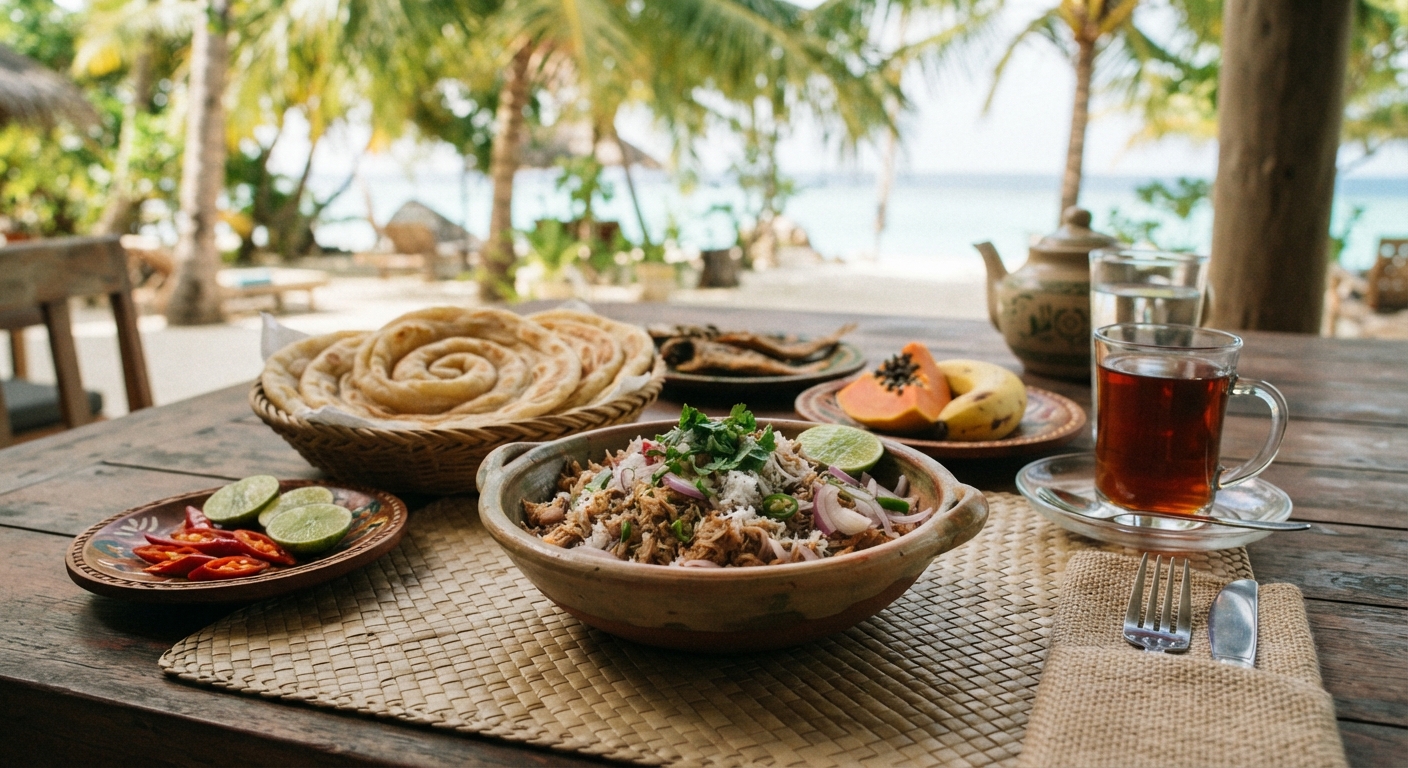
Mas huni is probably the dish most people associate with a traditional Maldivian breakfast. It combines tuna, grated coconut, onion, chili, and lime into a fresh, spicy mixture that is usually eaten with roshi.

The recipe is wonderfully straightforward. Use cooked tuna or good-quality canned tuna if fresh tuna is not available. Mix it with freshly grated coconut, finely sliced onion, chopped green chili, and lime juice. Add the lime gradually; the goal is to brighten the mixture, not make it sour. The same goes for the chili. A little heat brings the ingredients together, while too much can hide the flavor of the tuna and coconut.

Serve mas huni with warm roshi and eat it by hand, using pieces of bread to scoop up the mixture. Once you taste it, you understand one of the central ideas of Maldivian food: ordinary ingredients can be remarkably satisfying when they are balanced well.

Jump to Recipe
Mas Huni: The Classic Maldivian Breakfast

Mas Huni: The Classic Maldivian Breakfast

Prep Time 15 minutes
Cook Time 4 minutes
Course: Breakfast
Cuisine: Indian

Ingredients
  

2 cups cooked tuna, flaked
1½ cups freshly grated coconut
1 small onion, finely sliced
2–3 fresh green chilies, finely chopped
1–2 tablespoons fresh lime juice
½ teaspoon salt, or to taste
2 tablespoons finely chopped fresh coriander, optional
4 warm roshi or flatbreads, for serving

Method
 

Place the flaked tuna and grated coconut in a large bowl. Add the sliced onion and chopped green chilies, then gently mix everything together with your fingers or a spoon. Season with salt and gradually add the fresh lime juice, mixing until the flavors are evenly distributed. Taste and adjust the lime, salt, or chili according to your preference. Let the mixture rest for 5 minutes so the flavors can blend, then serve fresh with warm roshi or flatbread.

    Video

    Notes

    Use freshly grated coconut and fresh lime juice whenever possible. They make a noticeable difference in the texture and bright, authentic flavor of mas huni.

    Garudhiya: Traditional Maldivian Fish Broth

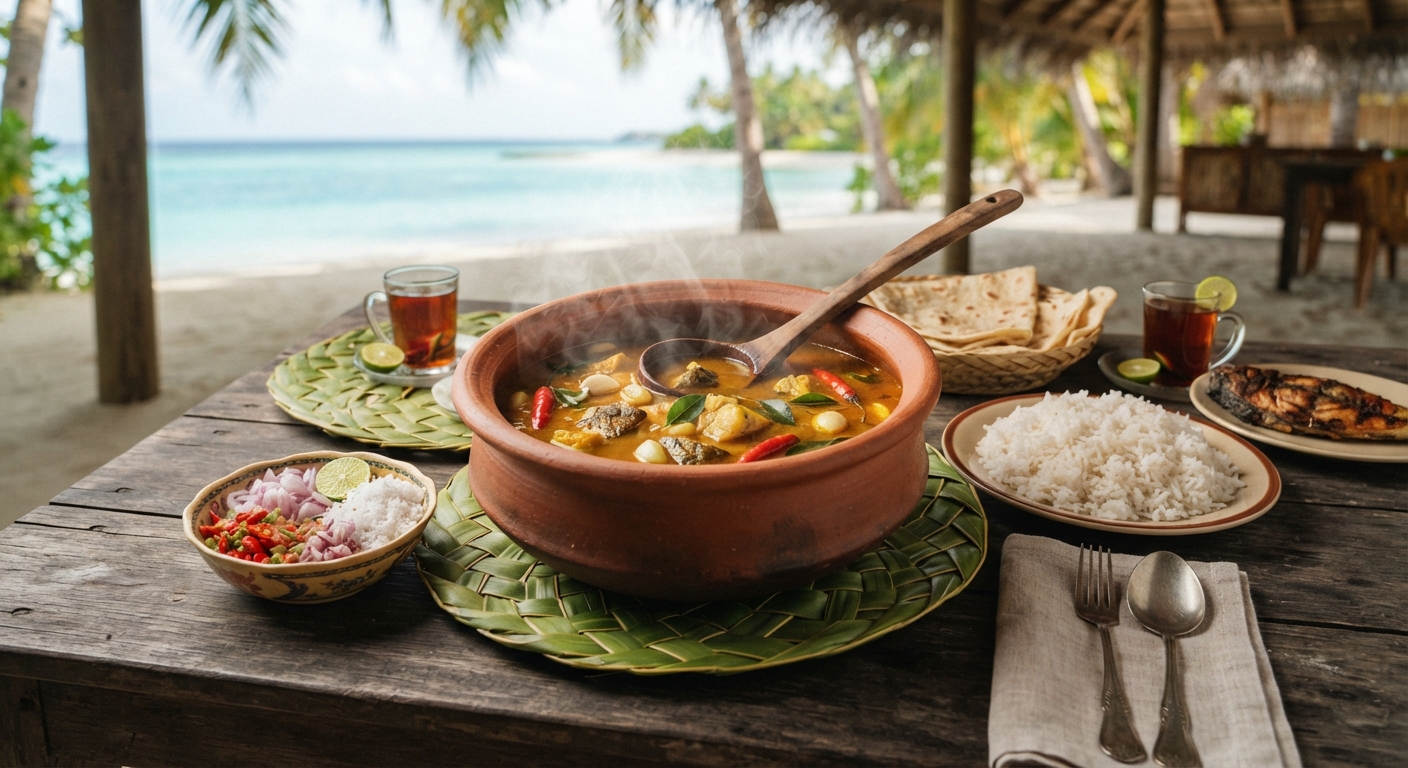
    Garudhiya is a clear tuna broth with a clean, savory flavor. Unlike a thick curry, it does not cover the fish with a heavy sauce. Instead, the broth lets the taste of the tuna remain at the center.

    It is usually served with rice and accompaniments such as lime, sliced onion, and chili. Depending on the household or occasion, fried fish, cassava, taro, sweet potato, or moringa leaves may also be served alongside it.

    How Garudhiya Is Traditionally Served

    Think of garudhiya as the heart of a meal rather than just a bowl of soup. Pour the broth over rice, then add lime, onion, and chili to taste. The result is light but deeply comforting, especially when the fish is fresh.

    For a home version, simmer tuna pieces gently with water and salt. You can add a few simple aromatics, but avoid turning the broth into a heavily seasoned stew. Skim away any impurities that rise to the surface, adjust the salt, and serve it hot. The best garudhiya is clear, fragrant, and full of fish flavor.
    Garudhiya: Traditional Maldivian Fish Broth

    Garudhiya: Traditional Maldivian Fish Broth

    Prep Time 10 minutes
    Cook Time 26 minutes
    Servings: 4
    Course: Appetizer
    Cuisine: maldive

    Ingredients
      

    500 g fresh tuna, cut into medium pieces
    1 liter water
    1 teaspoon salt, or to taste
    1 small onion, thinly sliced
    2–3 fresh green chilies, sliced
    2 cloves garlic, lightly crushed
    1 small piece fresh ginger, sliced
    1 teaspoon black peppercorns
    2 curry leaves, optional
    1 fresh lime, cut into wedges, for serving
    Steamed white rice, for serving

    Method
     

    Place the tuna pieces in a large pot with the water, salt, onion, garlic, ginger, black peppercorns, and curry leaves. Bring the mixture to a gentle boil, then reduce the heat and simmer for about 20–25 minutes, skimming any foam from the surface as needed. Continue cooking until the tuna is tender and the broth becomes clean, savory, and fragrant. Taste and adjust the salt before removing it from the heat. Serve the hot garudhiya with steamed rice, sliced chili, onion, and plenty of fresh lime wedges on the side.

      Video

      Notes

      Keep the broth clear and lightly seasoned. Garudhiya is traditionally appreciated for its clean tuna flavor, so avoid adding too many spices or coconut milk—the fresh lime and chili served alongside provide the final burst of flavor.

      Mas Riha: Authentic Maldivian Tuna Curry

      Mas riha shows the richer side of Maldivian cooking. It is a tuna curry made with onions, garlic, ginger, curry leaves, spices, and coconut milk. The sauce is flavorful without necessarily being heavy, and the fish should remain the star of the dish.

      Begin by gently cooking the onion, garlic, ginger, curry leaves, and spices until fragrant. Add the tuna, then pour in the coconut milk and simmer until the fish is just cooked. Avoid stirring too aggressively, or the tuna may break apart.

      The spice mixture varies from cook to cook, which is part of the charm. Serve mas riha with steamed rice or roshi. If you have any sauce left in the bowl, use the bread to collect every last bit of it.
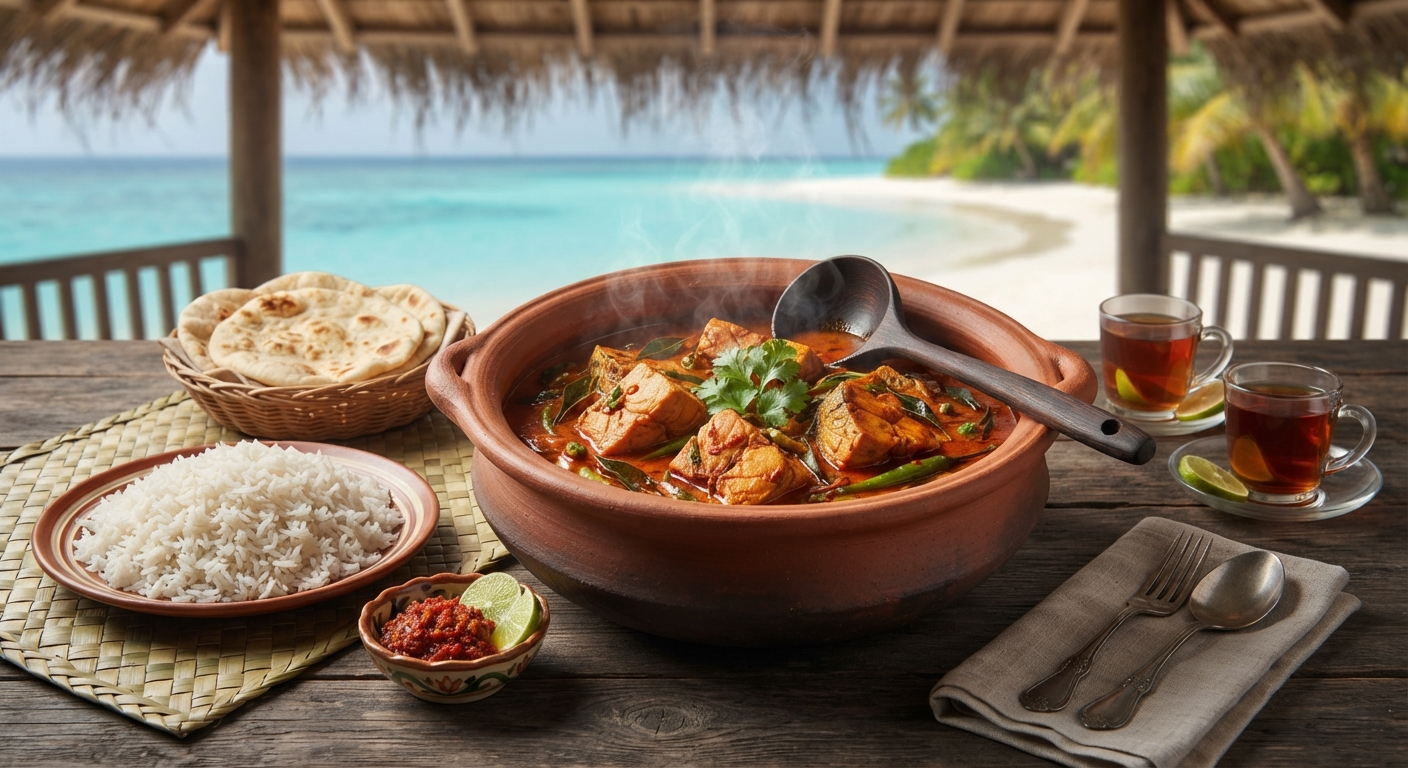
      Mas Riha: Authentic Maldivian Tuna Curry

      Mas Riha: Authentic Maldivian Tuna Curry

      Prep Time 15 minutes
      Cook Time 30 minutes
      Servings: 4
      Course: Main Course
      Cuisine: maldiv

      Ingredients
        

      500 g fresh tuna, cut into bite-sized pieces
      1 cup coconut milk
      1 small onion, finely sliced
      2 cloves garlic, minced
      1-inch piece fresh ginger, finely grated
      2–3 fresh green chilies, sliced
      1 tomato, finely chopped
      8–10 curry leaves
      1 teaspoon ground turmeric
      1 teaspoon ground cumin
      1 teaspoon ground coriander
      ½ teaspoon ground black pepper
      ½ teaspoon chili powder, or to taste
      1 tablespoon coconut oil or vegetable oil
      ½ teaspoon salt, or to taste
      ½ cup water
      1 tablespoon fresh lime juice
      Fresh coriander, chopped, for garnish
      Steamed rice or roshi, for serving

      Method
       

      Heat the oil in a heavy-bottomed pan over medium heat and gently sauté the onion, garlic, ginger, green chilies, and curry leaves until fragrant and the onion begins to soften. Add the turmeric, cumin, coriander, black pepper, and chili powder, stirring for about 30 seconds to release their aromas. Add the chopped tomato and cook until it softens into the spice mixture. Pour in the coconut milk and water, season with salt, and bring the curry to a gentle simmer. Add the tuna pieces and cook gently for about 8–10 minutes, or until the fish is just cooked through and tender. Avoid vigorous boiling, as it can make the tuna dry and break apart. Finish with fresh lime juice and garnish with chopped coriander before serving hot with steamed rice or warm roshi.

        Video

        Notes

        Don’t overcook the tuna. Add it after the curry base has developed its flavor and simmer gently until the fish is just tender. This keeps the tuna moist while allowing it to absorb the fragrant coconut and spices.

        Kandu Kukulhu: Rolled Tuna Curry

        Kandu kukulhu is a more elaborate tuna dish in which seasoned fish is rolled before being cooked in a curry sauce. The technique gives the dish a distinctive appearance and allows the rolls to absorb the flavors of the coconut and spices as they simmer.

        Making it takes more patience than preparing mas huni or garudhiya. Season the tuna, roll it carefully, and place the rolls in a prepared curry base. As they cook, the outside takes on the flavor of the sauce while the center stays firm and meaty.

        It is a good recipe to try when you want to explore something beyond the most familiar Maldivian dishes. The ingredients are recognizable, but the rolling technique gives the meal a more special feel.
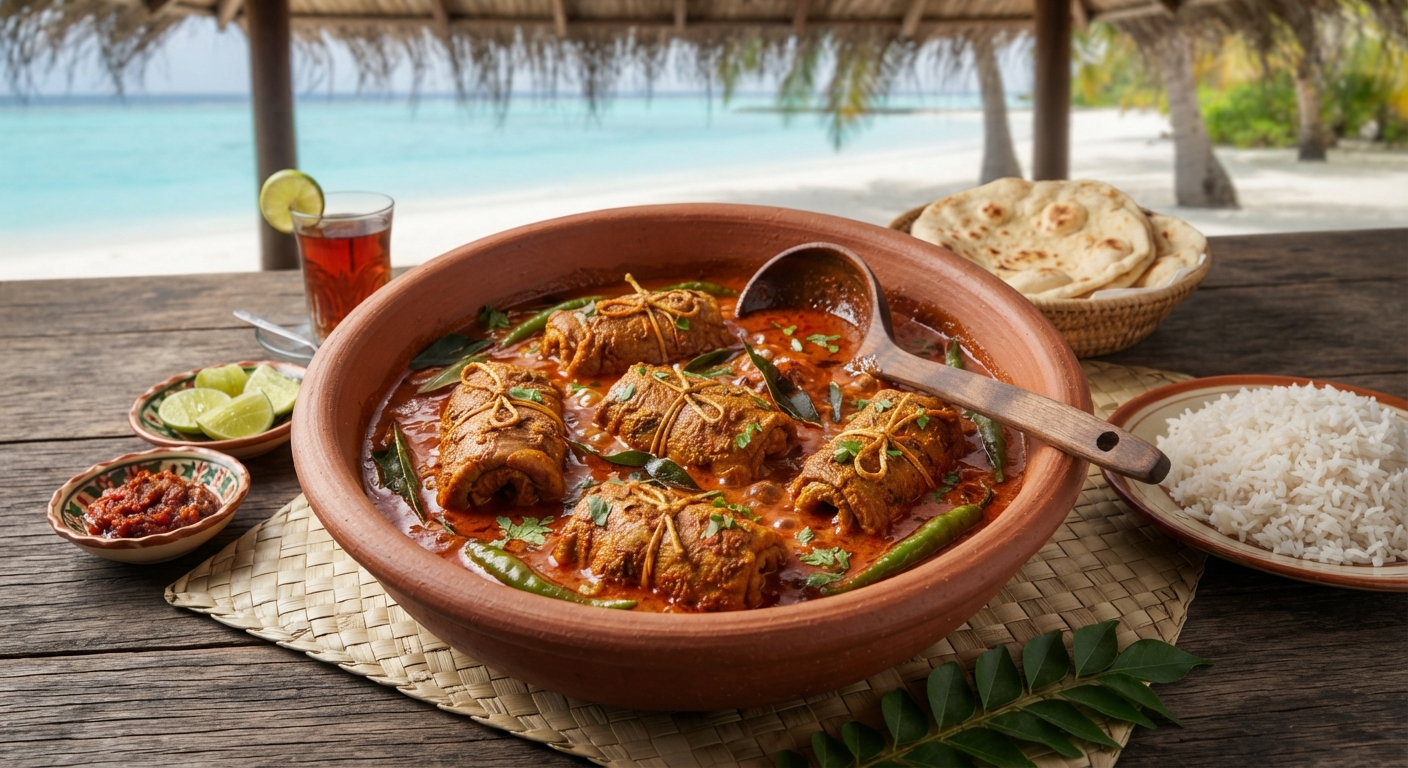
        Kandu Kukulhu: Rolled Tuna Curry

        Kandu Kukulhu: Rolled Tuna Curry

        Kandu kukulhu is a more elaborate tuna dish in which seasoned fish is rolled before being cooked in a curry sauce. The technique gives the dish a distinctive appearance and allows the rolls to absorb the flavors of the coconut and spices as they simmer.
        Prep Time 25 minutes
        Cook Time 30 minutes
        Servings: 4
        Course: Appetizer
        Cuisine: maldive

        Ingredients
          

        500 g fresh tuna, cut into thin, flat slices
        1 cup coconut milk
        ½ cup water
        1 small onion, finely chopped
        2 cloves garlic, minced
        1-inch piece fresh ginger, grated
        2–3 fresh green chilies, finely chopped
        8–10 curry leaves
        1 teaspoon ground turmeric
        1 teaspoon ground cumin
        1 teaspoon ground coriander
        ½ teaspoon ground black pepper
        ½ teaspoon chili powder, or to taste
        1 tablespoon fresh grated coconut
        1 tablespoon coconut oil
        1 teaspoon salt, or to taste
        1 tablespoon fresh lime juice
        Toothpicks or kitchen twine, for securing the rolls
        Steamed rice or roshi, for serving

        Method
         

        Place the tuna slices on a clean surface and gently flatten them if necessary. Combine half of the onion, garlic, ginger, green chili, grated coconut, turmeric, cumin, coriander, black pepper, chili powder, and a little salt to create a fragrant filling. Spread a small amount of the mixture over each tuna slice, then carefully roll the slices tightly and secure them with toothpicks or kitchen twine. Heat the coconut oil in a wide pan and gently sauté the remaining onion, garlic, ginger, chilies, and curry leaves until fragrant. Add the remaining spices and stir briefly, then pour in the coconut milk and water and bring the sauce to a gentle simmer. Carefully place the tuna rolls into the curry, cover the pan, and simmer gently for about 15–20 minutes, turning the rolls carefully once or twice so they cook evenly. Finish with fresh lime juice, remove the toothpicks or twine, and serve the rolls hot with steamed rice or warm roshi.

          Video

          Notes

          Roll the tuna tightly but don’t overfill it. A thin, even layer of filling helps the rolls hold their shape and allows the spicy coconut curry to penetrate the fish while it cooks.

          Fihunu Mas: Spicy Grilled Fish

          Fihunu mas is all about heat and smoke. Fish is rubbed with a mixture of chili, garlic, ginger, salt, lime, and spices, then grilled until the outside is slightly charred and the inside remains moist.

          Tuna works well, as do mahi-mahi and other firm fish. Coat the fish evenly and let the seasoning sit for a little while before grilling. The main thing to watch is the cooking time. Fish that is left on the heat too long will become dry, and no amount of sauce can completely fix that.

          Serve fihunu mas with rice, a sharp onion-and-chili salad, or even a little garudhiya on the side. It is a bold, smoky dish that makes a natural centerpiece for a larger meal.
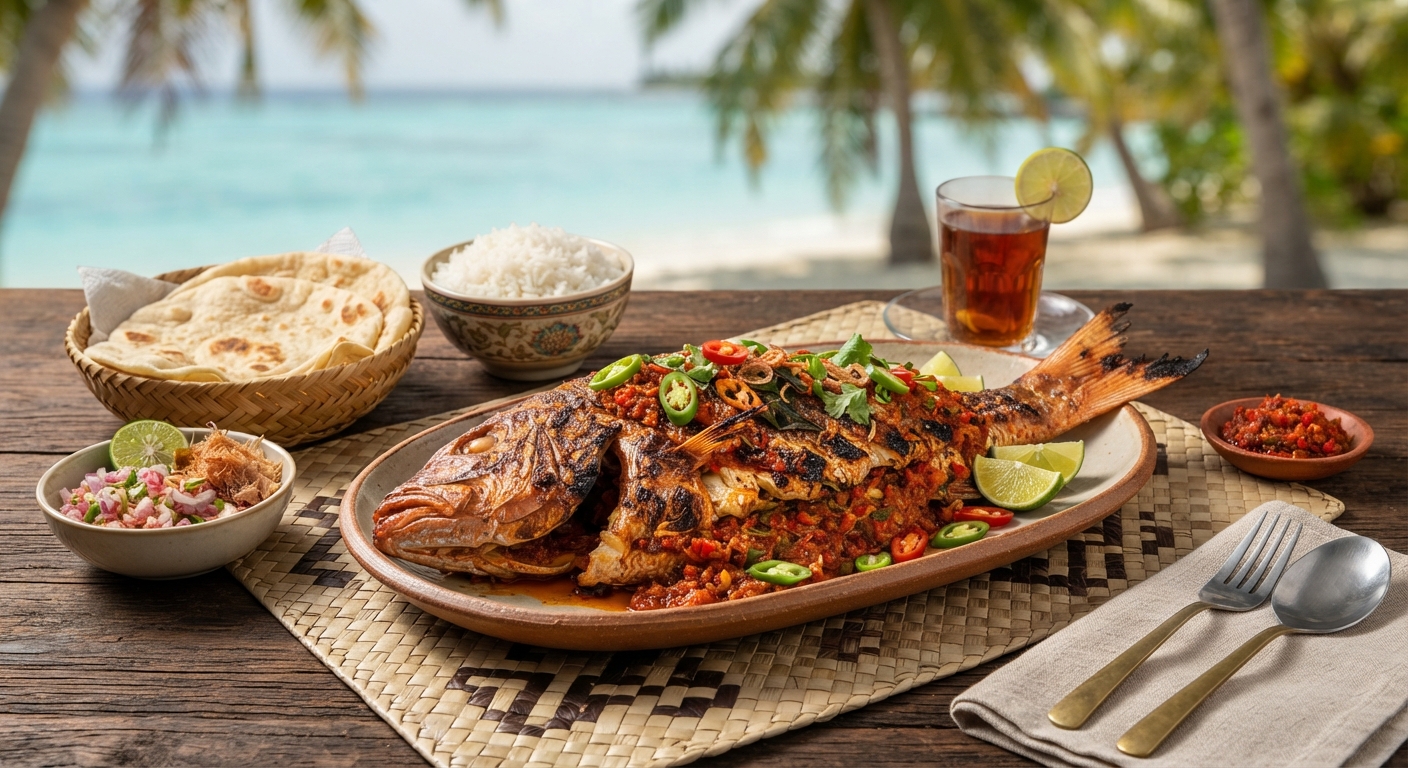
          Fihunu Mas: Spicy Grilled Fish

          Fihunu Mas: Spicy Grilled Fish

          Fihunu mas is all about heat and smoke. Fish is rubbed with a mixture of chili, garlic, ginger, salt, lime, and spices, then grilled until the outside is slightly charred and the inside remains moist.
          Prep Time 30 minutes
          Cook Time 15 minutes
          Servings: 4
          Course: Main Course
          Cuisine: maldive

          Ingredients
            

          600 g fresh tuna or other firm fish fillets
          2 tablespoons fresh lime juice
          2 tablespoons coconut oil
          2 cloves garlic, finely minced
          1-inch piece fresh ginger, finely grated
          2–3 fresh red or green chilies, finely chopped
          1 teaspoon ground turmeric
          1 teaspoon ground cumin
          1 teaspoon ground coriander
          ½ teaspoon ground black pepper
          ½ teaspoon chili powder, or to taste
          1 teaspoon salt
          6–8 curry leaves, finely chopped
          1 small onion, finely grated
          Fresh lime wedges, for serving

          Method
           

          Pat the fish dry with paper towels and place it in a shallow dish. In a bowl, combine the lime juice, coconut oil, garlic, ginger, chilies, turmeric, cumin, coriander, black pepper, chili powder, salt, curry leaves, and grated onion to make a thick, aromatic marinade. Rub the mixture generously over both sides of the fish, making sure it is evenly coated, then cover and refrigerate for about 30 minutes. Preheat a grill or grill pan to medium-high heat and lightly oil the cooking surface. Grill the fish for approximately 4–7 minutes per side, depending on its thickness, until the exterior is lightly charred and the fish is cooked through and flakes easily. Serve immediately with fresh lime wedges, steamed rice, roshi, or a traditional Maldivian-style salad.

            Video

            Notes

            Don’t grill the fish straight from a wet marinade. Let excess marinade drip off before placing it on the hot grill. This helps the spices caramelize and creates the delicious smoky, slightly charred crust that makes Fihunu Mas so flavorful.

            Rihaakuru: The Deeply Traditional Tuna Paste

            Rihaakuru is one of the most distinctive foods in the Maldivian kitchen. It is made by cooking tuna in water and salt, removing the fish, and slowly reducing the remaining broth until it becomes a thick, concentrated paste.

            The flavor is intensely savory, salty, and fish-forward. It may take a first-time taster a moment to appreciate, but it is an important part of Maldivian food culture. Rihaakuru reflects an older tradition of preserving fish and making the most of every part of the catch.

            It can be eaten with rice, roshi, taro, breadfruit, or other staples. It is also commonly combined with onion, chili, or curry leaves. Making it from scratch is a long process, so a prepared jar is the more practical choice for most home cooks outside the Maldives.
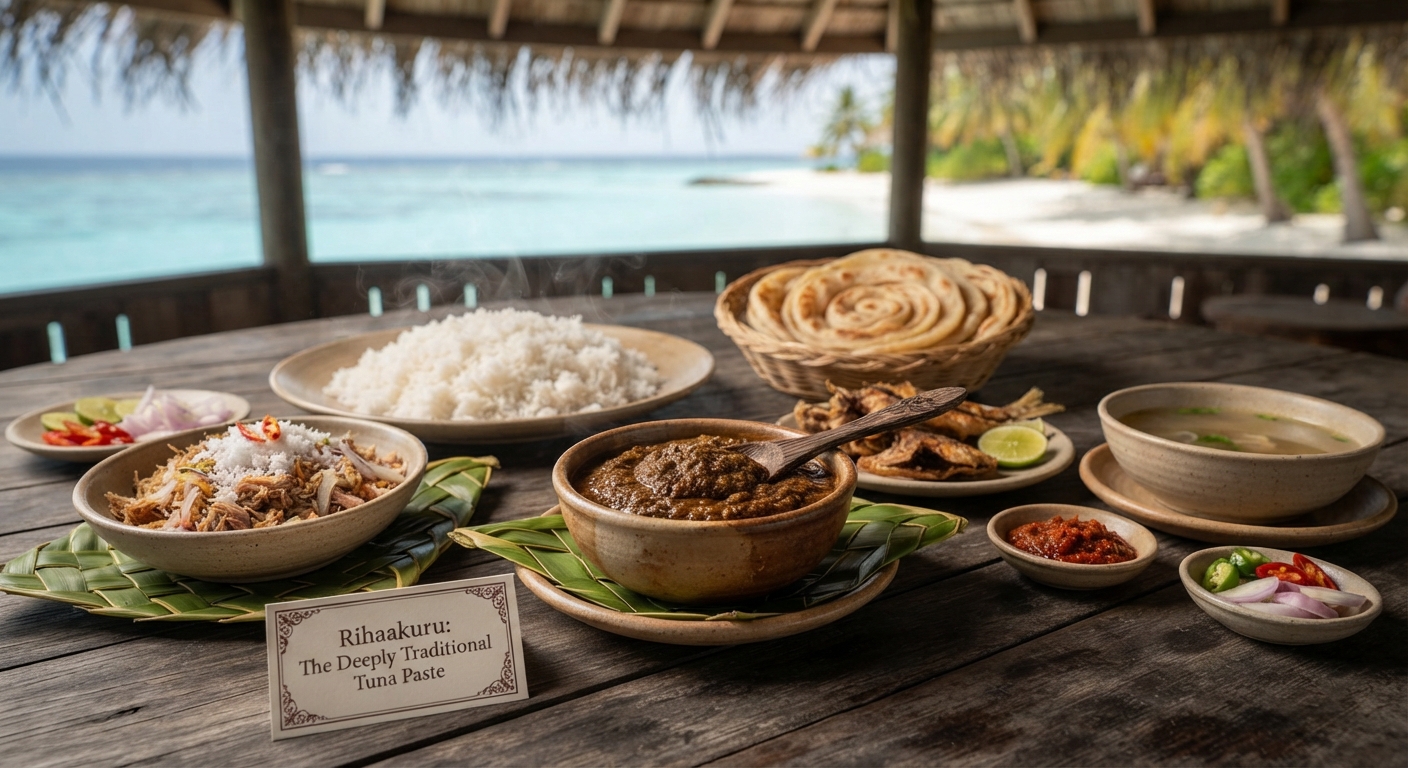
            Rihaakuru: The Deeply Traditional Tuna Paste

            Rihaakuru: The Deeply Traditional Tuna Paste

            Rihaakuru is one of the most distinctive foods in the Maldivian kitchen. It is made by cooking tuna in water and salt, removing the fish, and slowly reducing the remaining broth until it becomes a thick, concentrated paste.
            Prep Time 20 minutes
            Cook Time 3 hours 15 minutes
            Servings: 4
            Course: Main Course
            Cuisine: maldive

            Ingredients
              

            1 kg fresh tuna, cut into large pieces
            1.5 liters water
            2 teaspoons salt, or to taste
            1 small onion, roughly sliced
            4–5 curry leaves
            2–3 fresh chilies, optional
            1 small piece fresh ginger, sliced
            1 teaspoon black peppercorns
            1 tablespoon fresh lime juice, optional, for serving

            Method
             

            Place the tuna, water, salt, onion, curry leaves, ginger, and black peppercorns in a large heavy-bottomed pot and bring to a gentle boil. Reduce the heat and simmer until the tuna is completely cooked and the cooking liquid has developed a rich, savory flavor. Carefully remove the tuna pieces and set them aside for another dish, then strain the liquid to remove the aromatics and return the clear broth to the pot. Continue simmering the broth uncovered over low heat, stirring occasionally, until much of the water evaporates and the liquid gradually becomes thick, dark, and concentrated. This reduction can take several hours, so patience is essential. Once the mixture reaches a thick paste-like consistency, remove it from the heat and allow it to cool slightly before transferring it to a clean container.

              Video

              Notes

              Low and slow is the secret to good rihaakuru. Don’t rush the reduction by using high heat, because the concentrated tuna liquid can easily scorch. A gentle simmer allows the flavors to deepen gradually and produces a richer, more authentic paste.

              Masroshi: Maldivian Tuna-Stuffed Flatbread

              Masroshi is part flatbread, part savory snack. A filling of tuna, coconut, onion, chili, and aromatics is enclosed in soft dough and cooked on a hot pan until the outside is golden.

              It is a useful recipe for home cooks because it requires no special equipment. Make a soft dough, prepare the filling, place it in the center, seal the edges, and cook the flatbreads until done. Keep the filling fairly dry; if it is too wet, the dough can be difficult to close and may cook unevenly.

              Masroshi is best served hot, especially with tea. The contrast between the lightly crisp exterior and the savory tuna-and-coconut filling makes it an easy favorite.
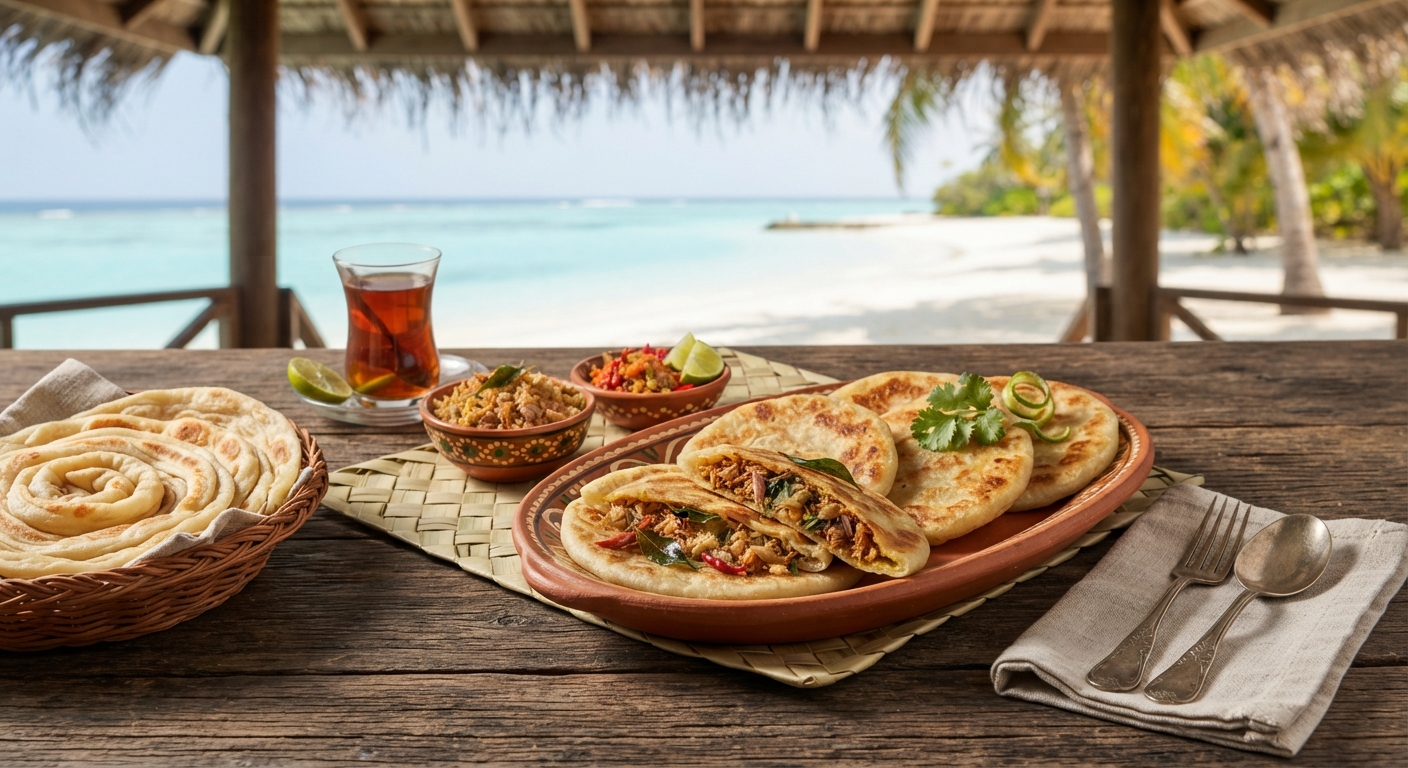
              Masroshi: Maldivian Tuna-Stuffed Flatbread

              Masroshi: Maldivian Tuna-Stuffed Flatbread

              Masroshi is part flatbread, part savory snack. A filling of tuna, coconut, onion, chili, and aromatics is enclosed in soft dough and cooked on a hot pan until the outside is golden.
              Prep Time 20 minutes
              Cook Time 15 minutes
              Servings: 23
              Course: Appetizer
              Cuisine: maldive

              Ingredients
                

              250 g cooked tuna, finely flaked
              1 cup freshly grated coconut
              1 small onion, finely chopped
              2 fresh green chilies, finely chopped
              1 tablespoon fresh lime juice
              ½ teaspoon salt, or to taste
              ½ teaspoon ground black pepper
              5–6 curry leaves, finely chopped
              • For the Flatbread
              2 cups all-purpose flour
              ½ teaspoon salt
              ¾ cup warm water, approximately
              1 tablespoon vegetable oil

              Method
               

              To prepare the filling, combine the flaked tuna, grated coconut, onion, green chilies, curry leaves, lime juice, salt, and black pepper in a bowl and mix thoroughly. In a separate bowl, combine the flour and salt, then gradually add warm water and knead until a soft, smooth dough forms. Add the oil and knead for another minute, then cover and let the dough rest for about 10 minutes. Divide the dough into eight equal portions and roll each portion into a thin circle. Place a generous spoonful of the tuna-coconut filling in the center, fold the dough over the filling, and seal the edges carefully. Gently flatten each stuffed bread with your fingers or a rolling pin. Heat a lightly oiled skillet over medium heat and cook the masroshi for about 2–3 minutes on each side, until golden brown spots appear and the bread is cooked through. Serve warm, preferably with tea or a fresh Maldivian-style sambol.

                Video

                Notes

                Keep the filling relatively dry and don’t overstuff the bread. Excess moisture or too much filling can cause the dough to split during cooking. A thin, evenly distributed layer gives you a crisp exterior with a flavorful tuna-and-coconut center.

                Gulha: A Favorite Maldivian Short Eat

                Gulha is a small, fried pastry filled with tuna, coconut, chili, onion, and aromatic ingredients. It belongs to the Maldivian tradition of hedhikaa, or short eats, which are often enjoyed with tea.

                The filling should be well seasoned and concentrated, but not wet. The dough should be thin enough to fry quickly without becoming heavy. Shape the small pastries carefully, fry them until crisp and golden, and drain them well before serving.

                Gulha is ideal for afternoon tea, gatherings, or a platter of homemade snacks. It is also a gentle introduction to Maldivian food because the pastry shape feels familiar while the filling brings the unmistakable flavors of the island
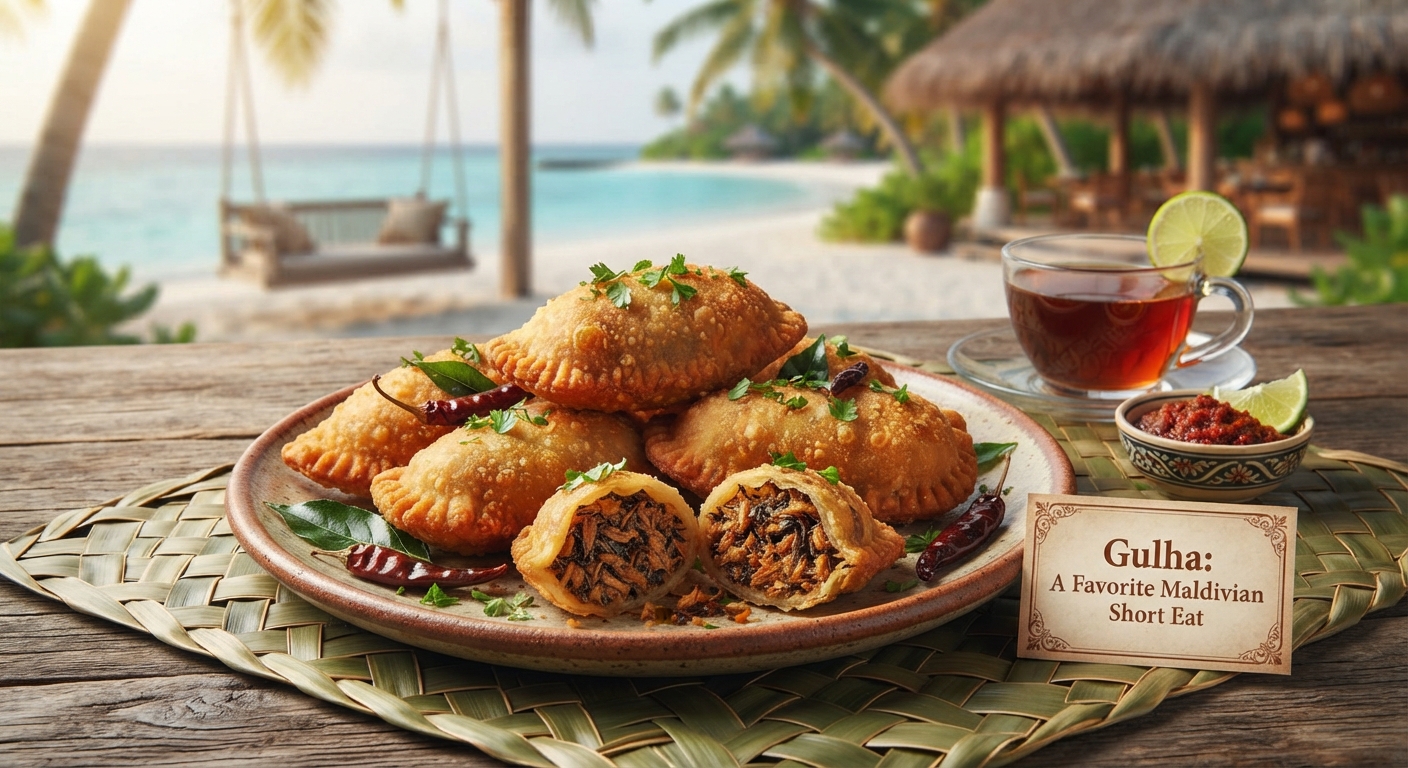
                Gulha: A Favorite Maldivian Short Eat

                Gulha: A Favorite Maldivian Short Eat

                Gulha is a small, fried pastry filled with tuna, coconut, chili, onion, and aromatic ingredients. It belongs to the Maldivian tradition of hedhikaa, or short eats, which are often enjoyed with tea.
                Prep Time 30 minutes
                Cook Time 15 minutes
                Servings: 4
                Course: Snack
                Cuisine: maldive

                Ingredients
                  

                250 g cooked tuna, finely flaked
                1 cup freshly grated coconut
                1 small onion, finely chopped
                2 fresh green chilies, finely chopped
                1 tablespoon fresh lime juice
                ½ teaspoon ground black pepper
                ½ teaspoon salt, or to taste
                5–6 curry leaves, finely chopped
                1 teaspoon grated fresh ginger
                • For the Dough
                2 cups all-purpose flour
                ½ teaspoon salt
                ¾ cup warm water, approximately
                1 tablespoon vegetable oil
                • For Frying
                Vegetable oil, as needed

                Method
                 

                Prepare the filling by combining the flaked tuna, grated coconut, onion, green chilies, curry leaves, ginger, black pepper, salt, and lime juice in a bowl, mixing until everything is evenly combined. In another bowl, mix the flour and salt, then gradually add warm water and knead until you have a soft, smooth dough. Add the oil and knead briefly, then cover and let the dough rest for 10 minutes. Divide the dough into small portions and roll each one into a thin circle. Place a small spoonful of tuna filling in the center, fold the dough around it, and carefully pinch and seal the edges to create a small oval or round pastry. Heat vegetable oil over medium heat and fry the gulha in batches until they become crisp and golden brown on all sides. Transfer them to a paper-lined plate to drain excess oil and serve warm with tea or your favorite dipping sauce.

                  Video

                  Notes

                  Keep the filling dry and seal every gulha firmly before frying. If the filling is too wet or the dough has small openings, the pastries can burst in the hot oil. Fry over medium heat so the outside becomes beautifully golden while the dough cooks evenly.

                  Bajiyaa and Bis Keemiya

                  Bajiyaa and bis keemiya show how Maldivian snack culture has developed through centuries of contact across the Indian Ocean. Bajiyaa resembles a small samosa, while bis keemiya is a fried pastry that may contain tuna, onion, cabbage, egg, or other fillings.

                  The most important part of making either snack is the balance between pastry and filling. Too much filling makes the pastry difficult to seal; too little leaves the bite mostly dough. Keep the tuna, onion, chili, and spices noticeable without making the mixture watery.

                  These snacks are a reminder that Maldivian cuisine is not isolated from its neighbors. Outside techniques have been adapted to local ingredients and local tastes, creating something recognizably Maldivian.
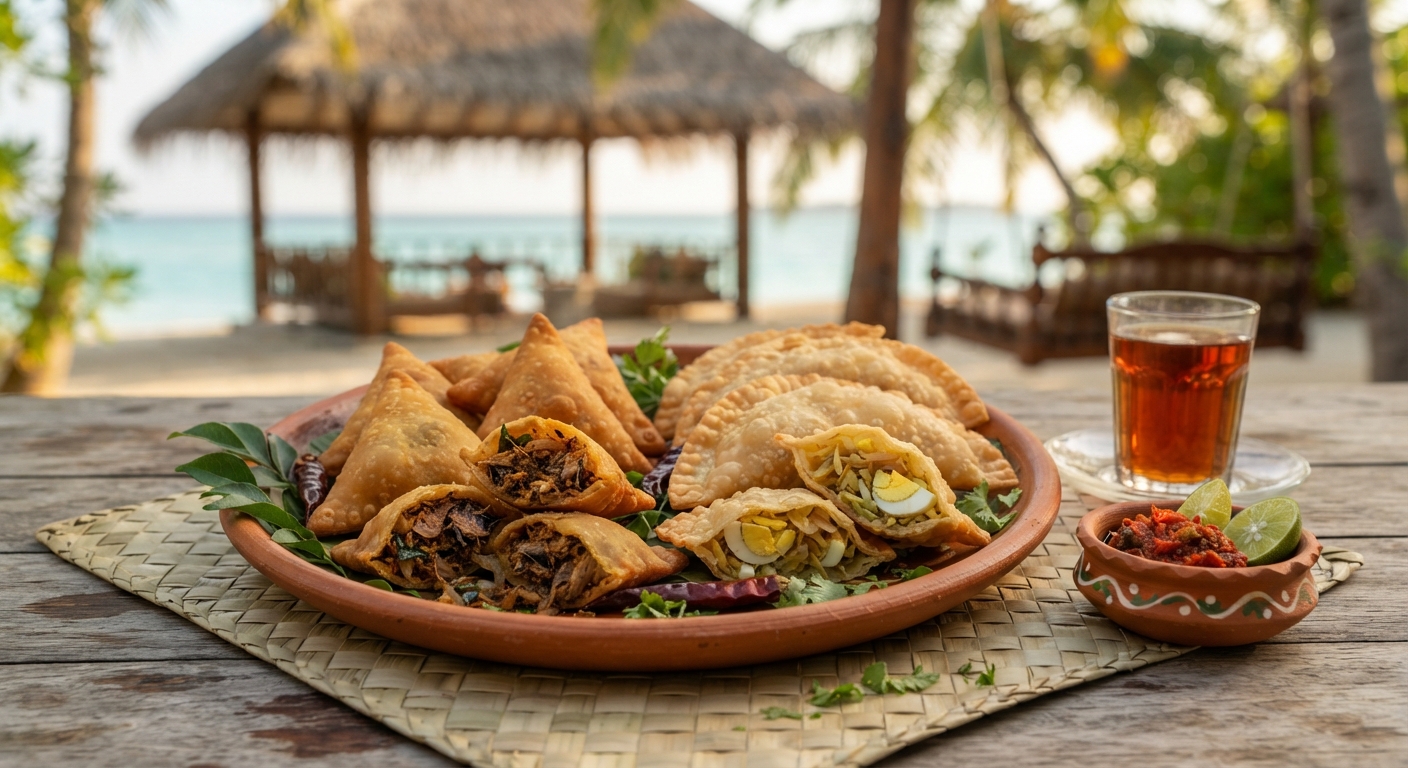
                  Bajiyaa and Bis Keemiya: Classic Maldivian Savory Pastries

                  Bajiyaa and Bis Keemiya: Classic Maldivian Savory Pastries

                  Bajiyaa and bis keemiya show how Maldivian snack culture has developed through centuries of contact across the Indian Ocean. Bajiyaa resembles a small samosa, while bis keemiya is a fried pastry that may contain tuna, onion, cabbage, egg, or other fillings.
                  Prep Time 30 minutes
                  Cook Time 20 minutes
                  Servings: 4
                  Course: Snack
                  Cuisine: maldive

                  Ingredients
                    

                  • For the Bajiyaa Filling
                  200 g cooked tuna, finely flaked
                  1 small onion, finely chopped
                  ½ cup grated coconut
                  2 fresh green chilies, finely chopped
                  1 teaspoon grated fresh ginger
                  ½ teaspoon ground cumin
                  ½ teaspoon ground black pepper
                  ½ teaspoon salt, or to taste
                  1 tablespoon fresh lime juice
                  5–6 curry leaves, finely chopped
                  • For the Bis Keemiya Filling
                  150 g cooked tuna, finely flaked
                  1 small onion, finely sliced
                  ½ cup finely shredded cabbage
                  1 hard-boiled egg, finely chopped
                  1–2 green chilies, finely chopped
                  ½ teaspoon ground black pepper
                  ½ teaspoon salt, or to taste
                  1 teaspoon fresh lime juice
                  • For Assembly and Frying
                  16–20 spring-roll wrappers or thin pastry sheets
                  1 tablespoon all-purpose flour mixed with 2 tablespoons water, for sealing
                  Vegetable oil, for deep frying

                  Method
                   

                  Prepare the bajiyaa filling by combining the tuna, coconut, onion, green chilies, ginger, cumin, black pepper, salt, curry leaves, and lime juice in a bowl. For the bis keemiya filling, mix the tuna with shredded cabbage, onion, chopped egg, chilies, black pepper, salt, and lime juice. Keep both fillings relatively dry so the pastry remains crisp after frying. Place a small amount of filling in the center of each pastry wrapper, fold the sides inward, and roll or fold into a neat triangle or rectangular parcel depending on the style you prefer. Brush the final edge with the flour-and-water mixture and press firmly to seal. Heat vegetable oil over medium heat and fry the pastries in small batches until crisp and golden brown, turning them occasionally for even cooking. Remove with a slotted spoon and drain on paper towels before serving warm.

                    Video

                    Notes

                    Never overfill the pastry. A small, compact amount of filling gives the bajiyaa and bis keemiya a crisp, delicate shell and prevents them from opening or bursting during frying. Keep the oil at a steady medium temperature—too hot and the pastry will brown before becoming crisp; too cool and it will absorb excess oil.

                    Kulhi Boakibaa: Spicy Maldivian Fish Cake

                    Kulhi boakibaa is a baked fish cake made with fish, coconut, rice, onion, and chili. The mixture is pressed into a greased dish, baked, and cut into pieces for serving.

                    It is a clever example of simple island cooking. A few inexpensive ingredients become a filling snack with a firm texture and plenty of flavor. Make sure the rice is properly softened and season the mixture before it goes into the oven. Let the finished cake rest for a few minutes before slicing so the pieces hold together.

                    Kulhi boakibaa can be served warm or at room temperature, making it a convenient addition to a snack table.
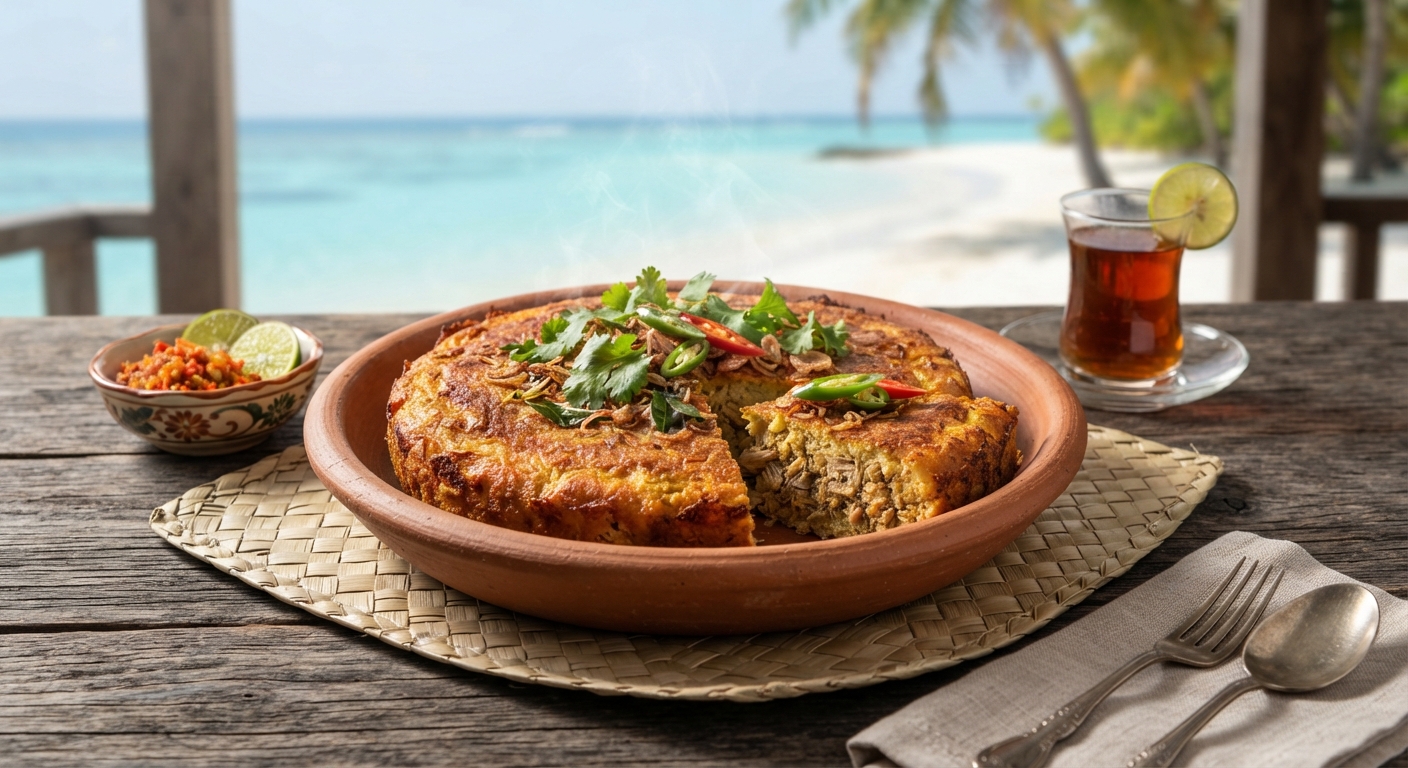
                    Kulhi Boakibaa: Spicy Maldivian Fish Cake

                    Prep Time 30 minutes
                    Cook Time 30 minutes
                    Course: Dessert
                    Cuisine: maldive

                    Ingredients
                      

                    Rinse the rice thoroughly and soak it in water for at least 2–3 hours, or until the grains become soft enough to crush easily. Drain the rice well, then grind it into a coarse paste, adding a little water if necessary. Transfer the rice mixture to a large bowl and add the flaked tuna, grated coconut, chopped onion, green chilies, curry leaves, ginger, turmeric, black pepper, salt, and lime juice. Mix everything thoroughly until you have a thick, evenly combined mixture with a slightly coarse texture. Grease a baking dish with vegetable oil and spread the mixture evenly into it, pressing it down firmly with the back of a spoon. Bake in a preheated oven at 180°C (350°F) for approximately 35–40 minutes, or until the surface is firm and lightly golden. Allow the boakibaa to cool for a few minutes before cutting it into squares or diamond-shaped pieces and serving.

                    Video

                    Notes

                    Don’t grind the rice into a completely smooth paste. A slightly coarse texture gives traditional kulhi boakibaa its satisfying firmness and helps the fish and coconut remain noticeable in every bite. Let it rest for 10–15 minutes after baking before slicing for cleaner

                    Leave a Comment

                    Your email address will not be published. Required fields are marked *

                    Recipe Rating


                    Scroll to Top