
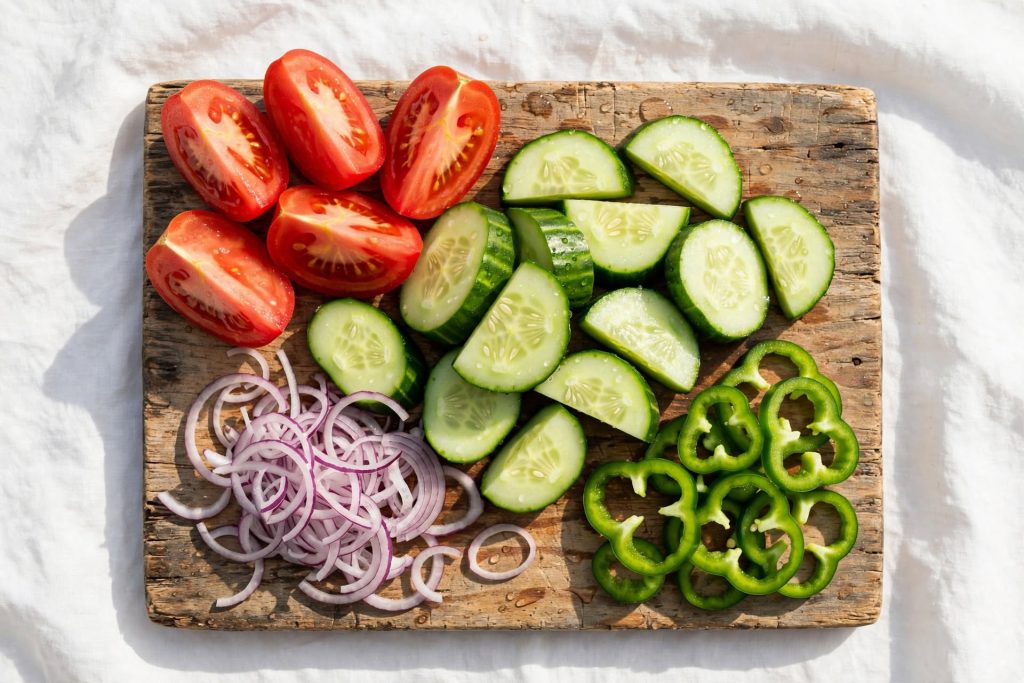
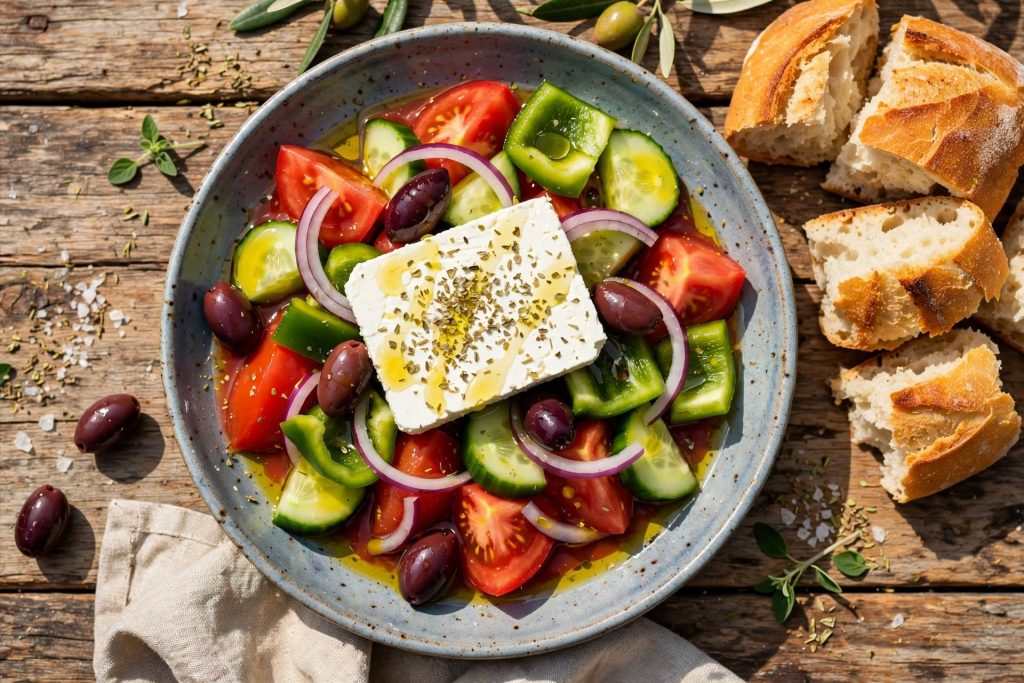
A fresh, traditional Greek village salad with ripe tomatoes, crunchy cucumber, creamy feta, Kalamata olives, and extra-virgin olive oil.
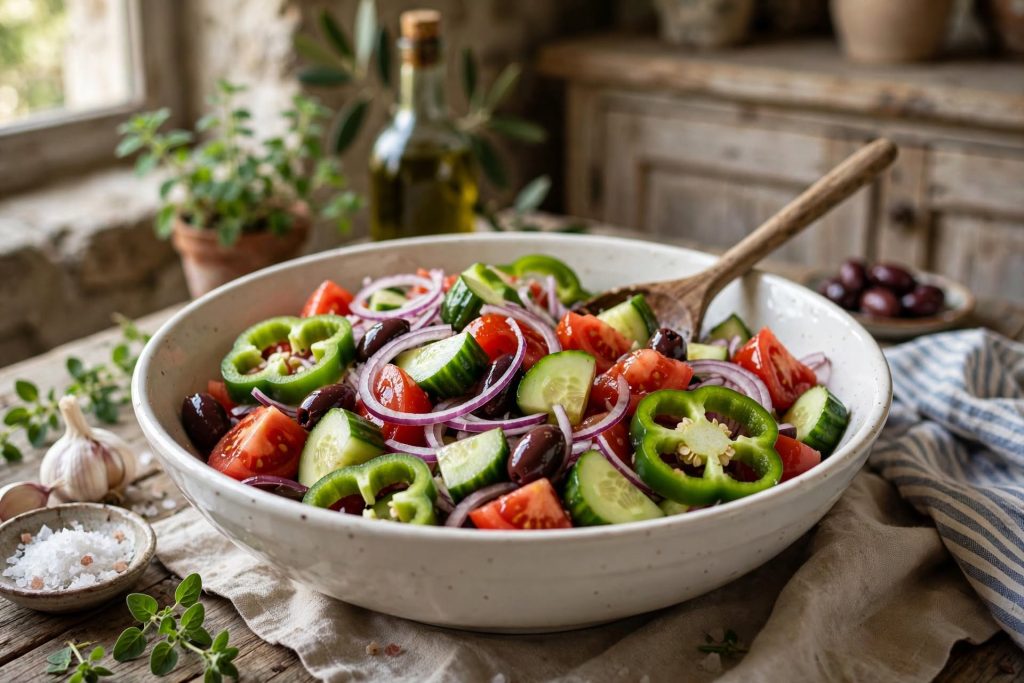
There is something special about a Greek salad made with ripe tomatoes, crisp cucumber, salty feta, and a generous drizzle of extra-virgin olive oil. It is simple, colorful, refreshing, and full of Mediterranean flavor.
The traditional Greek village salad, known as Horiatiki, is not a complicated dish. It does not need lettuce, a bottled dressing, or a long list of ingredients. Instead, it celebrates the natural taste of fresh vegetables, briny Kalamata olives, fragrant oregano, and creamy Greek feta.
This authentic Greek salad recipe is perfect for a light lunch, a summer side dish, or a delicious accompaniment to grilled fish, chicken, or warm crusty bread. With a few simple preparation tips, you can bring the taste of a Greek taverna straight to your kitchen.
What Is Horiatiki Greek Salad?
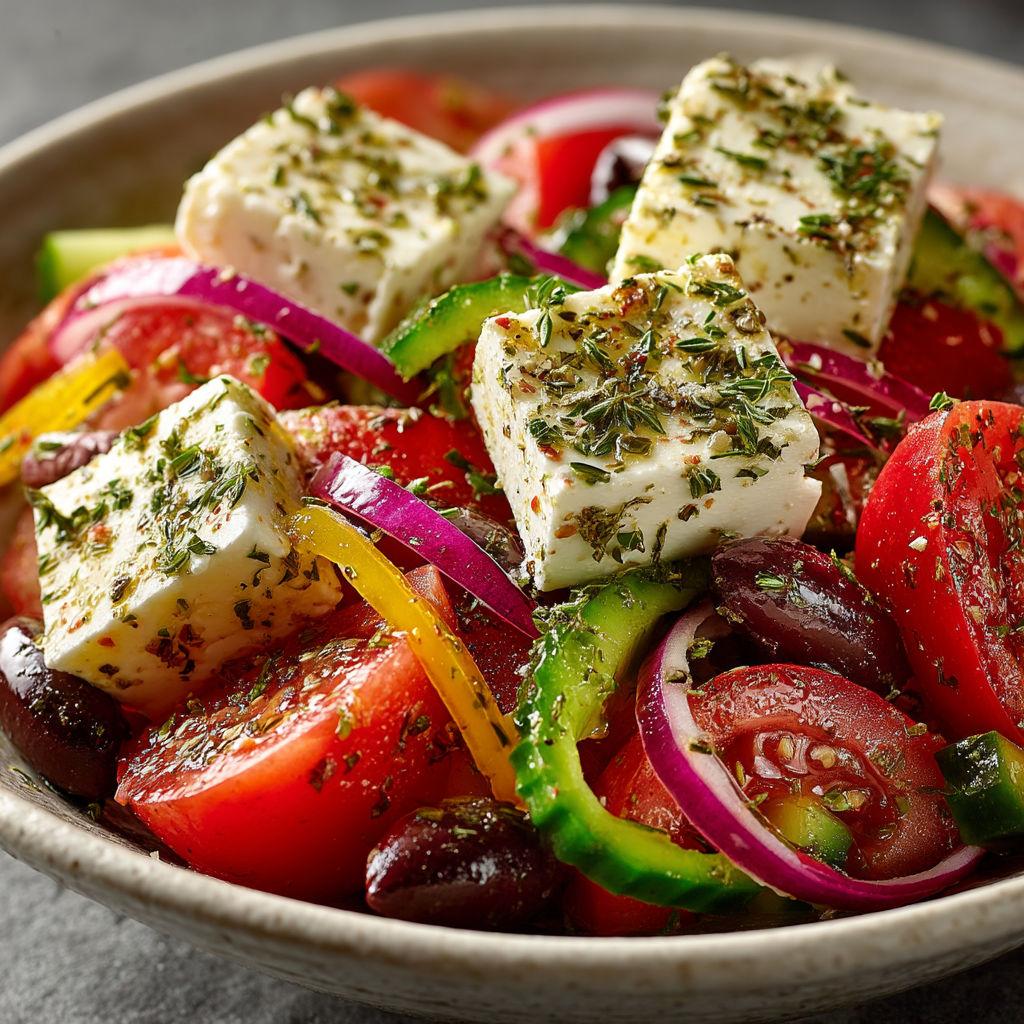
Horiatiki, pronounced roughly ho-ree-AH-tee-kee, means “village salad” in Greek. It is a traditional Greek salad made with chunky tomatoes, cucumber, red onion, green bell pepper, olives, and feta cheese. Extra-virgin olive oil and dried oregano provide its signature flavor.
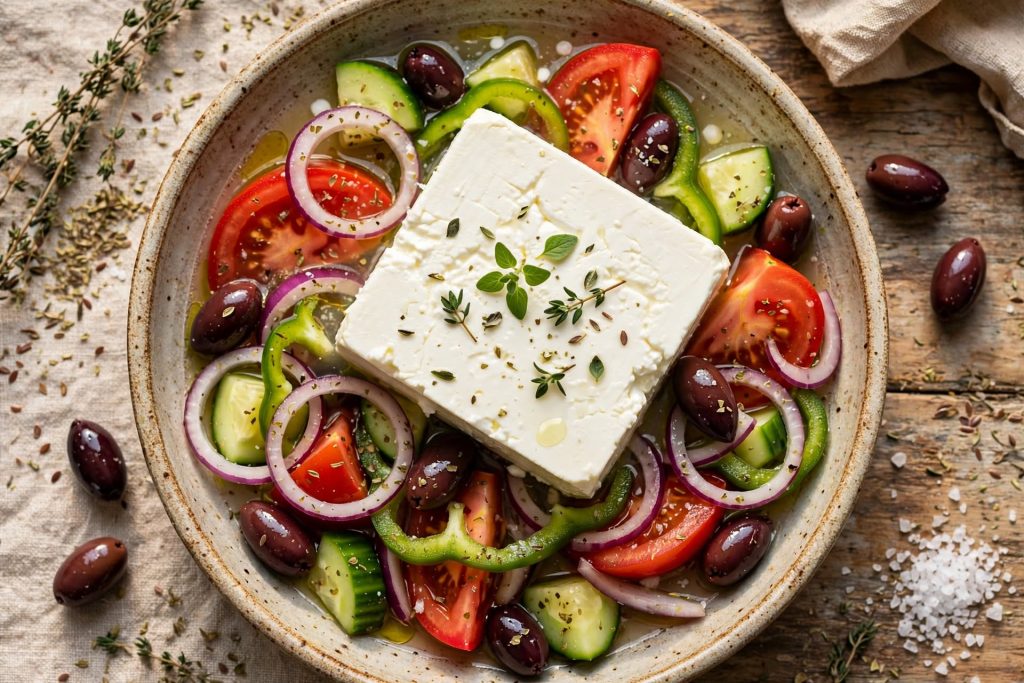
Unlike many international Greek salad recipes, traditional Horiatiki is generally made without lettuce. The vegetables are cut into generous pieces, and the feta is often served in a block or thick slab on top rather than finely crumbled throughout the salad.
The exact ingredients and preparation can vary from one Greek region or household to another. Some versions include capers, purslane, or a splash of red-wine vinegar, while others rely on the natural juices of the tomatoes and the flavor of good olive oil.
Why You’ll Love This Authentic Greek Salad
- Fresh and flavorful: Juicy tomatoes, crunchy cucumber, and aromatic oregano create a naturally delicious combination.
- Quick to prepare: You can have this salad ready in about 15 minutes.
- No cooking required: Just wash, cut, assemble, and serve.
- Simple ingredients: Most of the ingredients are easy to find in supermarkets.
- Perfect for many meals: Enjoy it as a side dish, light lunch, mezze, or picnic salad.
- Naturally vegetarian: It contains no meat or fish and can be made gluten-free by serving it without bread or with gluten-free bread.
Authentic Greek Salad Ingredients
Here is everything you need to make a traditional Greek village salad at home.
Fresh vegetables
- 4 medium ripe tomatoes — approximately 600 g, cut into large wedges.
- 1 large cucumber — approximately 300 g, sliced into thick half-moons.
- 1 small green bell pepper — thinly sliced into rings.
- 1 small red onion — thinly sliced.
- 80 g Kalamata olives — preferably whole or pitted, according to preference.
Feta and seasonings
- 150 g Greek feta cheese — ideally a good-quality feta kept in brine.
- 4 tablespoons extra-virgin olive oil — approximately 60 ml.
- 1 tablespoon red-wine vinegar — optional, according to taste.
- 1 teaspoon dried Greek oregano.
- A small pinch of sea salt — use sparingly because feta and olives are already salty.
- Freshly ground black pepper — optional.
For serving
- Warm crusty bread, pita, or a traditional Greek bread such as χωριάτικο ψωμί.
Ingredient substitutions
If you cannot find every ingredient, you can still make a delicious salad:
- Use a ripe English cucumber if a traditional Greek cucumber is unavailable.
- Substitute another mild green pepper if necessary.
- Use good-quality brined feta rather than a soft salad cheese.
- If Kalamata olives are unavailable, use another flavorful Greek olive.
- Red-wine vinegar can be omitted for a milder, more tomato-forward flavor.
For the most traditional result, prioritize ripe tomatoes, Greek feta, extra-virgin olive oil, and dried oregano.
How to Make Authentic Greek Salad
Step 1: Prepare the vegetables
Wash all the vegetables thoroughly and dry them well.
Cut the tomatoes into large wedges or irregular chunks. Avoid cutting them too small, because generous pieces retain their texture and release flavorful juices into the bowl.
Slice the cucumber into thick half-moons. You can leave the peel on, partially peel it, or peel it completely according to your preference.
Thinly slice the red onion and green bell pepper.
Step 2: Build the salad
Place the tomatoes in a large serving bowl. Add the cucumber, green pepper, red onion, and Kalamata olives.
Gently mix the vegetables once or twice. Do not overmix, as the tomatoes can become crushed and watery.
Step 3: Add the seasoning
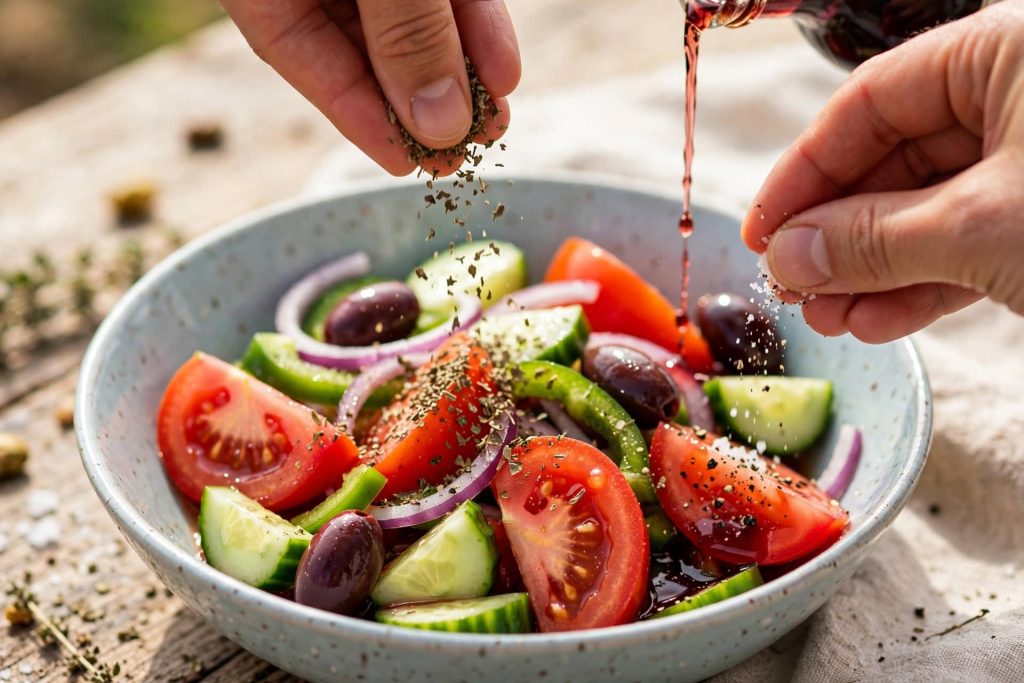
Sprinkle the dried oregano over the vegetables. Add a small pinch of salt and black pepper if desired.
If you are using red-wine vinegar, drizzle it over the vegetables. Let the tomatoes sit for a few minutes so their juices can mingle with the seasoning.
Step 4: Add the feta
Place the feta cheese in a thick slab or large piece on top of the vegetables.
A whole piece of feta is a traditional presentation and allows diners to break off pieces as they eat. You may crumble it if that is more convenient, but a slab gives the salad a more classic village-salad appearance.
Step 5: Finish with olive oil
Drizzle the extra-virgin olive oil over the vegetables and feta. Sprinkle a little more dried oregano over the top.
The tomato juices, olive oil, and seasonings will collect at the bottom of the bowl, creating a delicious mixture that can be enjoyed with bread.
Step 6: Serve immediately
Let the salad rest for approximately 5 minutes at room temperature, then serve.
Enjoy it with warm bread, grilled meat, fish, or another Mediterranean side dish.
Recipe Card
Authentic Greek Salad (Horiatiki)
- Prep time: 15 minutes
- Cook time: 0 minutes
- Total time: 15 minutes
- Servings: 4 as a side dish
- Cuisine: Greek
- Course: Salad
- Diet: Vegetarian; naturally gluten-free without bread
Equipment
Nutrition Profile
The following nutrition information is an estimate for one serving, based on dividing this recipe into four portions. Actual values vary depending on the size of the vegetables, the amount of olive oil, the feta brand, and the olives used.
| Nutrient | Approximate amount per serving |
|---|---|
| Calories | 260 kcal |
| Protein | 7 g |
| Total fat | 22 g |
| Carbohydrates | 12 g |
| Dietary fiber | 3 g |
| Total sugars | 6 g |
| Sodium | 650 mg |
These estimates exclude bread and are intended for general nutritional guidance, not medical or dietary diagnosis.
Nutrition Notes: Is Greek Salad Healthy?
1. Tomatoes provide antioxidants
Tomatoes contain lycopene, a naturally occurring carotenoid, as well as vitamin C and other plant compounds. Including tomatoes in a varied diet is a simple way to increase vegetable intake.
2. Cucumber adds hydration and crunch
Cucumber has a high water content and contributes small amounts of vitamin K and other nutrients. It gives the salad its refreshing texture without making it heavy.
3. Olive oil provides unsaturated fat
Extra-virgin olive oil is rich in monounsaturated fat and contains naturally occurring antioxidant compounds. It is a flavorful part of the Mediterranean-style eating pattern.
4. Feta contributes protein and calcium
Feta adds protein, calcium, and a creamy, salty flavor. It also contributes a significant amount of sodium, so extra salt is usually unnecessary.
5. Olives add flavor and fat
Kalamata olives provide unsaturated fat and distinctive briny flavor. Because they are often preserved in salt, their sodium content can vary.
Helpful Tips for the Best Greek Salad
Choose ripe tomatoes
Tomatoes are the foundation of a good Horiatiki. Choose tomatoes that are ripe, fragrant, and flavorful. In-season tomatoes usually provide the best balance of sweetness and acidity.
Do not chop everything too finely
Traditional Greek salad is rustic. Large tomato wedges and thick cucumber pieces provide a satisfying texture and prevent the salad from becoming mushy.
Use good olive oil
Since olive oil is one of the main ingredients, its flavor matters. A fresh, good-quality extra-virgin olive oil can make a noticeable difference.
Be careful with salt
Feta and Kalamata olives are already salty. Taste the salad before adding more sea salt.
Keep the feta in a slab
For a traditional presentation, place the feta on top instead of mixing it into the vegetables. It looks beautiful and allows the cheese to remain creamy and distinct.
Do not prepare it too far in advance
For the freshest texture, assemble the salad shortly before serving. If you need to prepare it ahead, cut the vegetables and refrigerate them separately from the dressing and feta.
Serve with bread
Warm crusty bread is an excellent accompaniment. It can be used to soak up the flavorful tomato juices and olive oil at the bottom of the bowl.
Common Mistakes to Avoid
Using unripe tomatoes: The salad will lack sweetness and flavor.
Adding lettuce: Lettuce is common in many modern salad variations, but it is not a defining ingredient of traditional Horiatiki.
Overmixing the vegetables: Excessive mixing can crush the tomatoes and make the salad watery.
Using too much vinegar: A large amount of vinegar can overpower the fresh vegetable flavor.
Adding too much salt: Feta and olives already bring plenty of saltiness.
Serving it ice-cold: Very cold tomatoes can taste less aromatic. Allowing the ingredients to come closer to room temperature before serving can improve their flavor.
Greek Salad Variations
Although this recipe follows a traditional Horiatiki style, Greek salads can differ across regions and households.
Island-style Greek salad
Some island versions include capers or caper leaves for an extra-briny flavor.
Cretan-inspired variation
A Cretan-style salad may include barley rusks, creating a heartier dish similar in spirit to Dakos.
Greek salad without feta
You can leave out the feta for a dairy-free version. The result will be lighter, although it will no longer have the classic feta flavor.
Greek salad with extra protein
Serve the salad with grilled chicken, chickpeas, beans, or grilled fish to create a more substantial meal.
The Best Authentic Greek Salad (Horiatiki)
Ingredients
Equipment
Method
- Wash all the vegetables thoroughly and dry them well.
- Cut the tomatoes into large wedges or irregular chunks. Avoid cutting them too small, because generous pieces retain their texture and release flavorful juices into the bowl.
- Slice the cucumber into thick half-moons. You can leave the peel on, partially peel it, or peel it completely according to your preference.
- Thinly slice the red onion and green bell pepper.
- Place the tomatoes in a large serving bowl. Add the cucumber, green pepper, red onion, and Kalamata olives.
- Gently mix the vegetables once or twice. Do not overmix, as the tomatoes can become crushed and watery.
- Sprinkle the dried oregano over the vegetables. Add a small pinch of salt and black pepper if desired.
- If you are using red-wine vinegar, drizzle it over the vegetables. Let the tomatoes sit for a few minutes so their juices can mingle with the seasoning.
- Place the feta cheese in a thick slab or large piece on top of the vegetables.
- A whole piece of feta is a traditional presentation and allows diners to break off pieces as they eat. You may crumble it if that is more convenient, but a slab gives the salad a more classic village-salad appearance.
- Drizzle the extra-virgin olive oil over the vegetables and feta. Sprinkle a little more dried oregano over the top.
- The tomato juices, olive oil, and seasonings will collect at the bottom of the bowl, creating a delicious mixture that can be enjoyed with bread.
- Let the salad rest for approximately 5 minutes at room temperature, then serve.
- Enjoy it with warm bread, grilled meat, fish, or another Mediterranean side dish.
Video
Notes
Frequently Asked Questions
What is an authentic Greek salad made of?
Authentic Horiatiki is generally made with ripe tomatoes, cucumber, red onion, green bell pepper, Kalamata olives, feta cheese, olive oil, and oregano. Some regional versions also include capers or other seasonal ingredients.
Does traditional Greek salad contain lettuce?
Traditional Horiatiki is generally made without lettuce. It focuses on chunky tomatoes, cucumber, onion, pepper, olives, and feta.
Can I make Greek salad ahead of time?
Yes. You can wash and cut the vegetables ahead of time and refrigerate them. For the best texture, add the olive oil, seasonings, and feta shortly before serving.
Is Greek salad keto-friendly?
A traditional Greek salad can fit into many low-carbohydrate eating patterns because it contains vegetables, feta, olives, and olive oil. However, the exact carbohydrate content depends on the ingredients and portion size. Bread is not included in the nutrition estimate above.
Is Greek salad gluten-free?
The salad itself is naturally gluten-free when made with suitable ingredients. Serve it without regular bread, or choose certified gluten-free bread if needed.
Can I use crumbled feta?
Yes. Crumbled feta is convenient and tastes delicious. However, placing a thick piece of feta on top is a more traditional presentation for Horiatiki.
What is the best dressing for Greek salad?
A simple combination of extra-virgin olive oil, dried oregano, and a little red-wine vinegar is an excellent choice. In some traditional versions, the natural tomato juices and olive oil provide most of the dressing.
How long does Greek salad last in the refrigerator?
For the best quality, enjoy it the day it is prepared. Leftovers can generally be refrigerated in a sealed container and used within 1–2 days, although the vegetables may become softer and release more liquid. Use your judgment based on freshness and food-safety conditions.
Final Thoughts
The best authentic Greek salad does not depend on complicated techniques or an elaborate dressing. It depends on fresh vegetables, good feta, flavorful olives, quality olive oil, and a light touch when assembling everything.
Make this Horiatiki when you want a quick, refreshing taste of Greece. Serve it with warm bread, grilled food, or enjoy it on its own for a simple Mediterranean-inspired meal.
Simple ingredients, honest flavors, and a little Greek sunshine in every bite.
Disclaimer
This article provides general culinary and nutrition information for educational purposes only. Nutrition values are estimates and should not replace advice from a qualified healthcare professional.
Pingback: Greek Zucchini Fritters with Feta (Kolokithokeftedes) |