
Quick Answer
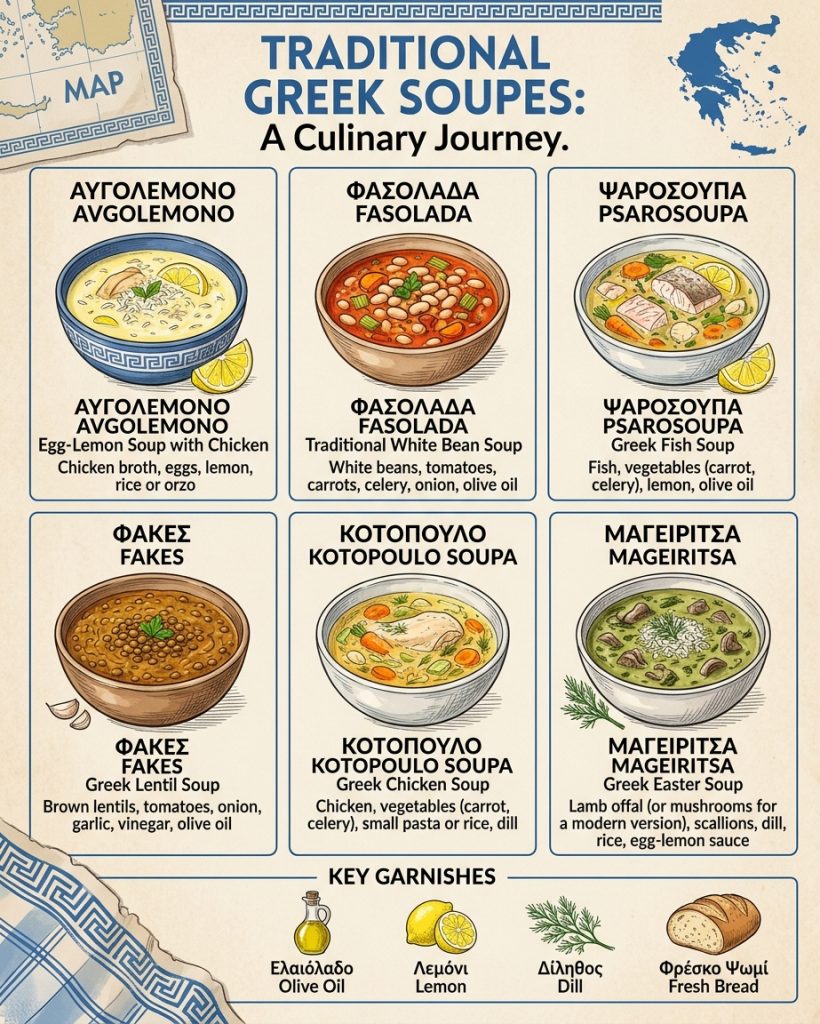
The best Mediterranean soups for winter are built on beans, lentils, seasonal vegetables, olive oil and lemon. Six classics are Greek fasolada (white bean), fakes (lentil), avgolemono (egg-lemon chicken) and fish soup, Moroccan harira, and Tuscan ribollita. Each simmers in one pot, costs little, and delivers fiber, plant protein and healthy fats.
Why Mediterranean Soups Work So Well in Winter
When it’s cold, nobody in the Mediterranean reaches for anything fancy. They reach for a pot. These soups come from home kitchens in Greece, Morocco and Tuscany, where beans, lentils, greens and good olive oil stretch a few simple ingredients into a full meal.
They’re also naturally filling. Legumes and vegetables give you fiber, olive oil carries flavor, and a squeeze of lemon at the end makes everything taste brighter. Most also reheat well, so a single pot covers several dinners.
1. Greek Fasolada (White Bean Soup)
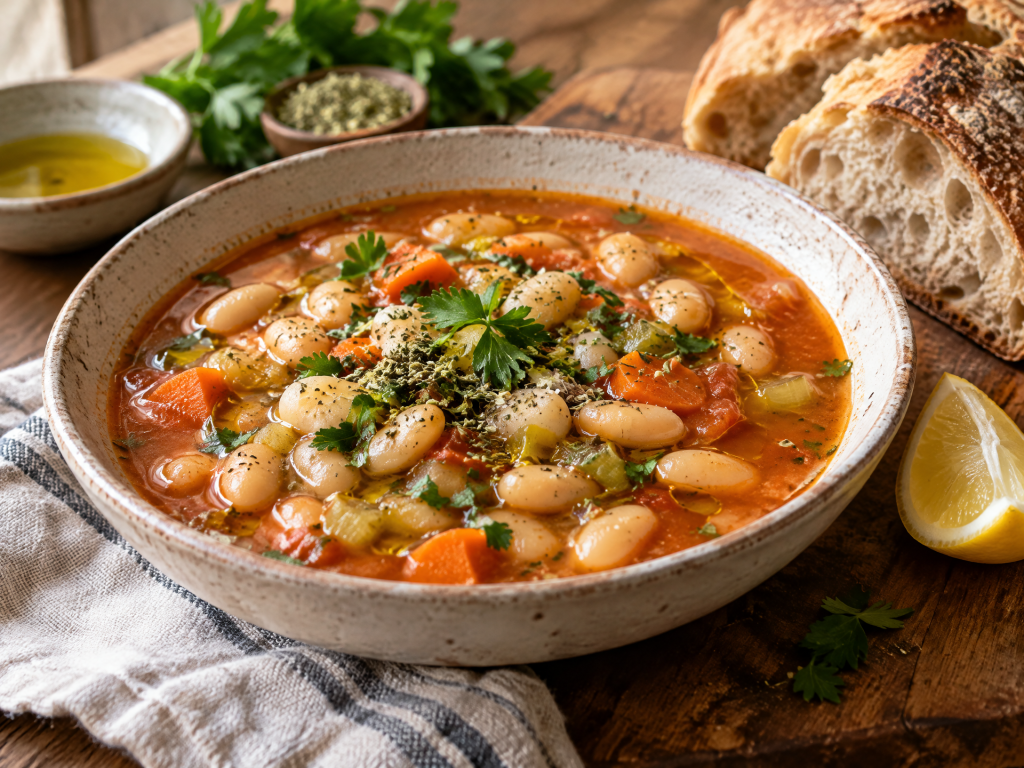
Often called Greece’s unofficial national dish. It’s creamy without any cream.
Serves 6 | Prep 15 min | Cook 75 min
Ingredients
- 1½ cups (300 g) dried white beans, soaked overnight
- ⅓ cup extra virgin olive oil
- 1 onion, 2 carrots and 2 celery stalks, diced
- 3 garlic cloves, minced
- 2 tbsp tomato paste
- 1 can (400 g) chopped tomatoes
- 2 bay leaves, 1 tsp dried oregano
- 6 cups water
- Salt, pepper, lemon wedges, chopped parsley
Method
- Drain the soaked beans, cover with fresh water, boil 10 minutes, then drain again.
- Warm half the oil in a large pot. Cook the onion, carrot and celery for 6-7 minutes.
- Stir in garlic and tomato paste for 1 minute.
- Add beans, tomatoes, bay leaves, oregano and 6 cups water. Simmer, partly covered, for 60-75 minutes until the beans are very tender.
- Season, stir in the remaining oil, and serve with lemon and parsley.
Nutrition (per serving, approx.): 330 kcal | 14 g protein | 44 g carbs | 12 g fiber | 13 g fat
2. Fakes (Greek Lentil Soup)
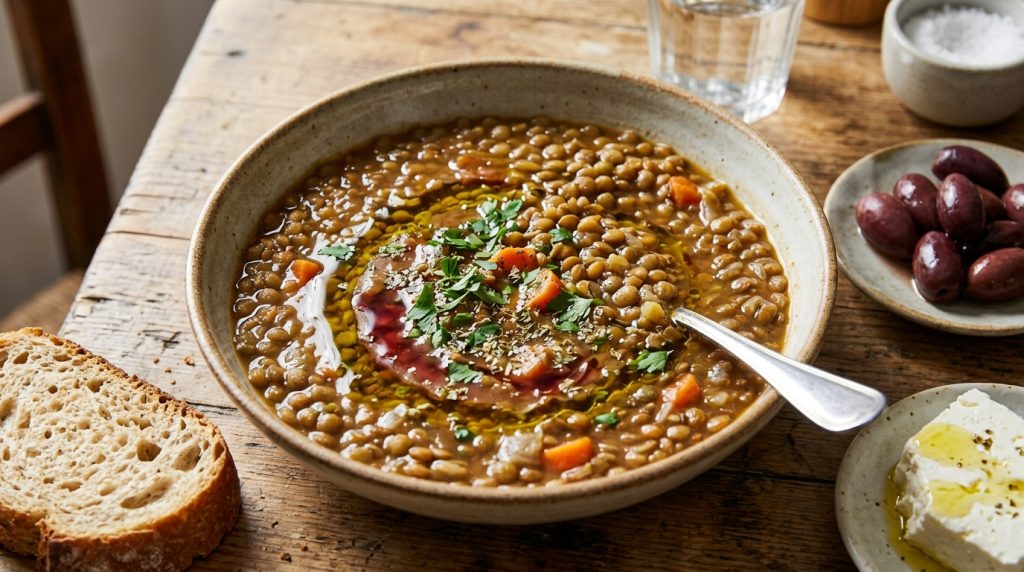
Humble, quick, and ready in under an hour. The splash of vinegar at the end is what makes it taste authentic.
Serves 5 | Prep 10 min | Cook 40 min
Ingredients
- 1½ cups brown lentils, rinsed
- 3 tbsp olive oil
- 1 onion, 1 carrot, 3 garlic cloves
- 2 tbsp tomato paste
- 2 bay leaves, 1 tsp oregano
- 6 cups water
- 1-2 tbsp red wine vinegar, salt, pepper
Method
- Sauté onion and carrot in oil until soft, then add garlic and tomato paste.
- Add lentils, bay leaves, oregano and water. Simmer 30-35 minutes.
- Season, stir in the vinegar just before serving, and finish with a drizzle of olive oil.
Nutrition (per serving, approx.): 300 kcal | 17 g protein | 40 g carbs | 15 g fiber | 8 g fat
3. Moroccan Harira (Lentil, Chickpea and Tomato Soup)
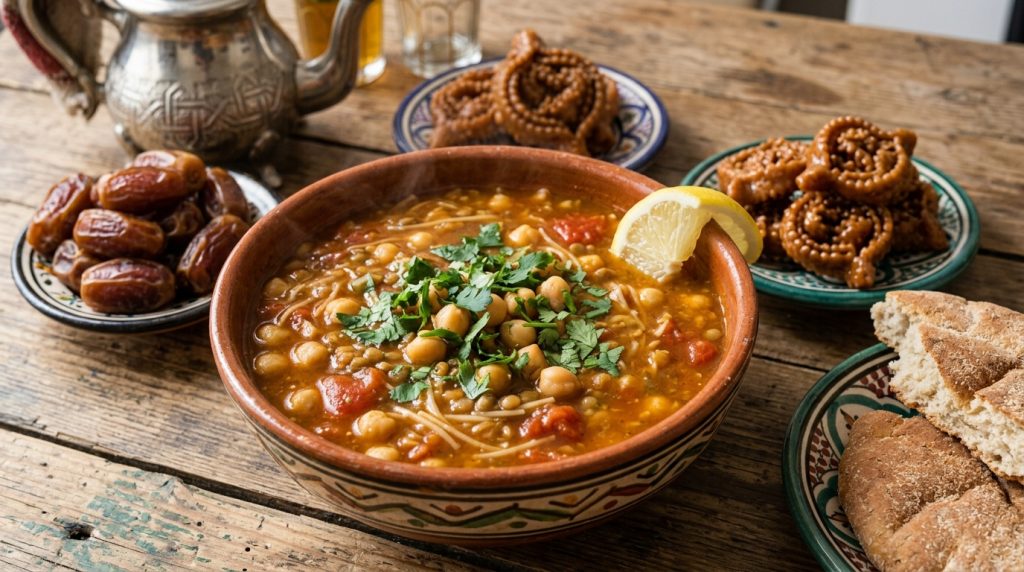
Fragrant with cinnamon, ginger and turmeric. Traditionally served with dates or figs on the side.
Serves 6 | Prep 15 min | Cook 45 min
Ingredients
- 2 tbsp olive oil
- 1 onion and 2 celery stalks, diced
- 1 tsp each turmeric, ground ginger, cinnamon; ½ tsp paprika
- 1 can (400 g) chopped tomatoes
- ½ cup brown lentils
- 1 can chickpeas, drained
- 6 cups vegetable broth
- ⅓ cup vermicelli or broken thin pasta
- Juice of 1 lemon, fresh cilantro and parsley
Method
- Soften onion and celery in oil for 5 minutes. Add the spices and stir for 30 seconds.
- Add tomatoes, lentils and broth. Simmer 25 minutes.
- Add chickpeas and vermicelli, then cook 8-10 minutes more.
- Finish with lemon juice and fresh herbs.
Nutrition (per serving, approx.): 290 kcal | 13 g protein | 42 g carbs | 10 g fiber | 7 g fat
4. Ribollita (Tuscan Bread and Bean Soup)
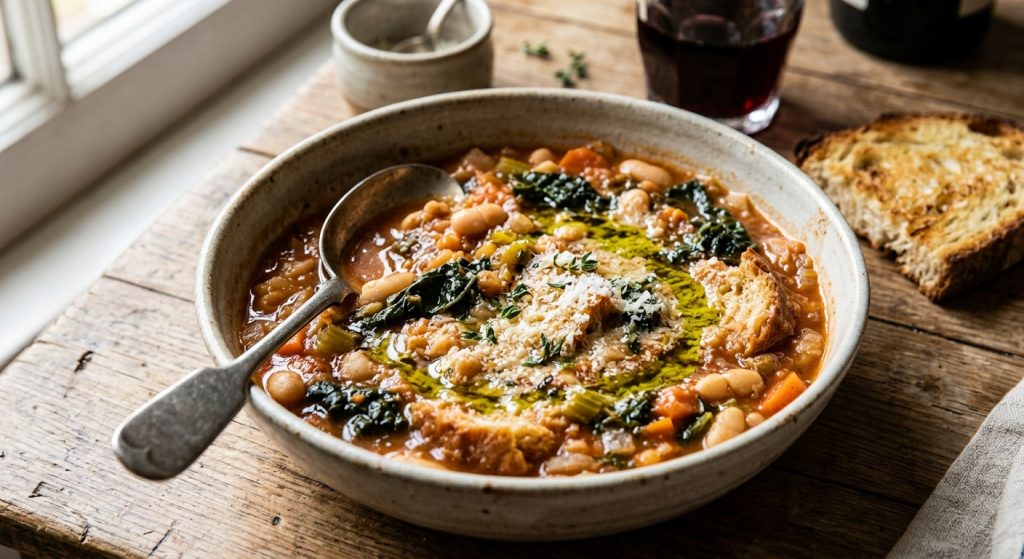
The name means “reboiled,” because it tastes even better the next day. Stale bread thickens it naturally.
Serves 6 | Prep 15 min | Cook 50 min
Ingredients
- 3 tbsp olive oil
- 1 onion, 1 carrot, 1 celery stalk, 3 garlic cloves
- 1 bunch lacinato (Tuscan) kale, chopped
- 1 can (400 g) chopped tomatoes
- 2 cans cannellini beans, drained
- 5 cups vegetable broth
- 1 sprig rosemary or 1 tsp thyme
- 4 slices stale rustic bread, cubed
- Parmesan rind (optional)
Method
- Sauté onion, carrot, celery and garlic in oil for 8 minutes.
- Add kale, tomatoes, beans, broth, herbs and the Parmesan rind. Simmer 30 minutes.
- Stir in the bread and cook 10 minutes until the soup turns thick and almost stew-like.
- Rest 10 minutes, then serve with a drizzle of olive oil.
Nutrition (per serving, approx.): 340 kcal | 14 g protein | 46 g carbs | 11 g fiber | 11 g fat
5. Avgolemono (Greek Egg-Lemon Chicken Soup)
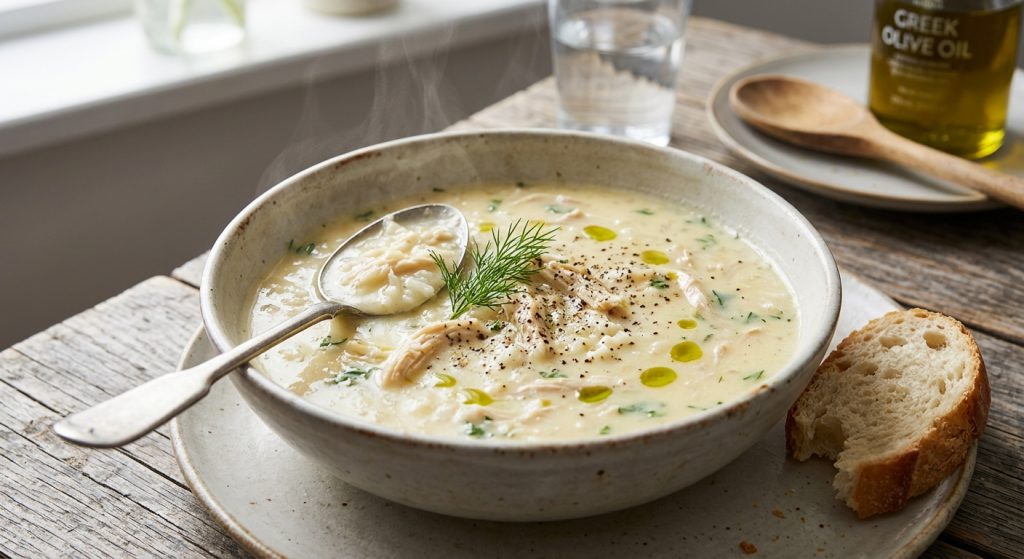
Silky and bright, with no cream involved. The eggs and lemon create the texture.
Serves 4 | Prep 10 min | Cook 30 min
Ingredients
- 6 cups chicken broth
- ½ cup short-grain rice
- 2 cups shredded cooked chicken
- 3 eggs
- Juice of 2 lemons
- Fresh dill, salt, black pepper
Method
- Simmer the rice in the broth for 15 minutes. Add the chicken and warm through.
- Whisk the eggs until frothy, then whisk in the lemon juice.
- Slowly ladle 1½ cups of hot broth into the egg mixture, whisking constantly, to temper it.
- Pour the mixture back into the pot off the heat, stirring gently. Do not boil, or the eggs will curdle.
- Season and serve with dill.
Nutrition (per serving, approx.): 290 kcal | 26 g protein | 25 g carbs | 1 g fiber | 8 g fat
6. Greek Fish Soup (Psarosoupa)
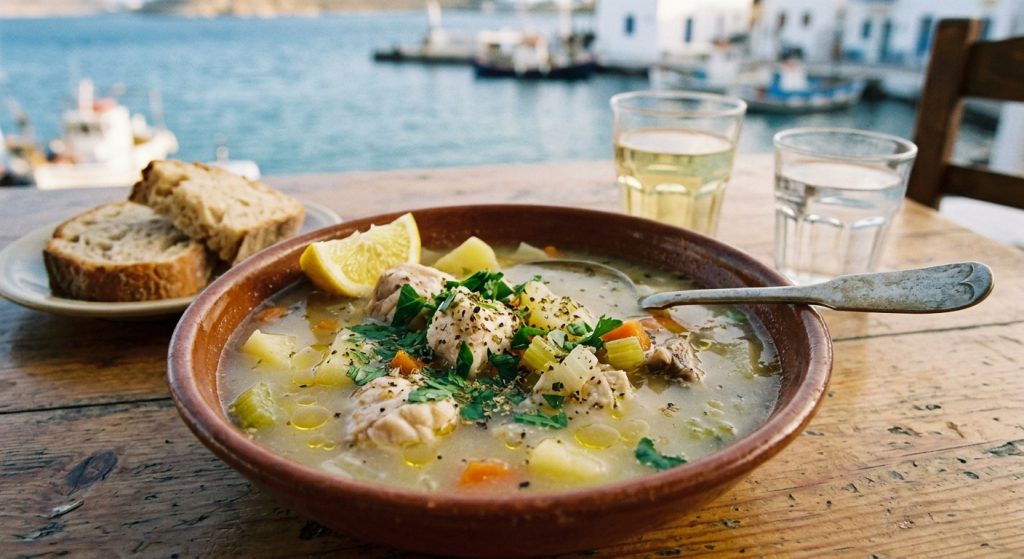
Light, clean and gently lemony. This one is for the days you want something warming but not heavy.
Serves 4 | Prep 15 min | Cook 35 min
Ingredients
- 3 tbsp olive oil
- 1 onion, 2 carrots, 2 celery stalks, 2 potatoes, all diced
- 6 cups water or fish stock
- 500 g firm white fish (cod, sea bream or hake), cut into chunks
- Juice of 2 lemons
- Salt, pepper, fresh parsley
Method
- Cook the vegetables in a pot with the oil for 5 minutes, then add the water. Simmer 20 minutes until tender.
- Add the fish and cook gently 6-8 minutes until it flakes.
- Finish with lemon juice, parsley and an extra drizzle of oil.
Nutrition (per serving, approx.): 330 kcal | 28 g protein | 24 g carbs | 4 g fiber | 13 g fat
Nutrition Notes
- Legumes are the backbone. Beans, lentils and chickpeas supply fiber and plant protein, which is why these soups keep you full.
- Olive oil does the heavy lifting. It’s mostly monounsaturated fat, and adding some at the end preserves its flavor.
- Sodium depends on your broth. Choose low-sodium broth and season at the end.
- Vitamin C matters. Lemon juice added after cooking keeps more of its brightness and helps your body absorb iron from beans and lentils.
- All values are estimates. They shift with brands, portion size and ingredient swaps.
Tips for Better Mediterranean Soup
- Build flavor first. Cook your onion, carrot and celery slowly before adding liquid.
- Use good olive oil twice. Cook with it, then finish with it.
- Add acid last. Lemon or vinegar at the end wakes everything up.
- Mash a few beans. Crush a ladleful against the pot wall for a creamy body without cream.
- Cook beans without salt at the start. Salt later, once they’re soft.
- Make extra. Bean and lentil soups freeze well for up to 3 months. Leave out the pasta, bread and egg-lemon mixture, and add those fresh when reheating.
Frequently Asked Questions
What is the most popular Mediterranean soup?
Greek fasolada is often considered the most iconic, while minestrone and harira are just as beloved in Italy and Morocco.
Are Mediterranean soups healthy?
They’re built around vegetables, legumes, olive oil and herbs, which makes them high in fiber and unsaturated fats. They fit well into a Mediterranean-style eating pattern.
Can I make these soups vegan?
Yes. Fasolada, fakes, harira and ribollita are vegan if you skip the Parmesan rind and use vegetable broth.
Can I use canned beans instead of dried?
Yes. Use drained canned beans and cut the simmering time to 20-30 minutes. Flavor will be slightly lighter.
How long do these soups keep?
Refrigerate in an airtight container for 4-5 days. Bean and lentil soups usually taste better on day two.
What do you serve with Mediterranean soup?
Crusty bread, a simple tomato-cucumber salad, olives, or a wedge of feta.
Final Thought
You don’t need rare ingredients to make a Mediterranean winter soup. You need a good pot, patient simmering, and a little olive oil and lemon at the right moment. Start with one of these six, and you’ll have a reliable recipe you can come back to all season.
Disclaimer: This article is for general information only, and nutrition values are estimates. Consult a doctor or registered dietitian for personal dietary or medical advice.