
There’s a reason French chefs treat the omelet as a test of skill rather than a throwaway breakfast. Done right, it’s soft, barely set in the middle, rolled instead of folded, and completely free of the browned, rubbery edges you get from rushing the pan. Add a handful of fresh herbs and you’ve got a dish that’s elegant enough for a weekend brunch table and simple enough for a Tuesday morning before work.
This version keeps everything keto-friendly — no milk, no flour, no sugar tricks hiding in the pan — while staying true to the classic French technique. If you’ve only ever made the diner-style folded omelet, this one is going to feel like a different dish entirely.
Why This Recipe Works
The French method skips the browning altogether. You keep the heat low to medium, keep the eggs moving with a spatula almost the entire time, and pull the pan off the heat while the center is still slightly glossy. Carryover heat finishes the cooking. The result is a pale, tender omelet that’s soft enough to fold in thirds or roll into a log, rather than the flat, well-done omelet most people grew up eating.
Herbs go in at the very end (or get folded inside), so they stay bright green and fragrant instead of wilting into the eggs during cooking.
Ingredients
- 3 large eggs
- 1 tablespoon butter (unsalted)
- 1 tablespoon heavy cream (optional, for extra silkiness — omit for stricter keto macros)
- 1 tablespoon fresh chives, finely chopped
- 1 tablespoon fresh parsley, finely chopped
- 1 teaspoon fresh tarragon or thyme leaves (optional, adds a classic French note)
- Salt and freshly ground black pepper, to taste
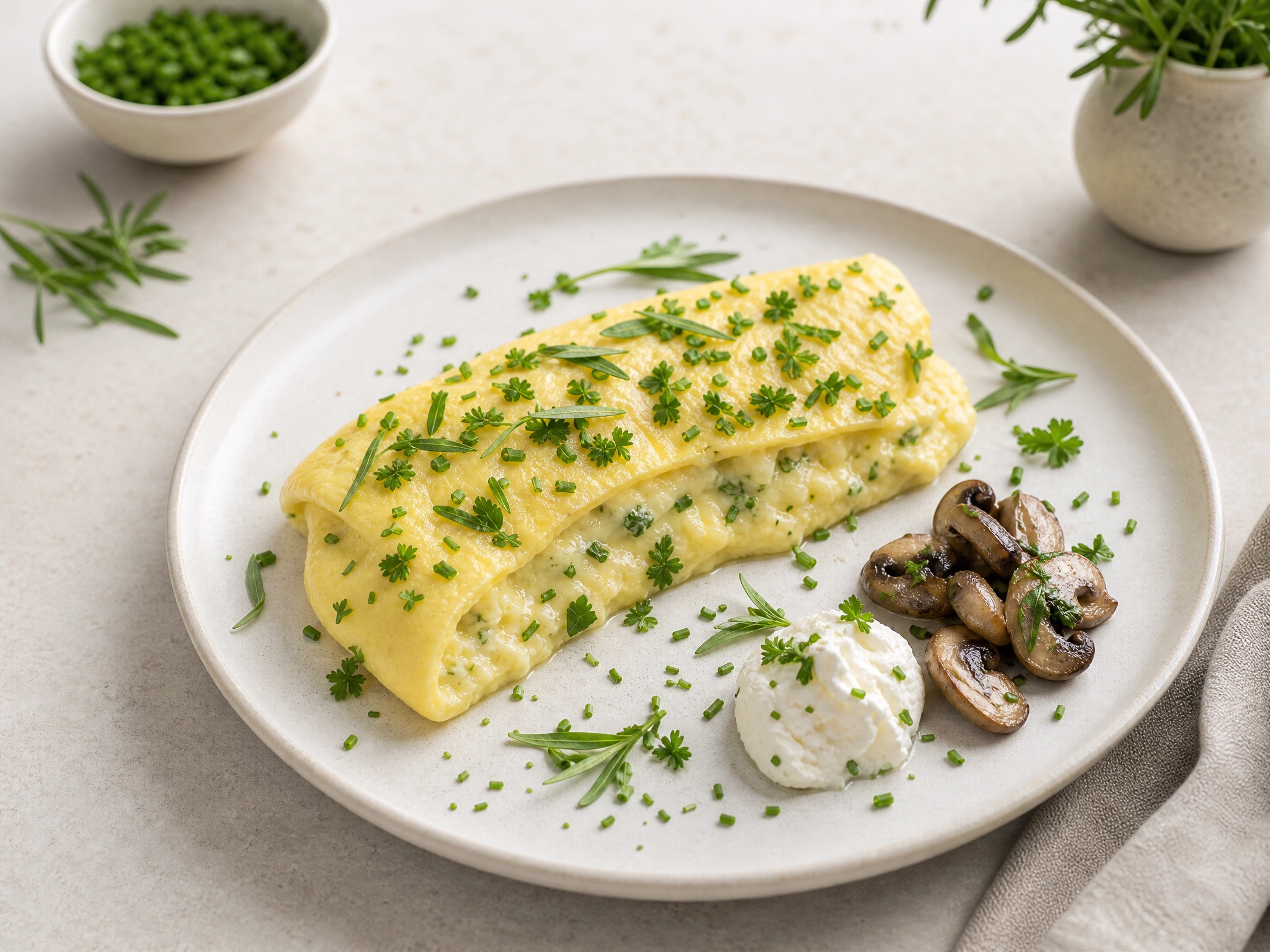
- Optional filling: 2 tablespoons soft goat cheese, shredded gruyère, or sautéed mushrooms
Step-by-Step Instructions
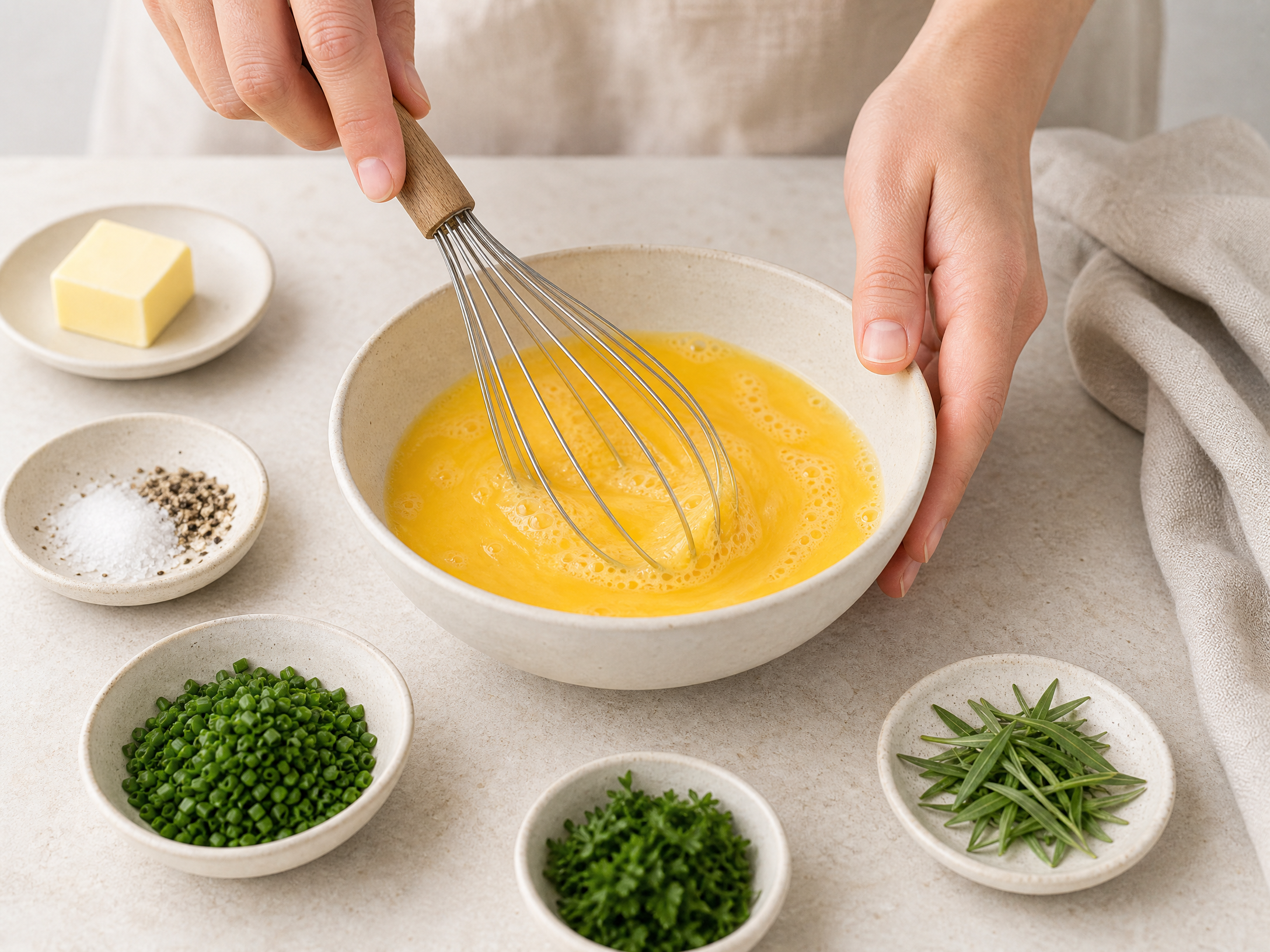
- Whisk the eggs. Crack the eggs into a bowl, add the cream if using, and whisk vigorously for about 30 seconds until the mixture is uniform and slightly frothy. Season with salt and pepper.
- Heat the pan. Set a nonstick 8-inch skillet over medium-low heat and add the butter. Swirl until it’s fully melted and just beginning to foam, but not browning.
- Add the eggs. Pour in the eggs all at once. Let them sit for about 5 seconds, then start stirring gently with a rubber spatula in small circles, keeping the pan moving.
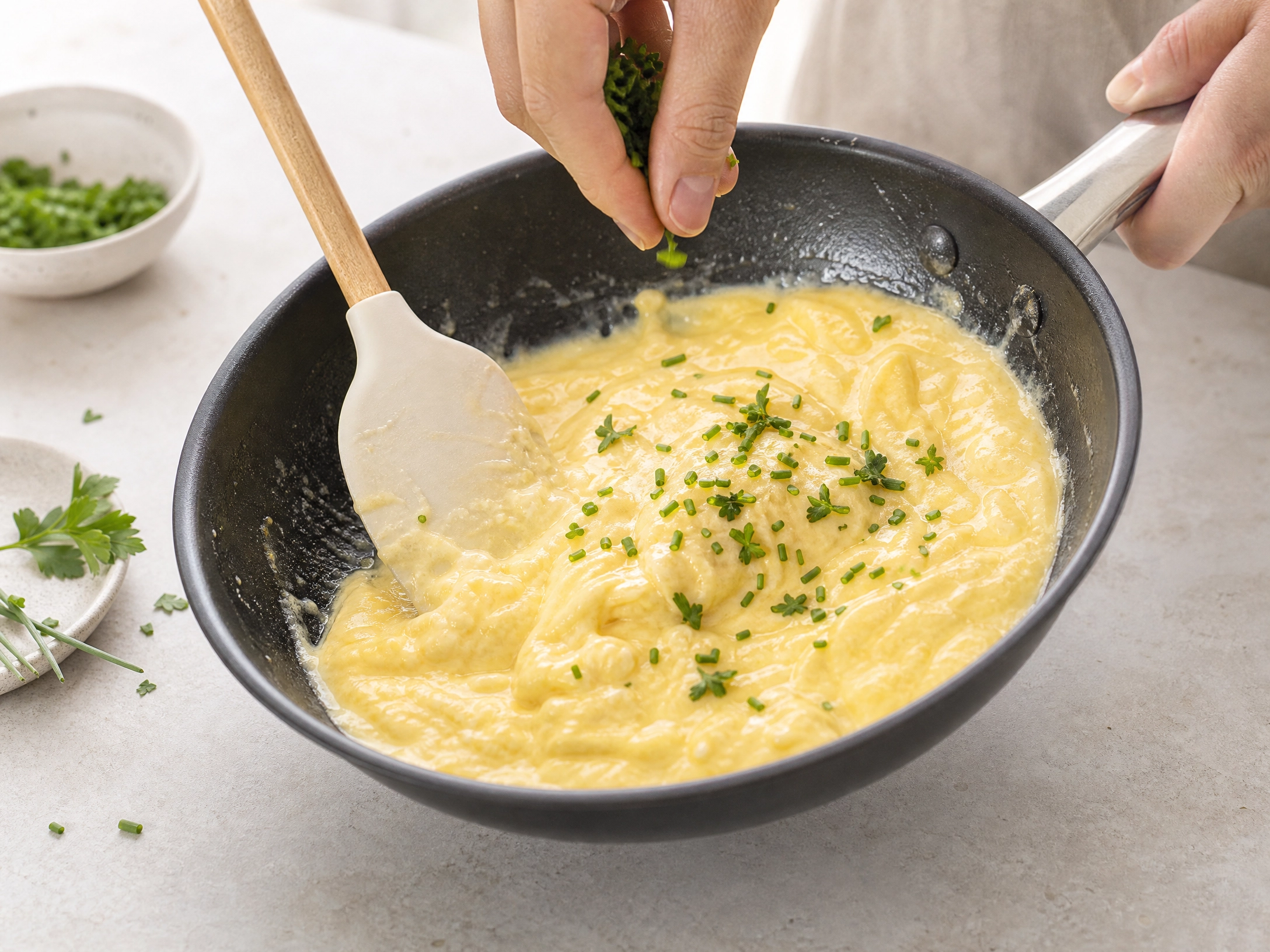
- Keep the curds small. Continue stirring and shaking the pan for 60–90 seconds. You’re aiming for small, soft curds rather than large scrambled chunks. Tilt the pan and use the spatula to push cooked egg toward the center, letting uncooked egg flow to the edges.
- Add the herbs and filling. When the eggs are mostly set but still slightly wet on top, sprinkle the chives, parsley, and tarragon evenly across the surface. Add cheese or mushrooms now if using.
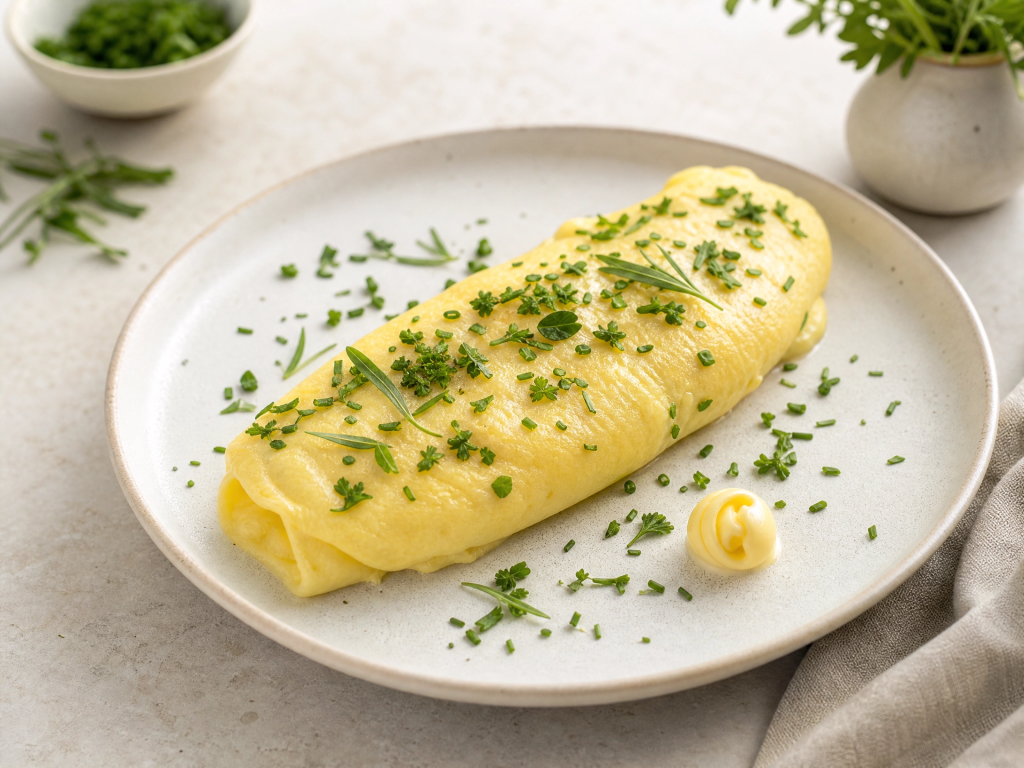
- Fold and roll. Tilt the pan and use the spatula to fold one-third of the omelet over the center, then roll or fold it again onto the plate so the seam sits underneath.
- Serve immediately. The center should still be soft and creamy, not fully firm. Add a light sprinkle of extra herbs on top before serving.
Nutrition Profile
Per serving (1 omelet, made with 3 eggs, butter, and cream; values are estimates and will vary based on exact ingredients and fillings used)
| Nutrient | Amount |
|---|---|
| Calories | ~310 kcal |
| Protein | 19 g |
| Total Fat | 26 g |
| Saturated Fat | 12 g |
| Carbohydrates | 2 g |
| Fiber | 0.5 g |
| Net Carbs | ~1.5 g |
| Sugar | 1 g |
Adding cheese or mushrooms will shift these numbers slightly — expect roughly 40–60 extra calories and 2–4 g more protein per tablespoon of shredded cheese.
Nutrition Notes
- Fat-forward, protein-rich: This omelet fits comfortably into a standard keto macro split (roughly 70–75% fat, 20–25% protein, under 5% carbs), making it a solid anchor for a keto breakfast without any adjustment.
- Choline and B vitamins: Eggs are one of the most concentrated food sources of choline, which supports liver and brain function, plus a good spread of B12, B2, and B5.
- Low glycemic impact: With under 2 grams of net carbs, this dish has essentially no effect on blood sugar, which is one reason egg-based breakfasts are common on low-carb and diabetic-friendly meal plans.
- Herbs add more than flavor: Parsley and chives contribute small amounts of vitamin K and antioxidants without adding any meaningful carbs, so there’s no nutritional trade-off to using them generously.
Tips for a Perfect French Omelet
- Use a nonstick or well-seasoned pan. This is non-negotiable — a sticky pan will tear the omelet apart before you can fold it.
- Keep the heat lower than you think you need. Medium-low is usually right. High heat browns the eggs, which is exactly what the French style avoids.
- Don’t walk away. The whole cook time is under two minutes once the eggs hit the pan — this isn’t a recipe to multitask through.
- Pull it off the heat slightly early. The center will keep cooking from residual heat as you fold it. If it looks fully set in the pan, it’s already overcooked.
- Chop herbs finely. Large herb pieces can tear the delicate egg as you fold, so a fine chop keeps the roll intact.
- Warm your plate. A cold plate can firm up the omelet too fast right as you’re plating it, so a slightly warmed plate helps it hold that soft, custardy texture.
Keto French Omelet with Herbs (Ready in 10 Minutes)
Ingredients
Equipment
Method
- Crack the eggs into a bowl, add the cream if using, and whisk vigorously for about 30 seconds until the mixture is uniform and slightly frothy. Season with salt and pepper.
- Set a nonstick 8-inch skillet over medium-low heat and add the butter. Swirl until it’s fully melted and just beginning to foam, but not browning.
- Add the eggs. Pour in the eggs all at once. Let them sit for about 5 seconds, then start stirring gently with a rubber spatula in small circles, keeping the pan moving.
- Continue stirring and shaking the pan for 60–90 seconds. You’re aiming for small, soft curds rather than large scrambled chunks. Tilt the pan and use the spatula to push cooked egg toward the center, letting uncooked egg flow to the edges.
- When the eggs are mostly set but still slightly wet on top, sprinkle the chives, parsley, and tarragon evenly across the surface. Add cheese or mushrooms now if using.
- Fold and roll. Tilt the pan and use the spatula to fold one-third of the omelet over the center, then roll or fold it again onto the plate so the seam sits underneath.
- The center should still be soft and creamy, not fully firm. Add a light sprinkle of extra herbs on top before serving.
Video
Notes
Recipe Variations
- Cheese and herb: Fold in a tablespoon of soft goat cheese or gruyère along with the herbs for a richer, more indulgent version.
- Smoked salmon and dill: Swap tarragon for fresh dill and add a few strips of smoked salmon just before folding.
- Mushroom and thyme: Sauté sliced mushrooms in butter beforehand and use fresh thyme instead of parsley for an earthier flavor.
- Herb butter finish: Rub a small pat of butter mixed with chopped herbs over the top of the finished omelet for extra richness and shine.
FAQ
Is a French omelet keto-friendly? Yes. A classic French omelet made with just eggs, butter, and herbs has under 2 grams of net carbs per serving, which makes it one of the easiest keto breakfasts to build a meal plan around.
What’s the difference between a French omelet and a regular omelet? A French omelet is cooked over lower heat, kept pale (no browning), and made with small, soft curds that get rolled rather than folded flat. A standard American-style omelet is usually cooked hotter, browned slightly, and folded in half over a filling.
Can I make this omelet dairy-free? Yes. Swap the butter for ghee or a neutral oil like avocado oil, and skip the heavy cream. The texture will be slightly less silky but still soft and tender.
Why is my omelet rubbery? Rubbery texture almost always comes from cooking over heat that’s too high or leaving the eggs in the pan too long. Lower the heat, and pull the omelet off the stove while the center still looks slightly underdone.
Can I prep the herbs and eggs ahead of time? You can chop the herbs and store them in the fridge a day ahead. It’s best to whisk the eggs fresh right before cooking, since pre-whisked eggs can lose some volume and turn out denser.
How many eggs should I use per omelet? Two to three eggs is the standard size for a single-serving French omelet. Going much higher than three makes it harder to keep the curds small and control the cook evenly.
Final Thoughts
Once you get the hang of the low-and-slow technique, this Keto French Omelet with Herbs turns into one of those recipes you can make on autopilot — ten minutes, one pan, and barely any cleanup. It’s soft, herby, satisfying, and fits neatly into a keto routine without feeling like a “diet” breakfast at all. Try it plain first to get the technique down, then start playing with the variations above once you’re comfortable with the fold.