
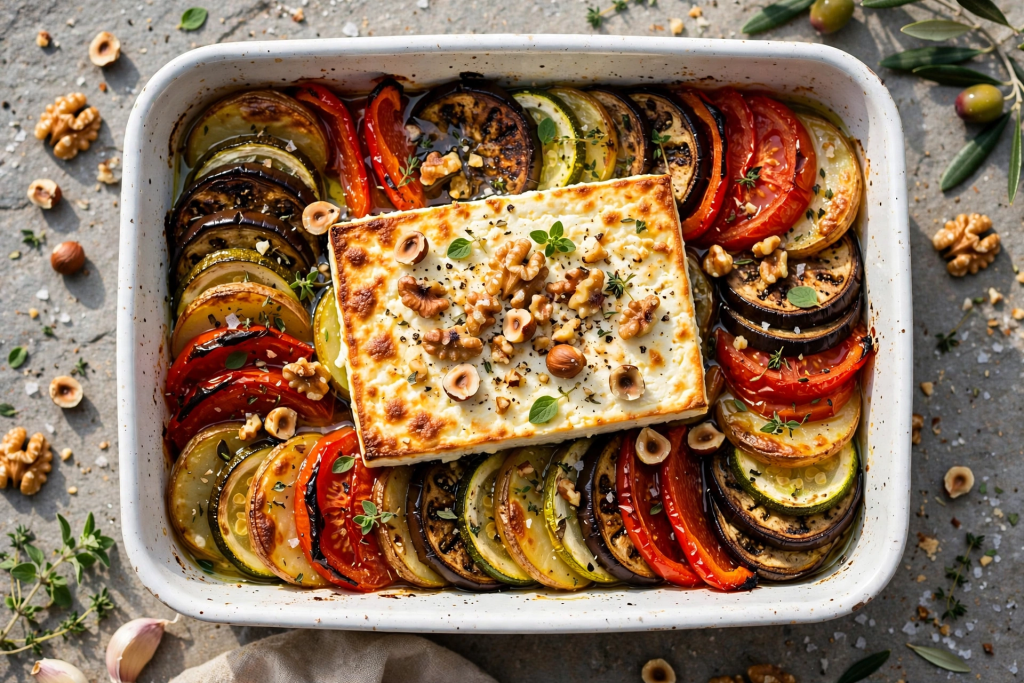
A deeply roasted Greek vegetable bake finished with a bright, garlicky lemon-and-olive-oil drizzle.
There is a particular moment at the end of summer when the garden seems to give you everything at once: glossy eggplants, tender zucchini, sun-warm tomatoes, sweet peppers, and potatoes still dusty from the earth. This is the moment for briam, Greece’s wonderfully unfussy answer to the question, “What can I do with all these vegetables?”
The classic dish is humble, generous, and designed for a leisurely table. Vegetables are layered or tumbled into a baking dish, dressed with olive oil and herbs, and roasted until their edges caramelize and their centers become silky. In Epirus, where mountain cooking favors food that is rustic, substantial, and intensely flavored, briam feels especially at home.
This version uses a simple finishing trick: ladolemono, a whisked sauce of olive oil and lemon. Rather than baking every drop of brightness into the dish, we reserve the ladolemono for the end. The result is a tray of sweet, savory vegetables with a fresh, almost electric finish—the kind of contrast that makes a familiar recipe taste newly addictive.
Why this brined dish works
The secret is not complicated technique. It is timing. Potatoes need a head start, while zucchini, eggplant, peppers, onions, and tomatoes need less time. Roasting the vegetables in stages keeps the potatoes from staying firm and prevents the softer vegetables from collapsing into sauce before they have had a chance to brown.
The other secret is restraint. The vegetables need enough olive oil to roast, but not so much that they stew. Give them room in the pan, season them in layers, and let the oven do the work. Then add the ladolemono only after roasting, when its lemony fragrance can remain vivid.
The method in one sentence: Roast the vegetables until caramelized, then finish them with a sharp, silky ladolemono while they are still hot.
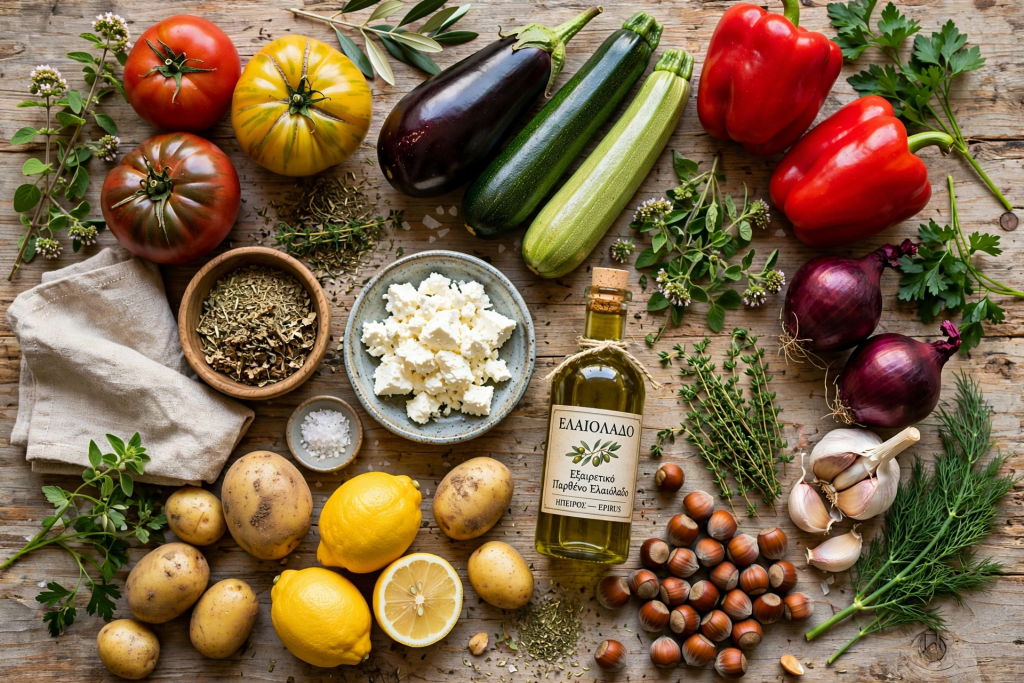
Epirus Late-Summer Briam with Ladolemono
Serves: 4–6
Prep time: 25 minutes
Roasting time: 65–80 minutes
Difficulty: Easy
Ingredients
For the briam
•700 g potatoes, peeled or scrubbed and cut into 2 cm chunks
•2 medium zucchini, cut into thick half-moons
•1 large eggplant, cut into 2 cm cubes
•2 red or green bell peppers, sliced into wide strips
•2 medium red onions, cut into wedges
•4 ripe tomatoes, cut into large chunks, or 400 g canned chopped tomatoes
•5 garlic cloves, lightly crushed
•100 ml extra-virgin olive oil, plus more if needed
•2 teaspoons dried oregano
•1 teaspoon dried thyme or savory
•1 teaspoon sweet paprika
•1½ teaspoons fine sea salt, plus more to taste
•Freshly ground black pepper
•A small handful of fresh parsley, roughly chopped
For the ladolemono
•60 ml extra-virgin olive oil
•45 ml fresh lemon juice, plus more to taste
•1 small garlic clove, finely grated or mashed into a paste
•1 teaspoon dried oregano
•½ teaspoon honey, optional
•A pinch of sea salt
•Freshly ground black pepper
Method
1. Heat the oven and season the potatoes
Heat the oven to 220°C. Line a large rimmed baking tray or use a wide, shallow roasting dish. The vegetables should sit in a mostly single layer; if they are crowded, divide them between two trays.
Add the potatoes to the tray with half of the olive oil, half of the salt, the paprika, and a generous amount of black pepper. Toss thoroughly, then spread them cut-side down where possible. Roast for 25 minutes, turning once halfway through.
2. Add the remaining vegetables
While the potatoes roast, combine the zucchini, eggplant, peppers, onions, tomatoes, and crushed garlic in a large bowl. Add the remaining olive oil, oregano, thyme or savory, and the remaining salt. Toss until everything is lightly coated.
When the potatoes have begun to color, add the vegetables to the tray. Spread them out so that hot air can circulate around the pieces. Return the tray to the oven and roast for 35–45 minutes, stirring once or twice, until the vegetables are tender and browned at the edges.
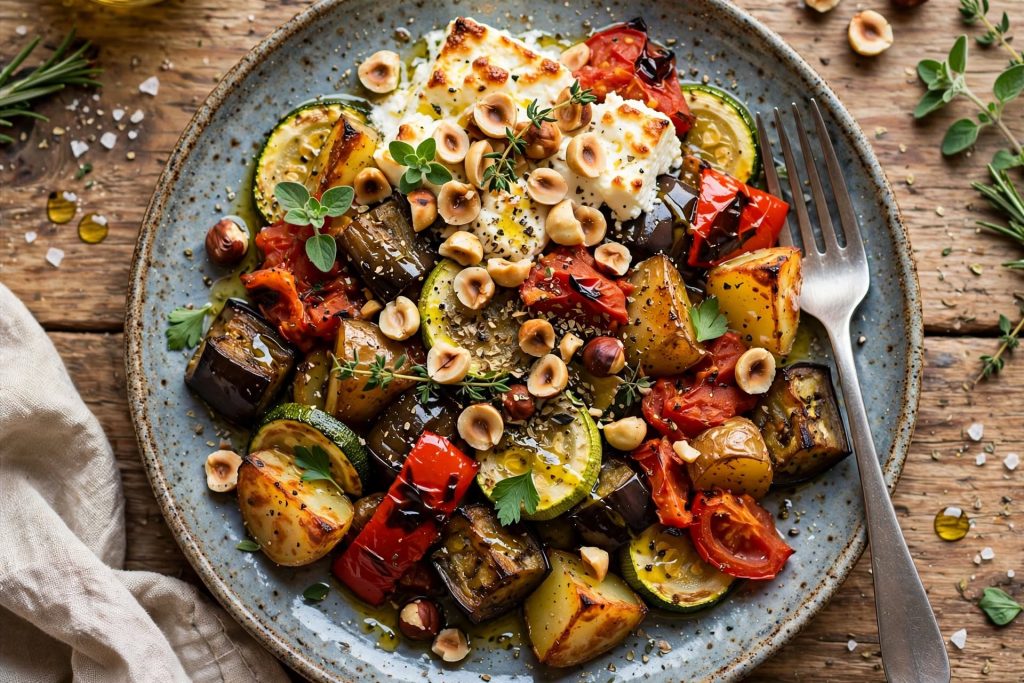
The tomatoes should slump into the corners of the pan, creating pockets of rich, savory juices. The eggplant should be soft and creamy, and the potatoes should offer a crisp edge before giving way to a fluffy center.
3. Make the ladolemono
While the briam finishes roasting, whisk the olive oil, lemon juice, garlic, oregano, salt, and pepper in a small bowl. Add the honey if your lemons are particularly sharp. The sauce does not need to become perfectly emulsified; a loose, glossy dressing is exactly right.
Taste it. It should be bright and assertive because the warm vegetables will soften its impact. Add another squeeze of lemon or a pinch of salt if needed.
4. Finish while hot
Remove the briam from the oven and let it stand for 5 minutes. Drizzle over most of the ladolemono and scatter with parsley. Toss gently at the edges of the pan, taking care not to break up the potatoes and eggplant.
Serve with the remaining ladolemono at the table. The warm vegetables will absorb some of the sauce, while the extra drizzle keeps every bite fragrant and lively.
The viral ladolemono method, explained
Ladolemono simply means olive oil and lemon, but its effect is much greater than the effort it requires. The key is to add it in two stages: a little over the hot briam so it can soak into the roasted vegetables, and the rest just before serving so its fresh citrus character remains intact.
For an even silkier sauce, mash the garlic with the salt before whisking. This creates a paste that disperses evenly through the oil and lemon. If you prefer a gentler garlic flavor, leave the dressing to stand for 10 minutes before serving; the sharpness will mellow.
The sauce is also wonderfully adaptable. Add a pinch of chili flakes for heat, a little grated lemon zest for perfume, or a spoonful of Greek yogurt for a creamy variation. Keep the basic proportions in mind: approximately four parts olive oil to three parts lemon juice, adjusted according to the acidity of your lemons.
Practical tips for the best briam
Use a wide pan. A crowded dish traps steam and gives you soft, pale vegetables. More surface area means more caramelization.
Cut according to cooking time. Keep potatoes slightly smaller and zucchini slightly thicker. Uniform pieces are less important than giving each vegetable the size it needs to finish at the same time.
Salt in layers. Salting the potatoes and the later-added vegetables separately gives the dish a more even flavor than adding all the salt at the end.
Do not fear dark edges. Deeply browned corners are where the sweetness lives. Watch for burning, but welcome serious color.
Rest briefly, not indefinitely. Five minutes allows the juices to settle while the briam remains hot enough to absorb the ladolemono.
What to serve with briam
Briam can be the centerpiece of a vegetarian meal or a generous side dish alongside grilled fish, roast chicken, or lamb. For a simple Greek-inspired spread, serve it with crusty bread, briny olives, feta, and a bowl of thick yogurt.
It is particularly good at room temperature, which makes it ideal for a late-summer lunch. The flavors become rounder as they rest, and the lemon dressing keeps the vegetables from tasting heavy. If you have leftovers, spoon them over toasted bread, fold them into an omelet, or warm them gently and top them with a fried egg.
Make-ahead and storage
The vegetables can be cut and seasoned several hours ahead, then kept covered in the refrigerator. Bring them close to room temperature before roasting so the tray does not lose too much heat.
Store leftover briam in an airtight container for up to four days. Keep extra ladolemono separately and drizzle it over the vegetables after reheating. A hot oven or air fryer will restore the roasted edges more effectively than a microwave, although the microwave is perfectly acceptable for a quick lunch.

Frequently asked questions
Can I use only one type of tomato?
Yes. Fresh tomatoes give the dish a juicy, summery character, while canned tomatoes create a deeper sauce. If using especially watery fresh tomatoes, roast the briam in a wide pan so excess moisture can evaporate.
Do I need to salt the eggplant first?
Modern eggplants are generally mild and do not require pre-salting. If your eggplant is large or particularly bitter, salt the cubes for 20 minutes, rinse, and dry thoroughly before roasting.
Can I add feta?
Absolutely. Crumble feta over the briam after it comes out of the oven, or serve it alongside so each person can add as much as they like. Add it after roasting rather than before, so it stays creamy and does not burn.
Can I make the dish without potatoes?
Yes, though it will roast more quickly. Begin checking after 35–40 minutes once all the vegetables are in the pan. You can also replace the potatoes with chickpeas for extra protein and texture.
A final squeeze of summer
The best briam is not precious. It is the dish you make when the market basket is full, and dinner needs to be both comforting and easy. The vegetables soften into one another, the olive oil carries their sweetness, and the late addition of ladolemono cuts through everything with a clean flash of lemon.
Serve it warm, serve it at room temperature, and keep plenty of bread nearby. This is the sort of recipe that asks very little of you—and gives back an entire late-summer table.
Recipe note: For the most dramatic finish, bring the ladolemono to the table in a small pitcher and let everyone add an extra spoonful over their own serving.