
Quick Answer: How Do You Make Authentic Greek Tzatziki?
Authentic Greek Tzatziki Sauce Recipe is made by mixing thick strained yogurt with grated, well-squeezed cucumber, crushed garlic, extra virgin olive oil, a splash of vinegar and salt. Chill it for at least 1 hour. The key is removing the cucumber water so the sauce stays thick.
Prep time: 10 minutes | Chill time: 1 hour | Makes: about 2½ cups (10 servings) | Difficulty: Easy
What Is Tzatziki?
Tzatziki (say it tza-TZEE-kee) is Greece’s best-known yogurt sauce. It’s cool, tangy and packed with garlic. You’ll find it on the table at almost every taverna, next to grilled meat, fried vegetables and warm bread.
Its close relatives run across the region. Turkey has cacık, and Cyprus has talatouri, which is usually made with mint. The Greek version is thicker and richer, and it leans hard on garlic and olive oil.
Why This Recipe Works
- Thick yogurt only. Regular yogurt turns runny within minutes.
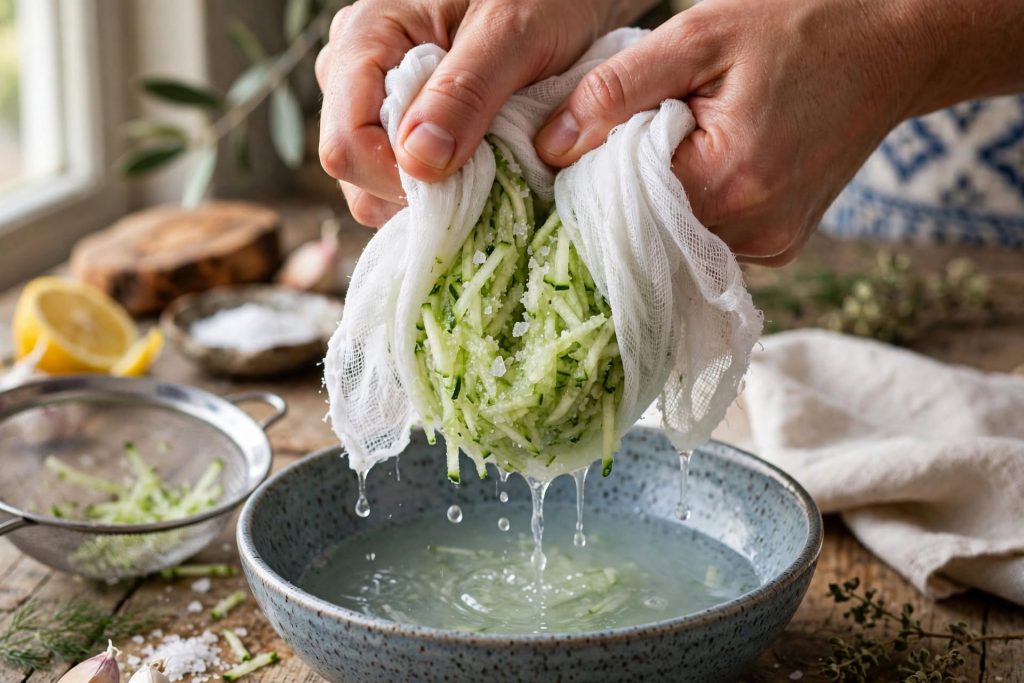
- Salted, squeezed cucumber. This is the step most home cooks skip, and it makes the biggest difference.
- Garlic crushed to a paste. It blends smoothly and avoids harsh raw bites.
- Real olive oil. It gives the sauce that silky taverna finish.
Ingredients
- 2 cups (500 g) full-fat strained Greek yogurt
- 1 medium cucumber (about 250 g)
- 3 garlic cloves (use 4 if you love it bold)
- 2 tablespoons extra virgin olive oil, plus more for drizzling
- 1 tablespoon red or white wine vinegar
- ½ teaspoon fine sea salt, plus a pinch for the cucumber
- Optional: 1 tablespoon finely chopped fresh dill
A note on dill: Some Greek households add a little, and many never do. Both are fine. Leave it out for the most traditional taste, or add it for a fresher, greener flavor.
Instructions
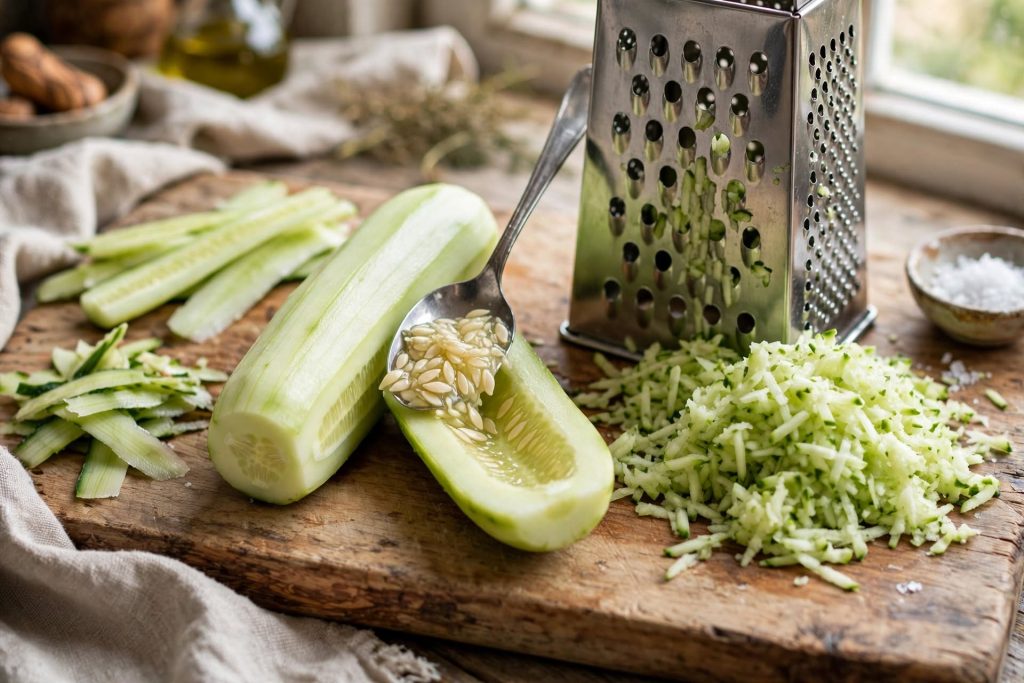
- Prep the cucumber. Peel it, cut it in half lengthwise and scoop out the seeds with a spoon. Grate it on the large holes of a box grater.
- Salt and rest. Toss the grated cucumber with a pinch of salt. Leave it in a sieve for 10 minutes.
- Squeeze hard. Wrap the cucumber in a clean kitchen towel or cheesecloth and squeeze until almost dry. You should get a surprising amount of water out.
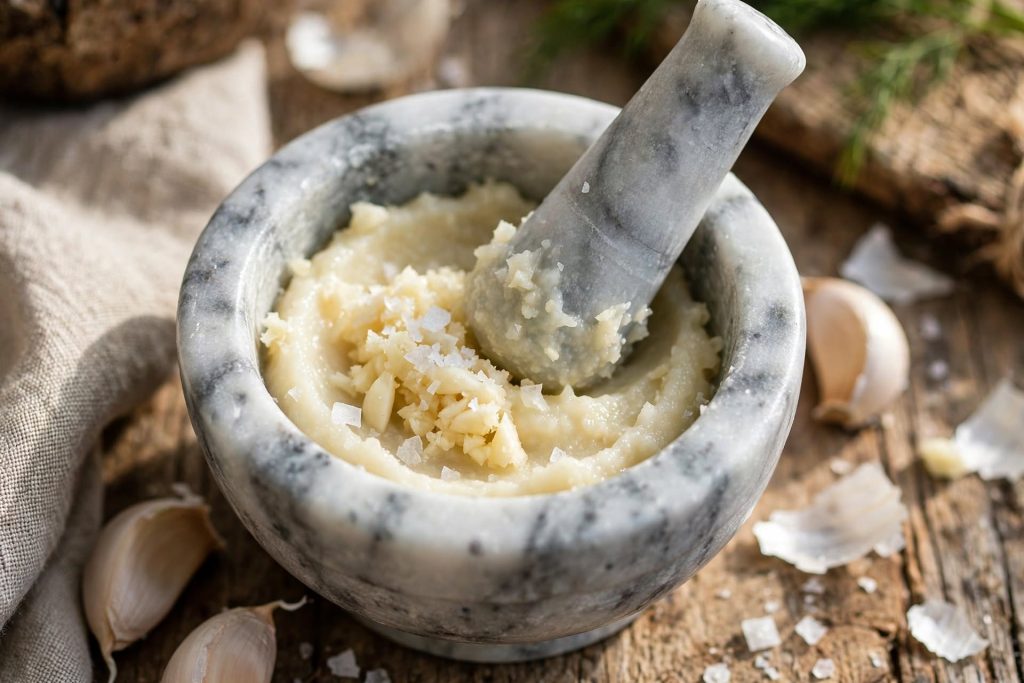
- Make the garlic paste. Crush the garlic with a pinch of salt using a mortar and pestle, or the flat of a knife, until it becomes a smooth paste.
- Mix. Add the yogurt to a bowl. Stir in the garlic paste, olive oil and vinegar, then fold in the cucumber (and dill, if using).
- Taste and adjust. Add salt, a little more garlic or a splash more vinegar if needed.
- Chill. Cover and refrigerate for at least 1 hour so the flavors settle and the garlic mellows.
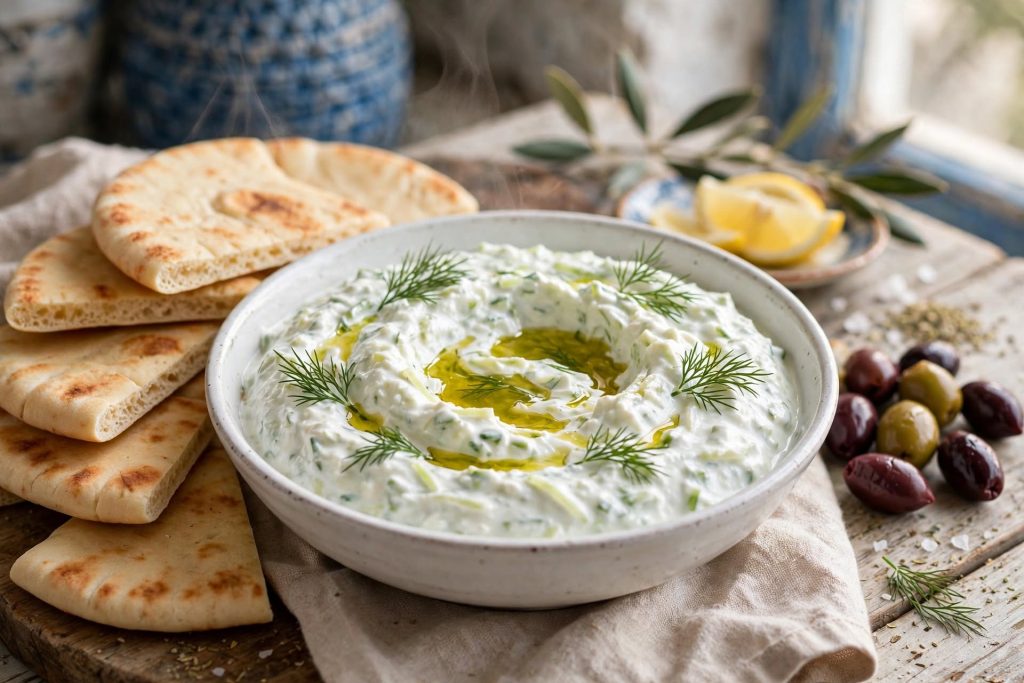
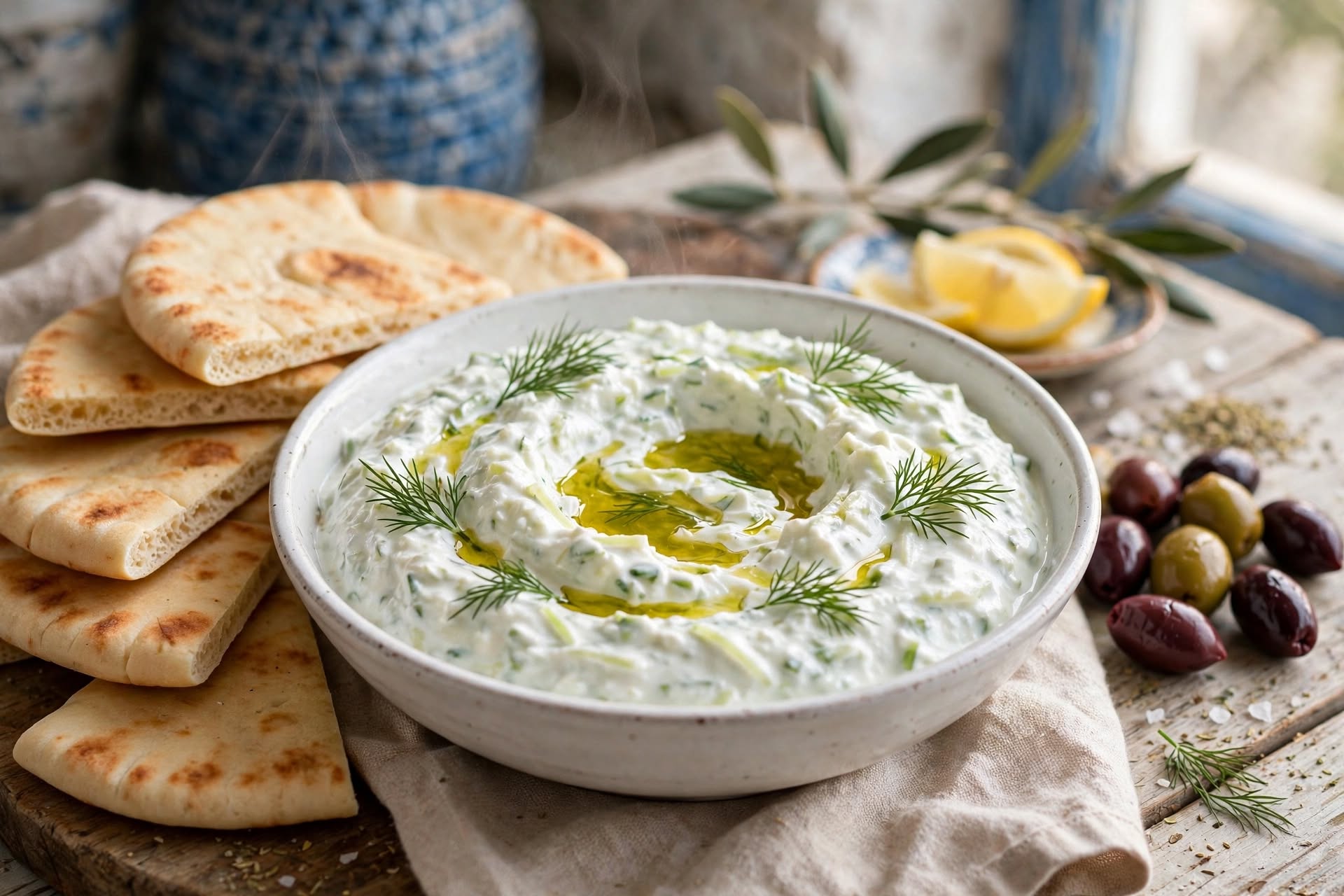
- Serve. Spoon into a bowl, make a small well in the center and drizzle with olive oil.
Nutrition Profile (Per Serving)
Serving size: about ¼ cup (60 g). Values are approximate and based on full-fat strained yogurt.
| Nutrient | Amount |
|---|---|
| Calories | ~75 kcal |
| Protein | ~4.5 g |
| Total fat | ~5.5 g |
| Saturated fat | ~2 g |
| Carbohydrates | ~2.5 g |
| Fiber | ~0.2 g |
| Sugars (natural) | ~2 g |
| Sodium | ~140 mg |
| Calcium | ~50 mg |
Nutrition Notes
- Good protein for a sauce. Strained yogurt carries most of the protein here, so a few spoonfuls add up quickly.
- Low in carbs. The sauce fits low-carb and keto-style eating, since cucumber adds very little sugar.
- Healthy fats. Extra virgin olive oil brings monounsaturated fats that fit a Mediterranean-style diet.
- Probiotic potential. Yogurt with live and active cultures can support gut health. Chilling doesn’t harm the cultures, but store-bought yogurt varies, so check the label.
- Watch the salt. Most of the sodium comes from what you add. Start with less and adjust at the end.
- Lighter option. Swap in 2% yogurt to cut calories and saturated fat. The sauce will be a little less rich.
- Gluten-free as written. Serve it with gluten-free bread or vegetables if needed.
Tips for the Best Tzatziki
- Squeeze twice. After the first squeeze, press the cucumber again in a fresh part of the towel.
- Choose full-fat yogurt. It gives the creamiest texture and rounder flavor.
- Go easy on vinegar. One tablespoon brightens the sauce without making it sharp.
- Make it ahead. It tastes better after a few hours, and the garlic gets more balanced overnight.
- Add oil last. Stirring it in gently keeps the texture smooth.
- Fixing watery tzatziki: Stir in a few extra spoonfuls of strained yogurt, or drain the sauce in a fine sieve for 20 minutes.
- Too garlicky? Add a little more yogurt and a small drizzle of olive oil, then rest it for 30 minutes.
- Use a fresh cucumber. Soft, old cucumbers turn the sauce mushy.
How to Serve Tzatziki
- With chicken, pork or lamb souvlaki
- Inside gyros and pita wraps
- As a meze dip with warm pita, olives and feta
- Alongside crispy fried zucchini or eggplant
- On roasted potatoes and grilled vegetables
- As a cooling spread for burgers and meatballs
Storage
Keep tzatziki in an airtight container in the fridge for up to 3 days. A little liquid may collect on top, so stir it back in or pour it off. I don’t recommend freezing it, because the yogurt separates and the cucumber turns watery once thawed.
Frequently Asked Questions
What is tzatziki made of?
Traditional tzatziki contains strained yogurt, cucumber, garlic, olive oil, vinegar and salt. Some cooks add dill or mint.
Is tzatziki healthy?
Yes, in normal portions. It’s high in protein, low in carbs and made with olive oil. Sodium can add up if you’re generous with salt, so season carefully.
Why is my tzatziki watery?
The most common cause is cucumber that wasn’t squeezed dry. Regular (unstrained) yogurt is the second most common cause. Salt the cucumber, squeeze it hard and use thick yogurt.
Does authentic tzatziki have dill?
It varies. Many Greek cooks skip it and rely on garlic and olive oil. Others add a little. Both versions are accepted at home.
Can I use lemon juice instead of vinegar?
Yes. Lemon gives a fresher, brighter taste, while vinegar is the more classic choice in many Greek kitchens.
What is the best yogurt for tzatziki?
Thick, strained, full-fat Greek yogurt. Traditional recipes sometimes use sheep’s or goat’s milk yogurt, which you can use if you find it.
Can I make tzatziki without garlic?
You can, but it won’t taste like classic tzatziki. For a milder version, use one small clove and let it rest longer.
How long does homemade tzatziki last?
Up to 3 days in the fridge in a sealed container.
Is tzatziki gluten-free?
Yes, as long as your yogurt has no added thickeners containing gluten and you serve it with gluten-free dippers.
Can I make tzatziki vegan?
Yes. Use a thick, unsweetened plant-based yogurt (coconut or soy work well) and follow the same steps. The taste will differ from dairy tzatziki.
traditional Greek tzatziki recipe
Ingredients
Method
- Peel it, cut it in half lengthwise and scoop out the seeds with a spoon. Grate it on the large holes of a box grater.
- Toss the grated cucumber with a pinch of salt. Leave it in a sieve for 10 minutes.
- Wrap the cucumber in a clean kitchen towel or cheesecloth and squeeze until almost dry. You should get a surprising amount of water out.
- Crush the garlic with a pinch of salt using a mortar and pestle, or the flat of a knife, until it becomes a smooth paste.
- Add the yogurt to a bowl. Stir in the garlic paste, olive oil and vinegar, then fold in the cucumber (and dill, if using).
- Taste and adjust.
- Add salt, a little more garlic or a splash more vinegar if needed.
- Cover and refrigerate for at least 1 hour so the flavors settle and the garlic mellows.
- Serve. Spoon into a bowl, make a small well in the center and drizzle with olive oil.
Video
Notes
Final Thought
Great tzatziki doesn’t need a long ingredient list, just a few good things treated with care: thick yogurt, dry cucumber, fresh garlic and good olive oil. Make it once the Greek way, and you’ll never reach for the store-bought tub again. Serve it cold, drizzle generously and share it.
Disclaimer
Nutrition values are estimates and will vary by brand and portion size. This content is for general information only and isn’t medical or dietary advice, so consult a qualified professional for specific health needs.