
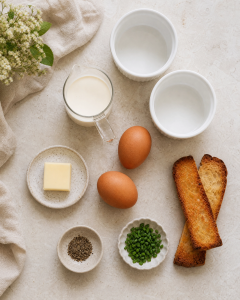
If you’ve never had oeufs cocotte, picture this: a whole egg cracked into a little ramekin, nestled into a pool of cream, baked just until the white sets and the yolk stays soft and jammy in the middle. That’s it. That’s the whole trick. It’s one of those dishes the French have quietly perfected for centuries, and it’s stupidly easy to make at home once you know the rhythm.
I started making these on lazy Sunday mornings when I wanted something that felt special but didn’t want to stand at the stove flipping anything. A ramekin, an egg, a splash of cream, into the oven, done. No whisking, no flipping, no watching a pan like a hawk. You just wait for the timer.
This post walks through everything: what oeufs cocotte actually are, how to make the classic version, the nutrition breakdown, tips I’ve picked up from trial and error, and answers to the questions people always ask me about this dish.
What Are Oeufs Cocotte, Exactly?
“Oeufs cocotte” translates loosely to “eggs in a little pot.” The “cocotte” refers to the small ramekin or cocotte dish the egg is baked in, traditionally set inside a water bath (a bain-marie) so the heat surrounds it gently instead of blasting it directly. That gentle heat gives you a silky, barely set white and a yolk that’s still runny when you dip your toast in.
It’s a bistro classic in France, often served as a light starter or a weekend breakfast, and it’s endlessly adaptable. Cream and chives are the traditional base, but you’ll see versions with mushrooms, spinach, ham, cheese, or tomato tucked into the bottom of the ramekin before the egg goes in.
The Classic Recipe
Serves: 2 Prep time: 5 minutes Cook time: 10–12 minutes
Ingredients
- 2 large eggs
- 4 tablespoons heavy cream (or crème fraîche), divided
- 1 teaspoon unsalted butter, for greasing
- Salt and freshly cracked black pepper, to taste
- 1 tablespoon fresh chives, finely chopped
- Optional: a pinch of grated nutmeg, a spoonful of sautéed mushrooms, or a few strands of grated Gruyère
Instructions
- Preheat your oven to 375°F (190°C). Butter two ramekins generously, right up the sides.
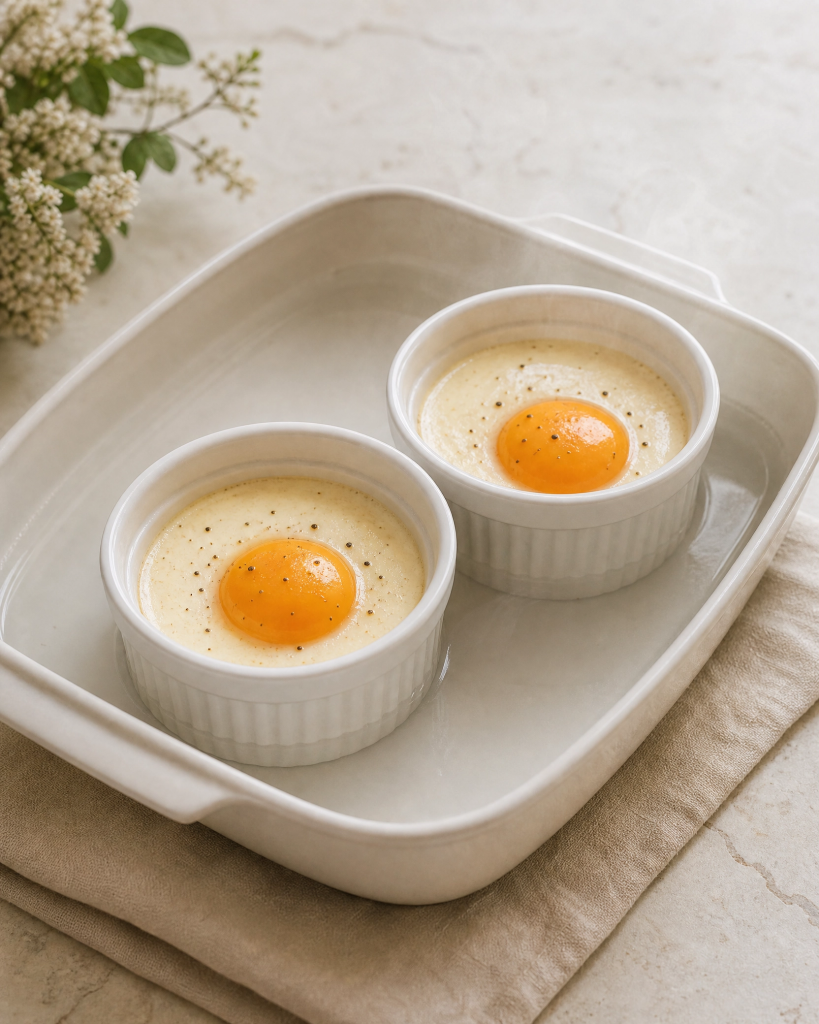
- Spoon 1 tablespoon of cream into the bottom of each ramekin.
- Crack one egg into each ramekin on top of the cream, being careful not to break the yolk.
- Spoon the remaining cream over the top of each egg.
- Season with salt, pepper, and a pinch of nutmeg if using.
- Place the ramekins in a baking dish and pour hot water into the dish until it reaches about halfway up the sides of the ramekins (this is your bain-marie).
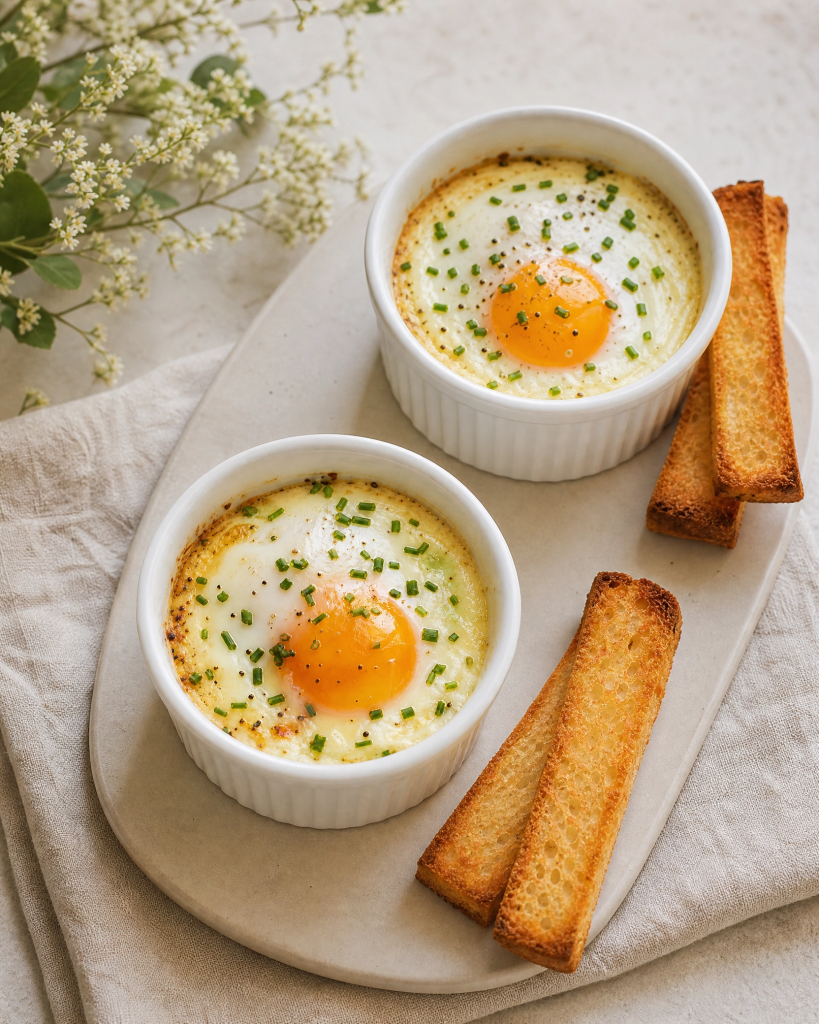
- Bake for 10–12 minutes, until the whites are just set but the yolks still jiggle slightly in the center.
- Remove carefully, sprinkle with fresh chives, and serve immediately with crusty bread or toast soldiers for dipping.
Nutrition Profile
Per serving (1 ramekin, using heavy cream), approximate values:
| Nutrient | Amount |
|---|---|
| Calories | 180 kcal |
| Protein | 7 g |
| Total Fat | 16 g |
| Saturated Fat | 8 g |
| Carbohydrates | 1 g |
| Fiber | 0 g |
| Sugar | 0 g |
| Cholesterol | 210 mg |
| Sodium | 140 mg |
Values are estimates and will shift depending on the cream you use and any add-ins like cheese or mushrooms.
Nutrition Note
Eggs are one of the most complete protein sources you can eat, carrying all nine essential amino acids along with choline, which supports brain and liver function, plus a solid dose of vitamin B12, selenium, and riboflavin. The yolk is where most of the nutrients live, including lutein and zeaxanthin, two compounds linked to eye health. The cream in this recipe adds richness and calories but relatively little else nutritionally, so if you’re watching saturated fat, swapping in a lighter cream, whole milk, or even a spoonful of Greek yogurt cuts the fat down noticeably while still keeping the texture creamy. Pairing your oeufs cocotte with vegetables in the base, like spinach or mushrooms, is an easy way to stretch the fiber and micronutrient content of the dish.
Tips for Perfect Oeufs Cocotte
- Don’t skip the water bath. It’s the single biggest factor in getting a soft-set white instead of a rubbery one. The water buffers the direct oven heat.
- Room-temperature eggs bake more evenly. Take them out of the fridge 15–20 minutes before you start.
- Watch the clock, not just the timer. Ovens vary, so start checking at the 9-minute mark. You want the whites opaque and just set, with the yolk still soft.
- Add-ins go in first. If you’re using mushrooms, spinach, or ham, sauté or cook them beforehand and layer them at the bottom of the ramekin before the cream and egg.
- Let them rest for a minute before serving. The residual heat finishes the eggs gently and makes them easier to handle.
- Serve immediately. Oeufs cocotte don’t hold well; the yolk keeps cooking from residual heat the longer it sits.
- Use ramekins with straight sides, around 4 ounces, so the egg cooks evenly instead of spreading thin.
Frequently Asked Questions
Can I make oeufs cocotte without a water bath? You can, but the texture won’t be quite the same. Without the water bath, the direct oven heat tends to cook the egg white faster and can leave it a bit rubbery around the edges before the yolk catches up. If you’re in a hurry, it still works; just keep a close eye on it and pull it a minute or two earlier.
What can I use instead of heavy cream? Crème fraîche, whole milk, half-and-half, or even a spoonful of Greek yogurt all work. Each changes the richness slightly. Milk gives a lighter result, while crème fraîche adds a subtle tang.
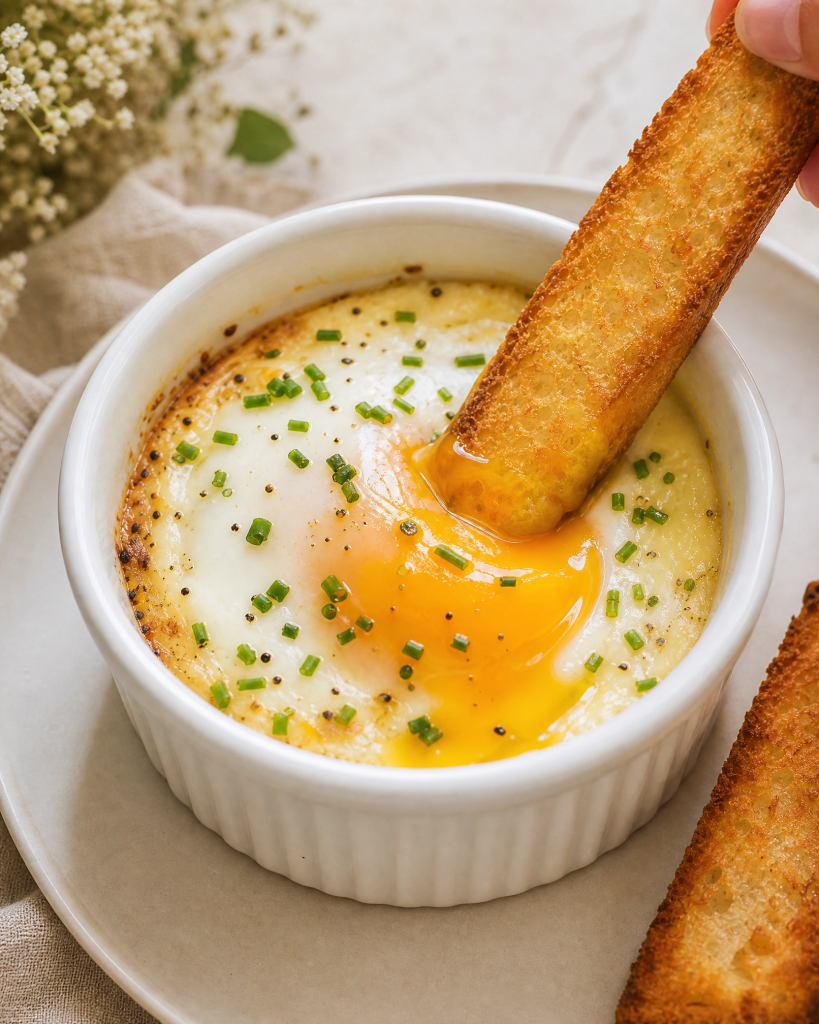
How do I know when they’re done? The whites should look fully set and opaque, with no jiggle. The yolk should still have a slight wobble in the center if you want it runny. If you prefer a firmer yolk, leave it in for an extra 2–3 minutes.
Can I prep these ahead of time? You can prep the ramekins with cream and any add-ins ahead of time and refrigerate them, then add the raw egg and bake right before serving. Baked oeufs cocotte themselves are best eaten fresh, since reheating overcooks the yolk.
What should I serve with oeufs cocotte? Crusty baguette or toasted sourdough cut into strips (mignardises, sometimes called soldiers) is the classic pairing for dipping. A simple green salad on the side turns it into a light lunch.
Are oeufs cocotte the same as shirred eggs? They’re closely related. Shirred eggs is the American term for baked eggs in a dish, sometimes with cream and toppings, similar in method to oeufs cocotte, though oeufs cocotte specifically implies the French style and often the bain-marie technique.
Can I double the recipe for a crowd? Yes, it scales easily. Just keep each egg in its own ramekin rather than combining multiple eggs in one dish, since that changes the cook time and makes it harder to get an even set.
Disclaimer
This recipe is provided for general informational and culinary purposes only. Nutritional values listed above are estimates calculated from standard ingredient data and will vary based on specific brands, portion sizes, and any substitutions or add-ins you use; they should not be treated as precise or relied upon for medical or clinical purposes. This post is not a substitute for professional nutritional or medical advice, and anyone with food allergies, egg or dairy sensitivities, dietary restrictions, or health conditions such as diabetes or high cholesterol should consult a doctor or registered dietitian before making this recipe a regular part of their diet. As with any dish containing eggs, use pasteurized eggs where possible and ensure eggs are cooked to a safe internal temperature to reduce the risk of foodborne illness, particularly for pregnant individuals, young children, older adults, or anyone with a compromised immune system. Cooking times may vary depending on your oven, ramekin size, and egg size, so always check for visual doneness rather than relying on time alone.
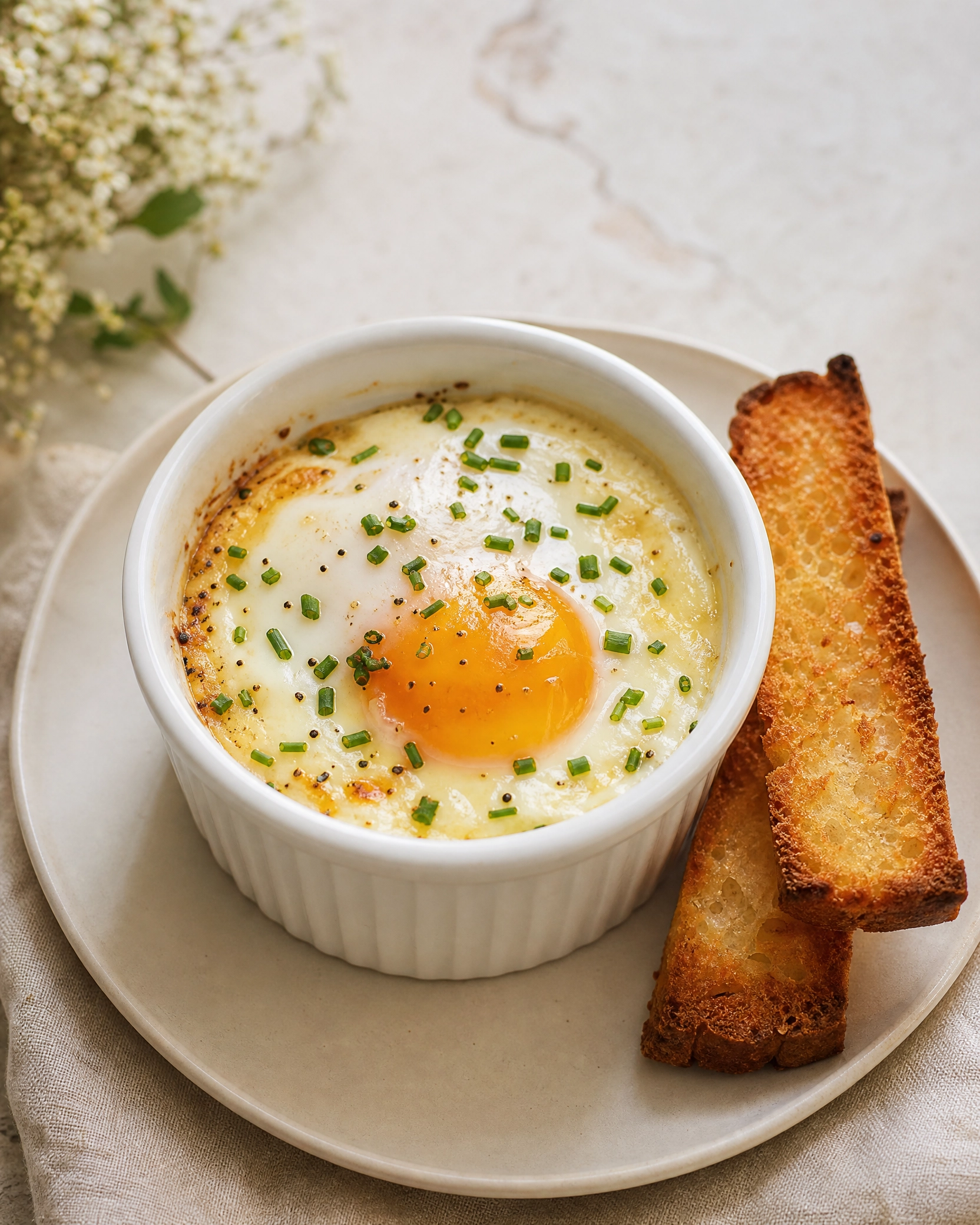
French-Style Baked Eggs (Oeufs Cocotte): A Cozy 15-Minute Classic
Ingredients
Equipment
Method
- Preheat your oven to 375°F (190°C). Butter two ramekins generously, right up the sides.
- Spoon 1 tablespoon of cream into the bottom of each ramekin.
- Crack one egg into each ramekin on top of the cream, being careful not to break the yolk.
- Spoon the remaining cream over the top of each egg.
- Season with salt, pepper, and a pinch of nutmeg if using.
- Place the ramekins in a baking dish and pour hot water into the dish until it reaches about halfway up the sides of the ramekins (this is your bain-marie).
- Bake for 10–12 minutes, until the whites are just set but the yolks still jiggle slightly in the center.
- Remove carefully, sprinkle with fresh chives, and serve immediately with crusty bread or toast soldiers for dipping.
Video
Notes
Final Thought
Oeufs cocotte prove that a dish doesn’t need a long ingredient list or a complicated technique to feel special. It’s just an egg, a little cream, and gentle heat, but the result is something you’d happily order at a bistro. Once you’ve got the basic method down, it’s an easy one to make your own, so don’t be afraid to experiment with whatever you have in the fridge. A ramekin of these on a quiet morning, with something to dip into that yolk, is hard to beat.