
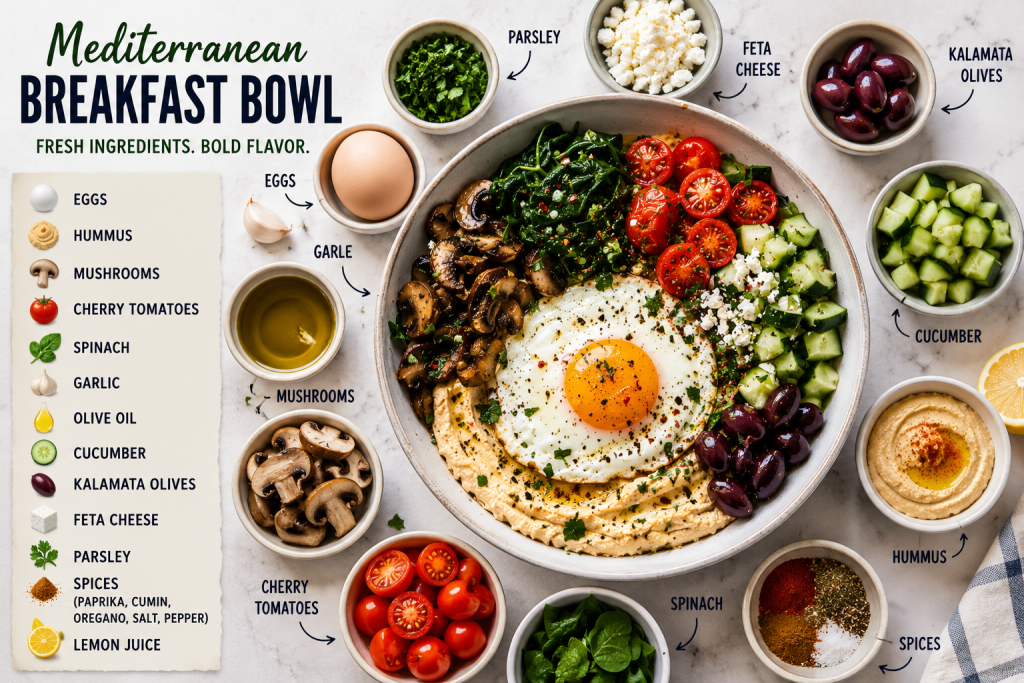
Are you tired of starting every morning with the same toast, cereal, or sweet breakfast that leaves you hungry again an hour later? Then it might be time to bring some Mediterranean flavor to your breakfast table. These Mediterranean breakfast bowls are colorful, savory, creamy, fresh, and satisfying, combining ingredients such as eggs, hummus, sautéed vegetables, olive oil, herbs, and bold spices in one seriously delicious bowl. The inspiration for this breakfast style comes from the simple idea of building a meal around protein, vegetables, legumes, and flavorful Mediterranean ingredients, but this version gives you more flexibility to create a breakfast that suits your own kitchen and tastes. A recently updated Mediterranean breakfast bowl recipe from The Mediterranean Dish follows a similar foundation, using eggs, hummus, mushrooms, tomatoes, spinach, olive oil, and Mediterranean seasonings, showing just how quickly a filling, savory breakfast can come together. The source lists approximately 246.5 calories, 15.8 grams of protein, and 7 grams of fiber per serving, making this combination a useful example of how several simple ingredients can create a more substantial morning meal.
The real beauty of a breakfast bowl is that there is no single rigid formula. Think of it like building your own edible mosaic: every ingredient brings a different color, texture, and flavor, but together they create something much more interesting than the individual pieces. Creamy hummus can meet juicy tomatoes, earthy mushrooms can sit beside soft eggs, peppery greens can add freshness, and olives or herbs can provide that final burst of Mediterranean character. You can prepare many of the ingredients ahead, use leftover roasted vegetables, switch the eggs for tofu, or change the spices depending on what is sitting in your refrigerator. That makes this recipe ideal not only for food lovers but also for busy people who want a healthy breakfast without spending an hour cooking. Let’s build a breakfast bowl that feels fresh enough for a weekend brunch yet practical enough for a rushed Tuesday morning.
Why Mediterranean Breakfast Bowls Are the Perfect Way to Start the Day
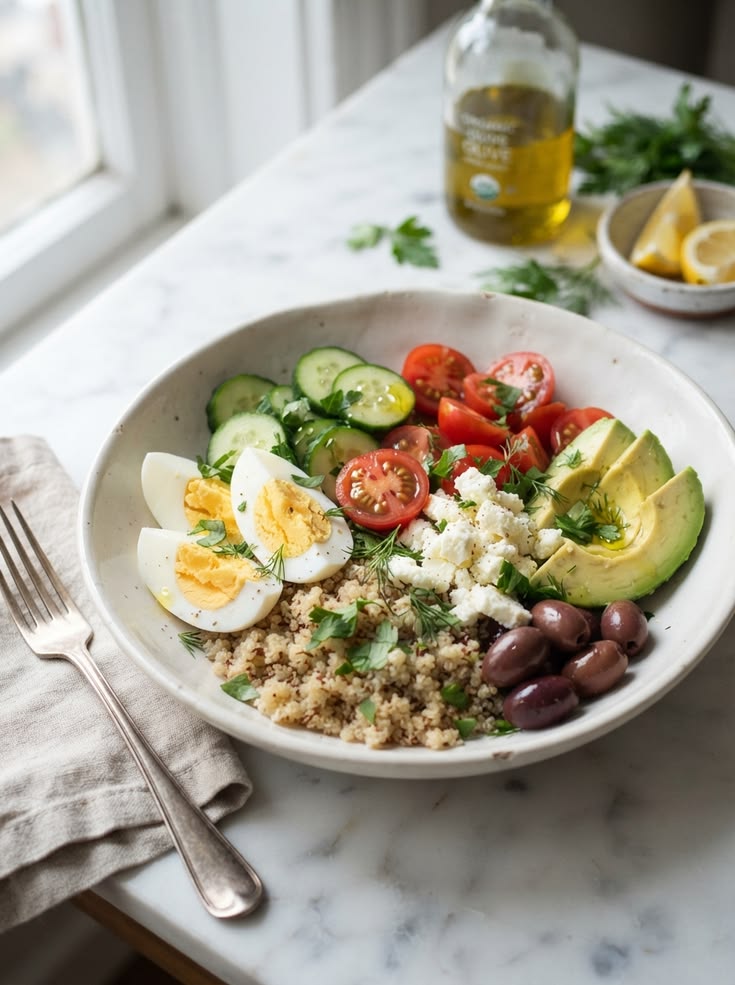
A great breakfast should do more than simply stop your stomach from growling for a few minutes. Ideally, it should provide a satisfying mix of foods that make the meal enjoyable, practical, and substantial enough to carry you through your morning. Mediterranean breakfast bowls work especially well because they naturally combine several food groups instead of relying heavily on one ingredient. You can bring together protein from eggs, hummus, yogurt, beans, or tofu; fiber-rich vegetables and legumes; and flavorful fats from ingredients such as extra-virgin olive oil, avocado, olives, or nuts. The result is a meal with layers rather than a one-note breakfast.
The format is also wonderfully adaptable. Some mornings you may want a warm bowl filled with sautéed mushrooms and spinach. On another day, you might prefer crisp cucumber, tomatoes, herbs, avocado, and a fried egg. There is no reason breakfast has to look identical every day. A bowl format lets you change the ingredients while keeping the same easy structure, which helps prevent healthy eating from becoming repetitive. The Mediterranean Dish’s current breakfast bowl recipe also emphasizes this flexibility, recommending that the bowl be treated as a guide and customized with available vegetables, different hummus varieties, seasonings, olives, herbs, or other additions.
A Savory Breakfast That Actually Keeps You Full
Many people know the feeling: you eat breakfast, feel fine for a short while, and then suddenly find yourself searching the kitchen for a snack. A savory breakfast bowl can be a smart alternative because it allows you to combine several satisfying ingredients in one meal. Instead of relying only on refined carbohydrates or sugary toppings, you can create more variety with eggs, chickpeas, vegetables, and healthy fats. Hummus is particularly useful here because it acts almost like a creamy sauce while also bringing chickpeas into the meal. That means every spoonful can feel rich and satisfying without requiring a heavy cream-based dressing.
Texture also matters more than people realize. A good breakfast bowl should not feel like a pile of soft ingredients with no contrast. Add warm browned mushrooms, fresh tomatoes, crisp cucumber, creamy hummus, tender eggs, crunchy seeds, or toasted pita pieces, and suddenly breakfast becomes an experience. The best meals keep your attention because each bite is slightly different. One spoonful might be creamy and tangy, while the next is smoky, fresh, or spicy. That variety is one of the biggest reasons this style of breakfast feels more exciting than eating the same bowl of cereal every morning.
Fresh Mediterranean Flavors in Every Bite
Mediterranean cooking is famous for making relatively simple ingredients taste extraordinary through smart combinations. Garlic, lemon, olive oil, herbs, olives, tomatoes, chickpeas, yogurt, and spices can create enormous flavor without complicated preparation. For this breakfast bowl, you do not need a cabinet packed with rare ingredients. A drizzle of good olive oil, a squeeze of lemon, some garlic, black pepper, paprika, cumin, oregano, or za’atar can completely transform everyday vegetables and eggs.
The key is balance. Tomatoes bring sweetness and acidity, hummus adds creaminess, eggs offer richness, greens contribute freshness, and spices wake everything up. Salty olives or feta can act as the finishing touch, much like the final note in a piece of music. The original inspiration recipe uses Aleppo pepper and za’atar, but you can easily use smoked paprika, chili flakes, cumin, or your favorite seasoning blend instead. The goal is not to copy one exact bowl every time; the goal is to learn a flexible formula that gives you a flavorful Mediterranean breakfast whenever you need one.
What Makes a Balanced Breakfast Bowl?

The easiest way to create a great breakfast bowl is to stop thinking in terms of a strict recipe and start thinking in layers. Imagine building a house. You need a strong foundation first, then the structure, then the details that make the space feel complete. Your bowl works in much the same way. Begin with a protein-rich ingredient, add vegetables, include something creamy or satisfying, and finish with flavors that make the entire meal come alive.
A simple formula is protein + vegetables + creamy element + healthy fat + seasoning + optional crunch. Once you understand that formula, the possibilities become almost endless. You can make the bowl vegetarian, vegan, gluten-free, dairy-free, spicy, mild, low-carb, or more carbohydrate-rich depending on your needs. You can use leftover vegetables from dinner or cook fresh ingredients in a skillet. You can even create a cold version for summer and a warm version for winter.
Start with a Protein-Rich Foundation
Protein gives your bowl structure and makes it feel like a proper meal rather than a collection of side dishes. Eggs are one of the easiest options because they cook quickly and can be prepared in several different ways. Soft-boiled eggs create a luxurious yolk that mixes into the hummus, while fried eggs add crisp edges and scrambled eggs offer speed and convenience. If you already have boiled eggs in your refrigerator, your morning preparation becomes even faster.
Hummus is another excellent foundation because it provides creaminess and brings chickpeas into the meal. Spread it across the bottom of the bowl rather than dropping it in one small spoonful. That way, the vegetables and toppings can be dipped and mixed into it as you eat. The inspiration recipe combines eggs and hummus and reports 15.8 grams of protein per serving, while another breakfast hummus bowl from the same publisher uses hummus, eggs, Greek yogurt, avocado, and vegetables and lists 18.1 grams of protein per serving. These examples show how changing the ingredients can alter the nutritional profile while keeping the same basic bowl concept.
Eggs, Chickpeas, and Plant-Based Alternatives

If eggs are not your thing, do not abandon the breakfast bowl idea. Crispy tofu, chickpeas, white beans, lentils, or baked falafel can all work beautifully. Crumbled tofu sautéed with turmeric, black pepper, garlic, and a pinch of paprika can create a colorful egg-like scramble. Falafel adds a more substantial texture, while extra hummus and roasted chickpeas can make the bowl completely plant-based.
The important thing is to choose an ingredient that makes the meal feel satisfying. For a vegan version, pair hummus with tofu or beans and load the bowl with vegetables. Add pumpkin seeds or sesame seeds for crunch and finish with lemon juice and olive oil. The current inspiration recipe specifically suggests omitting the eggs and using falafel, fried tofu, or additional vegetables for a vegan adaptation.
Add Colorful Vegetables
Vegetables are where you can make this breakfast bowl truly your own. Mushrooms, spinach, tomatoes, peppers, zucchini, roasted sweet potatoes, cucumber, radishes, and avocado can all fit beautifully into a Mediterranean-inspired bowl. Do not worry about following a perfect ingredient list. If you have roasted broccoli left from dinner, use it. If a few cherry tomatoes are getting soft in the refrigerator, toss them into the pan. If you have half an avocado that needs to be used today, breakfast is the perfect opportunity.
Try to include at least two or three colors when possible. This is not just about making your bowl look attractive for Instagram. Different vegetables bring different flavors and textures, which makes the meal more enjoyable. A combination of dark leafy greens, red tomatoes, golden roasted vegetables, and creamy beige hummus can turn an ordinary breakfast into something that looks like it came from a café.
Include Healthy Fats and Big Flavors
Healthy fats help create a more luxurious eating experience, and Mediterranean ingredients make it easy to include them naturally. A drizzle of extra-virgin olive oil over hummus can add a peppery, fruity finish. Avocado provides creaminess, while olives add a salty punch. A little feta can bring tanginess, and nuts or seeds can add crunch. You do not need to use every option at once; choose one or two and let the other ingredients shine.
Seasonings are equally important. Salt and black pepper are the starting point, but Mediterranean flavors become more interesting when you experiment. Za’atar has a herby, tangy character, Aleppo pepper brings gentle warmth, cumin offers earthiness, and smoked paprika can give vegetables a deeper flavor. A squeeze of lemon near the end can make the whole bowl taste brighter, almost as if someone turned on the lights.
Mediterranean Breakfast Bowl Ingredients
For this version, we are creating a flexible bowl that is hearty, colorful, and easy enough for an everyday breakfast. You will need eggs, hummus, mushrooms, cherry tomatoes, spinach, garlic, extra-virgin olive oil, seasonings, and a few optional toppings. These ingredients overlap with the successful Mediterranean breakfast bowl concept that was updated on July 31, 2026, while the recipe below uses its own quantities, flavor approach, and expanded customization ideas.
The best part is that none of these ingredients are locked in stone. Think of them as the cast of a movie rather than the only people allowed on stage. If mushrooms are not available, use zucchini. If spinach is missing, try kale or arugula. If you prefer a more refreshing bowl, add cucumber and parsley. Your kitchen should work for you, not the other way around.

The Best Ingredients for Flavor and Nutrition
For 4 servings, gather:
- 4 large eggs
- 1 ½ cups hummus
- 250 g mushrooms, sliced or halved
- 2 cups cherry tomatoes, halved
- 2 packed cups baby spinach
- 2 garlic cloves, finely chopped
- 2 tablespoons extra-virgin olive oil
- ½ teaspoon smoked paprika
- ½ teaspoon ground cumin
- ½ teaspoon dried oregano
- Salt and freshly ground black pepper, to taste
- 1 tablespoon lemon juice
- ¼ cup chopped parsley
- ¼ cup crumbled feta, optional
- ½ cup sliced cucumber, optional
- Kalamata olives, optional
- Chili flakes or za’atar, optional
- Warm whole-grain pita or gluten-free bread, optional
Easy Ingredient Substitutions
Cooking becomes much easier when you understand substitutions. White button mushrooms can be replaced with cremini mushrooms. Baby spinach can become kale, Swiss chard, or arugula. Hummus can be traditional chickpea hummus, roasted red pepper hummus, white bean dip, or even a homemade avocado-bean spread. The inspiration source itself recommends experimenting with alternatives such as avocado hummus, roasted red pepper hummus, beet hummus, and white bean hummus.
If you cannot find za’atar, use a mixture of oregano, sesame seeds, and a little lemon zest. If feta is unavailable, leave it out or use another tangy cheese you enjoy. The bowl will still be delicious. Flexibility is what makes this recipe practical enough to become part of your regular routine.
How to Make Mediterranean Breakfast Bowls Step by Step

This recipe is designed to be straightforward. You are not preparing five separate complicated dishes and then trying to arrange them perfectly. Most of the action happens in one skillet, while the hummus and toppings wait nearby. If you prep the vegetables in advance, the process becomes even faster.
The goal is to create contrast: warm vegetables, creamy hummus, tender eggs, and fresh finishing ingredients. Keep the vegetables from becoming overcooked and soggy. Brown the mushrooms first, then briefly cook the tomatoes and spinach so they retain their character. This technique follows the general preparation approach used by the inspiration recipe, which cooks the mushrooms first before adding tomatoes, spinach, and garlic.
Step 1: Prepare Your Eggs
Bring a saucepan of water to a gentle boil if you want soft-boiled eggs, then cook them until the whites are set and the yolks remain slightly jammy. You can also fry, scramble, or poach the eggs. For busy mornings, boiled eggs prepared ahead of time are incredibly useful because they eliminate one entire cooking step.
Do not feel pressured to cook your eggs exactly one way. A fried egg with a runny yolk can act almost like a natural sauce when broken over the vegetables and hummus. Scrambled eggs are easier for children and convenient for meal prep. Choose the method that fits your morning.
Step 2: Cook the Vegetables
Heat the olive oil in a large skillet over medium-high heat. Add the mushrooms, season lightly with salt and pepper, and cook until they release their moisture and begin to brown. Browning is important because it develops a deeper, more savory flavor. Once the mushrooms look golden, add the tomatoes and cook for another minute or two.
Add the garlic and spinach last. Stir just until the spinach wilts, then season with smoked paprika, cumin, and oregano. Finish with lemon juice and remove the skillet from the heat. You want the vegetables to taste lively, not tired and overcooked.
Step 3: Build the Creamy Bowl Base
Divide the hummus between four bowls. Use the back of a spoon to spread it around the bottom in a thick layer. This simple step changes the eating experience because every bite can pick up some hummus instead of leaving a large untouched pile at the side.
If your hummus is very cold from the refrigerator, let it sit for a few minutes before assembling. You can also stir it with a teaspoon of water or lemon juice to make it slightly softer. A small drizzle of olive oil on top adds extra flavor and gives the bowl a beautiful finish.
Step 4: Assemble and Finish Your Bowl
Spoon the warm mushroom, tomato, and spinach mixture over the hummus. Add your eggs, then finish with parsley, feta, cucumber, olives, chili flakes, or za’atar. Do not overthink the arrangement. A rustic bowl with ingredients casually layered together can look just as appealing as something carefully styled.
Serve immediately while the vegetables are warm. If you want something on the side, warm pita, whole-grain toast, or gluten-free bread works nicely. You can also add fresh fruit for a larger brunch.
Mediterranean Breakfast Bowl Recipe

Prep Time: 10 minutes
Cook Time: 10 minutes
Total Time: 20 minutes
Servings: 4
Ingredients: Use the ingredient list above.
Instructions: Cook the eggs using your preferred method. Heat olive oil in a skillet and brown the mushrooms. Add tomatoes, followed by garlic and spinach, then season with smoked paprika, cumin, oregano, salt, and pepper. Finish the vegetables with lemon juice. Spread hummus into four bowls and top with the warm vegetable mixture. Add the eggs and finish with parsley and your preferred toppings. Serve warm, with pita or bread if desired.
This bowl is best enjoyed fresh, but the individual components are also excellent for meal preparation. The original inspiration recipe similarly recommends preparing components separately or assembling bowls ahead, with its current version stating that prepared bowls can be refrigerated for up to four days. For best texture in this homemade version, keep fresh herbs and crunchy toppings separate until serving.
Delicious Ways to Customize Your Breakfast Bowl
Once you have made the basic recipe once, experiment. Add roasted sweet potato for a heartier bowl. Use avocado for extra creaminess. Add cucumber and radish for crunch. Replace the eggs with crispy tofu for a vegan version. Sprinkle dukkah, sesame seeds, or chopped almonds on top when you want texture.
You can also create regional flavor variations. For a Greek-inspired bowl, use feta, cucumber, olives, oregano, and tomato. For a Middle Eastern-inspired version, lean into hummus, za’atar, parsley, chickpeas, and warm pita. For a spicy version, add harissa, chili flakes, or hot sauce. The same basic bowl can travel through different flavor profiles without requiring you to learn an entirely new recipe.
How to Meal Prep Breakfast Bowls for Busy Mornings
Meal prep can turn this recipe from a nice weekend idea into a realistic weekday breakfast. Cook several eggs, sauté a larger batch of vegetables, and portion hummus into containers. Store the fresh toppings separately. In the morning, all you need to do is assemble your bowl.
For the best results, keep the components separate whenever possible. Reheat only the cooked vegetables if you want a warm breakfast, while allowing the hummus and other ingredients to remain cool or come closer to room temperature. This creates an appealing temperature contrast. The inspiration recipe also presents separate component storage as its preferred make-ahead option, while offering full bowl assembly as another option.

Vegan and Gluten-Free Variations
Making this bowl vegan is simple. Remove the eggs and add crispy tofu, extra chickpeas, white beans, or baked falafel. Use a generous portion of hummus and include avocado or roasted vegetables for additional substance. A squeeze of lemon and plenty of herbs will keep the bowl bright.
The bowl is naturally easy to make gluten-free because the main ingredients do not require wheat. Simply skip the pita or choose certified gluten-free bread if you want something on the side. This flexibility is another reason breakfast bowls work so well for families: everyone can start with a similar base and adjust toppings to match their preferences.
What to Serve with Mediterranean Breakfast Bowls
These bowls can absolutely stand on their own, but a few side dishes can turn them into a more complete brunch. Warm pita or rustic toast is ideal for scooping hummus and vegetables. A simple fruit salad brings sweetness and freshness. Greek yogurt with berries can create an interesting contrast between savory and cool flavors.
For a special weekend breakfast, serve the bowls alongside a platter of fresh fruit, olives, cheese, and warm bread. You can place the toppings in small bowls and let everyone build their own version. This is especially useful when feeding guests because nobody has to eat ingredients they dislike.
Why This Breakfast Bowl Is Better Than a Boring Breakfast
Breakfast should not feel like a chore. You should not have to choose between something fast and something you actually enjoy eating. Mediterranean breakfast bowls offer a middle ground: they can be quick, customizable, and packed with fresh ingredients while still feeling like real food.
What makes this approach especially useful is its adaptability. The original Mediterranean Dish recipe focuses on a simple combination of eggs, hummus, mushrooms, tomatoes, spinach, olive oil, and Mediterranean seasonings, with a reported preparation time of around 20 minutes total. This expanded version takes that flexible concept and gives you more customization options, meal-prep strategies, substitutions, and flavor directions so you can return to the idea again and again without eating the exact same breakfast.
Frequently Asked Questions
1. Are Mediterranean breakfast bowls healthy?
They can be a nutritious choice because they can combine eggs or plant proteins, vegetables, legumes, and healthy fats in one meal. The exact nutritional value depends on your ingredients and portion sizes. The inspiration recipe from The Mediterranean Dish lists 246.5 calories, 15.8 grams of protein, and 7 grams of fiber per serving.
2. Can I make Mediterranean breakfast bowls ahead of time?
Yes. Prepare the eggs, cooked vegetables, and hummus ahead and store them separately for the best flexibility. You can assemble the bowl quickly in the morning and add fresh herbs or crunchy toppings before eating. The source recipe also recommends make-ahead preparation and states that fully assembled bowls can be stored refrigerated for up to four days.
3. What can I use instead of eggs?
Crispy tofu, falafel, chickpeas, white beans, or lentils are good alternatives. The best choice depends on whether you want the bowl to remain vegetarian or become fully vegan. Hummus can also be increased to create a more substantial plant-based bowl.
4. Can I eat a Mediterranean breakfast bowl for lunch?
Absolutely. This bowl is not limited to breakfast. Add roasted sweet potato, quinoa, brown rice, or extra chickpeas if you want a larger meal for lunch. The same flavor combination works well at almost any time of day.
5. What is the best hummus for a breakfast bowl?
Classic chickpea hummus is an excellent choice, but roasted red pepper, garlic, avocado, beet, or white bean versions can all work. The Mediterranean Dish specifically suggests experimenting with several hummus variations rather than limiting yourself to plain hummus.
Conclusion
A Mediterranean breakfast bowl is proof that healthy food does not have to be boring, bland, or complicated. With creamy hummus, protein-rich eggs or plant-based alternatives, colorful vegetables, olive oil, herbs, and spices, you can build a breakfast that feels satisfying from the first bite to the last. The basic recipe takes only about 20 minutes, and meal preparation can make it even easier on busy mornings.
The biggest secret is flexibility. Use what you have, change the vegetables with the seasons, experiment with different spices, and create a bowl that suits your taste. Once you understand the simple formula of protein + vegetables + creamy base + healthy fats + bold flavor, you have far more than one recipe. You have an easy breakfast system that can produce dozens of delicious meals.
Pingback: Mediterranean Intermittent Fasting: The Easy Combo That Works -