
Disclaimer: Nutrition values are estimates for general reference only and will vary based on ingredients, brands, and portion sizes used. This content is for informational purposes and is not a substitute for professional dietary advice.
Quick Answer:The best Indian vegetarian air fryer snacks — samosa, paneer tikka, aloo tikki, onion pakora, sabudana vada, and corn pakoda among them cook at 180–200°C for 8–18 minutes with just 1–2 teaspoons of oil. The two things that separate a crisp snack from a soggy one: patting ingredients dry before cooking, and never overcrowding the basket. Full list, settings, and nutrition below.
Most air fryer snack roundups are just a list of names with a generic “180°C for 15 minutes” slapped under each one — as if a delicate poha vada and a dense paneer cube behave the same way in hot air. They don’t. This list gives each snack its own tested settings, tells you the one mistake that ruins it most often, and includes actual nutrition numbers instead of leaving that field blank.
The 12 Snacks
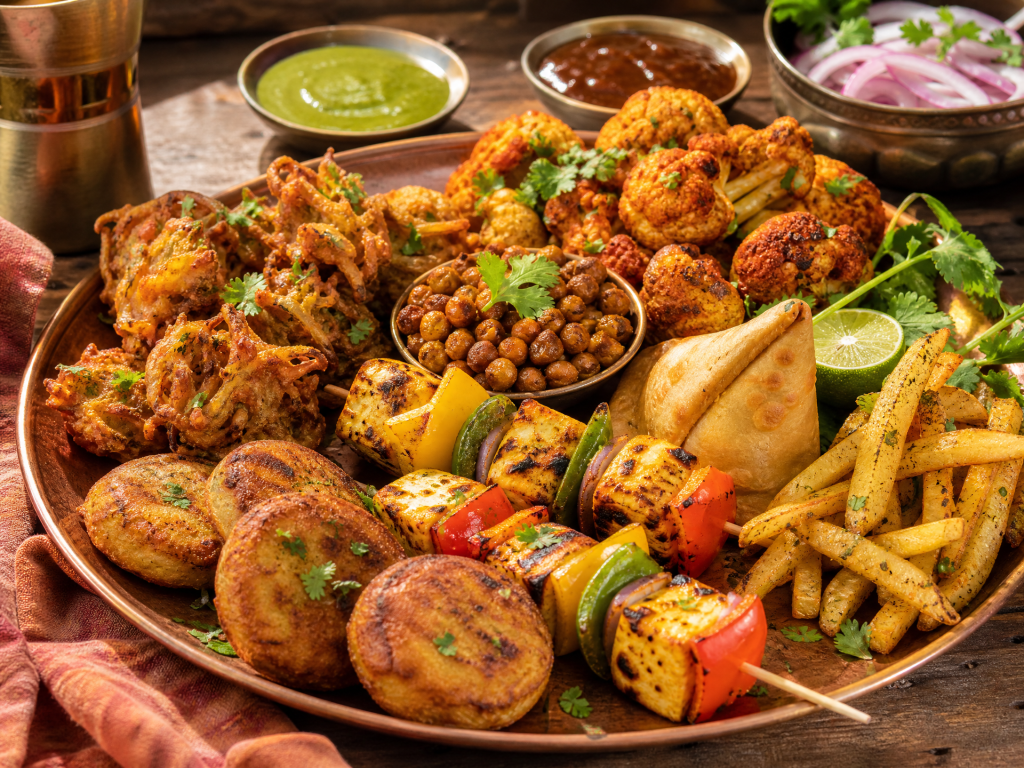
1. Aloo Tikki
Temp: 160°C then 200°C (two-stage) | Time: 15–16 min | Oil: 1–2 tsp spray Boiled, mashed potato bound with rice flour and spices, shaped into patties. The two-stage temperature (low to set, high to crisp) prevents the crust from browning before the center firms up. Common mistake: Skipping a short chill before air frying — this is why tikkis crack down the middle.
2. Paneer Tikka
Temp: 200°C | Time: 10–12 min | Oil: 1 tsp Cubed paneer marinated in yogurt, ginger-garlic, and tandoori spices, skewered with peppers and onion. Common mistake: Marinating for less than 30 minutes — the paneer stays bland no matter how hot the air fryer runs.
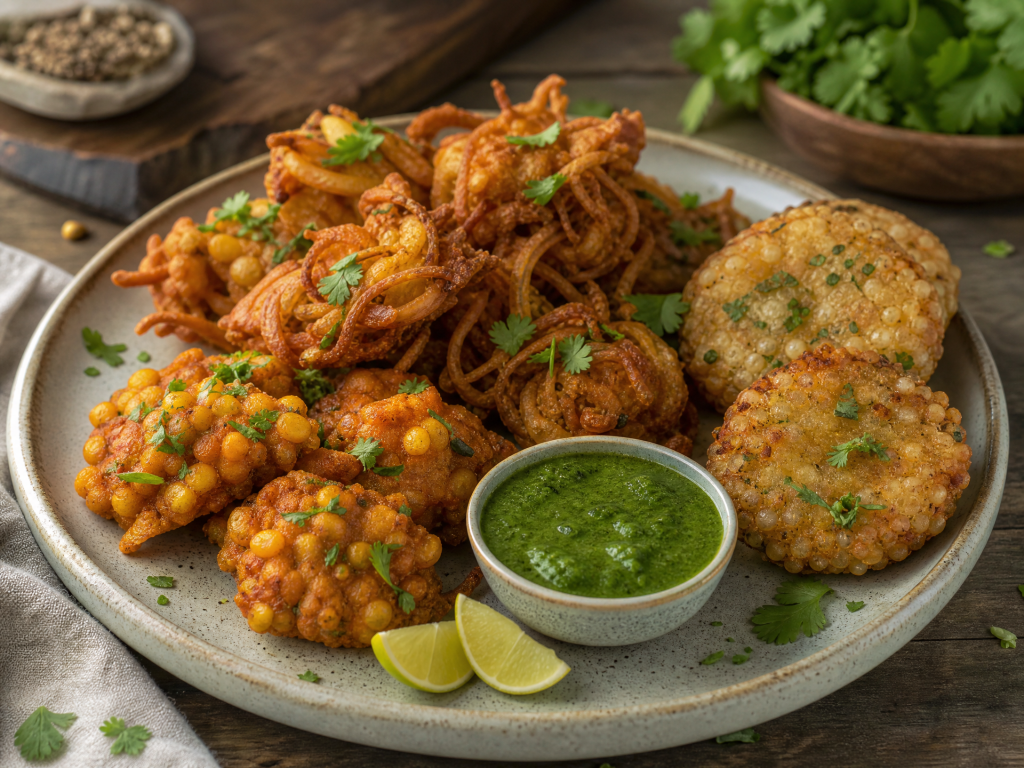
3. Onion Pakora (Air Fryer Style)
Temp: 190°C | Time: 12–14 min | Oil: 1 tbsp mixed into batter Thinly sliced onions in a besan batter, shaped into small clusters rather than deep-fried drops. Common mistake: Using a runny, deep-fry-style batter — it needs to be thick enough to hold its shape without oil to set it.
4. Sabudana Vada
Temp: 180°C then 200°C | Time: 16–18 min | Oil: 2 tsp spray Soaked sago pearls mixed with mashed potato, peanuts, and green chilli, shaped into flat patties. Common mistake: Under-soaking the sabudana — it stays hard and glassy inside no matter how long it air fries.
5. Corn Pakoda
Temp: 190°C | Time: 12 min | Oil: 1 tbsp Boiled sweet corn mixed with besan, rice flour, and spices, dropped in small clusters. Common mistake: Making the clusters too large — the outside burns before the inside cooks through.
6. Bread Pakora
Temp: 180°C | Time: 8 min | Oil: 1 tsp brushed Bread slices sandwiched with spiced mashed potato, dipped lightly in besan batter. Common mistake: Over-soaking the bread in batter, which makes it soggy instead of crisp.
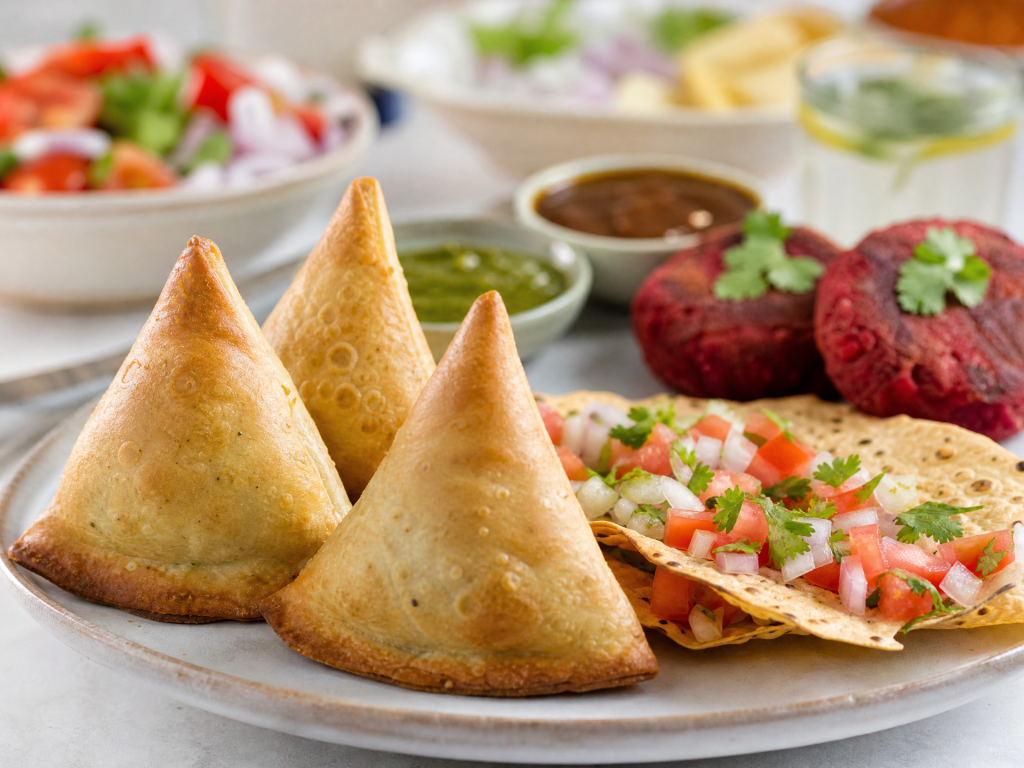
7. Masala Papad
Temp: 200°C | Time: 2–3 min | Oil: None Plain papad topped with chopped onion, tomato, coriander, and chaat masala after air frying. Common mistake: Adding toppings before cooking — the papad turns limp instead of crisp.
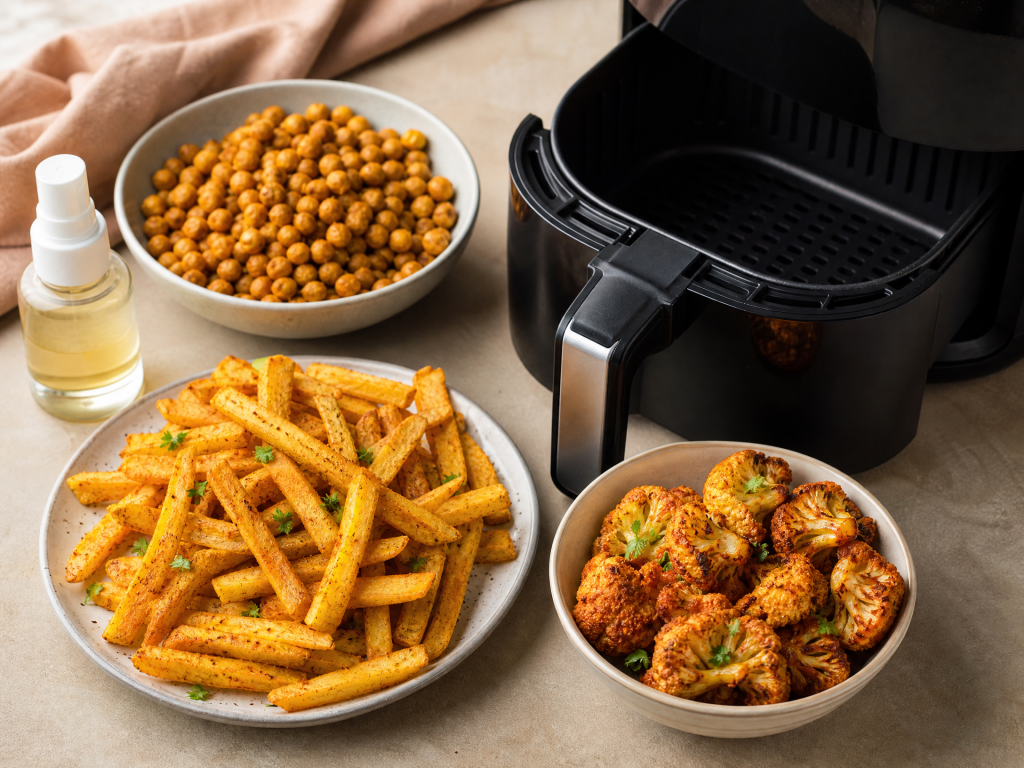
8. Crispy Air Fryer Chickpeas
Temp: 200°C | Time: 15–18 min, shaking every 5 min | Oil: 1 tsp Boiled or canned chickpeas, patted completely dry, tossed with oil and spices. Common mistake: Skipping the drying step — any surface moisture steams the chickpeas instead of crisping them.
9. Tandoori Gobi (Cauliflower Tikka)
Temp: 200°C | Time: 14–16 min | Oil: 1 tbsp Cauliflower florets marinated in a yogurt-tandoori paste, air fried until charred at the edges. Common mistake: Not parboiling the florets first — they stay tough inside even when the outside looks done.
10. Beetroot Tikki
Temp: 160°C then 200°C | Time: 15 min | Oil: 1–2 tsp spray Boiled, grated beetroot mixed with mashed potato and spices, shaped into patties — same two-stage logic as aloo tikki. Common mistake: Using raw grated beetroot without pre-cooking it, which leaves a hard, earthy bite.
11. Masala French Fries
Temp: 200°C | Time: 18–20 min, shaking halfway | Oil: 1 tbsp Hand-cut potato fries, soaked in cold water for 30 minutes before cooking to remove surface starch. Common mistake: Skipping the soak — the starch causes the fries to stick together and steam rather than crisp.
12. Air Fryer Samosa (Homemade)
Temp: 180°C | Time: 12–15 min | Oil: 1 tsp brushed Standard aloo-peas filling in a homemade or store-bought pastry shell, brushed rather than dipped in oil. Common mistake: Placing samosas flat instead of upright, which cooks the base faster than the folds crisp.
Master Temperature & Time Chart
| Snack | Temp | Time | Oil |
|---|---|---|---|
| Aloo Tikki | 160°C → 200°C | 15–16 min | 1–2 tsp |
| Paneer Tikka | 200°C | 10–12 min | 1 tsp |
| Onion Pakora | 190°C | 12–14 min | 1 tbsp |
| Sabudana Vada | 180°C → 200°C | 16–18 min | 2 tsp |
| Corn Pakoda | 190°C | 12 min | 1 tbsp |
| Bread Pakora | 180°C | 8 min | 1 tsp |
| Masala Papad | 200°C | 2–3 min | None |
| Crispy Chickpeas | 200°C | 15–18 min | 1 tsp |
| Tandoori Gobi | 200°C | 14–16 min | 1 tbsp |
| Beetroot Tikki | 160°C → 200°C | 15 min | 1–2 tsp |
| Masala Fries | 200°C | 18–20 min | 1 tbsp |
| Air Fryer Samosa | 180°C | 12–15 min | 1 tsp |
Nutrition Profile (Per Serving, Approx.)
| Snack | Calories | Carbs | Protein | Fat |
|---|---|---|---|---|
| Aloo Tikki (1 pc) | ~95 kcal | 19 g | 2 g | 1.5 g |
| Paneer Tikka (4 cubes) | ~150 kcal | 4 g | 9 g | 10 g |
| Onion Pakora (3 pcs) | ~110 kcal | 14 g | 3 g | 4 g |
| Sabudana Vada (1 pc) | ~130 kcal | 20 g | 3 g | 4 g |
| Corn Pakoda (4 pcs) | ~120 kcal | 16 g | 3 g | 4 g |
| Crispy Chickpeas (1/4 cup) | ~130 kcal | 18 g | 6 g | 4 g |
| Tandoori Gobi (1 cup) | ~90 kcal | 8 g | 5 g | 4 g |
| Masala Fries (1 cup) | ~180 kcal | 30 g | 3 g | 5 g |
Values are estimates based on standard portion sizes and will shift with oil quantity and ingredient brand.
Nutrition Notes
- Protein-rich picks: paneer tikka and crispy chickpeas carry noticeably more protein per serving than the potato-based snacks, making them better choices if you’re pairing snacks with a workout or a light dinner.
- Air frying vs. deep frying typically cuts total fat by 60–80% per serving, since almost all the fat in these recipes now comes from a light spray or brush rather than a hot oil bath.
- Starch-heavy snacks (tikki, vada, fries) are higher in carbs and lower in protein — pairing them with a yogurt-based dip or raita adds protein and slows the carb spike.
- Sodium adds up fast across chaat-style toppings (chaat masala, table salt, ketchup) — go easy on the finishing salt if you’re making more than one snack from this list in a sitting.
Tips for Better Results Across All Snacks
- Pat every ingredient dry before it goes in the basket — moisture is the single biggest reason air-fried snacks turn out soft instead of crisp.
- Never fill the basket more than two-thirds full; overcrowding blocks air circulation and leads to uneven, pale patches.
- Preheat for 3 minutes on anything battered or breaded — a cold basket makes the coating stick before it sets.
- Shake or flip halfway through for anything loose (pakoras, chickpeas, fries); patties and tikkis only need one flip.
- A light oil spray (not a pour) is enough for almost everything on this list — more oil doesn’t mean more crisp, it just means more calories.
FAQ
Do I need to preheat the air fryer for Indian snacks? For battered items like pakoras and bread pakora, yes — a 3-minute preheat helps the coating set immediately instead of soaking into the food. For patties like tikki, it’s optional.
Can I make these snacks oil-free? Mostly yes, though a light spray gives a noticeably crisper, more golden result. Papad and masala fries (soaked, unbattered) are the two that work well with zero oil.
Why do my air-fried snacks turn out soft instead of crispy? The three usual causes are: too much surface moisture, an overcrowded basket, or a batter that’s too thin. Fixing those three fixes most crispiness problems.
Can I air fry frozen Indian snacks like frozen samosas or tikkis? Yes — add 3–5 minutes to the times above and skip the preheat, since frozen items need the extra time regardless.
How do I reheat leftover air fryer snacks and keep them crisp? Reheat in the air fryer at 180°C for 3–4 minutes rather than the microwave, which will make them soggy.
Final Thoughts
Indian snacks were built around the crunch of hot oil, so getting the same result from an air fryer takes a few small adjustments — drying ingredients properly, not overcrowding the basket, and matching the temperature to what you’re actually cooking rather than using one setting for everything. Once those three habits are in place, this entire list becomes a reliable weekly rotation rather than a one-off experiment.