
Disclaimer: This article is for general informational purposes only and isn’t a substitute for personalized medical or nutritional advice. Always check your specific dorm or housing policy before using any cooking appliance.
If your idea of “cooking” right now is microwaving ramen at 11 p.m., a mini crockpot might be the single best upgrade you can make to your dorm room. It’s quiet, it’s safe, it doesn’t need a stovetop, and it turns cheap ingredients into an actual meal while you’re in class. This guide breaks down what to look for, which sizes and features actually matter in a dorm, and how slow cooking stacks up nutritionally against dining-hall and takeout food.
Why a Crockpot Makes Sense in a Dorm
Most Resident Life offices are fine with small slow cookers because they run on low, steady heat instead of an open flame or exposed coil, which keeps fire risk low. That’s very different from hot plates or deep fryers, which many schools ban outright. Always double-check your specific housing handbook before buying, but in general, a compact slow cooker is one of the more “approved-appliance-friendly” ways to cook for yourself.
Beyond the rules, the appeal is practical:
- You can set it and go to class. Load it in the morning, come back to a finished meal.
- It uses way less power than a stove or air fryer, which matters on a shared circuit.
- It’s forgiving. You don’t need real cooking skills to make something edible.
- It stretches a tight food budget by turning cheap staples like beans, rice, and frozen vegetables into filling meals.
What to Look for in a Dorm Crockpot
1. Size (1 to 3 quarts is the sweet spot)
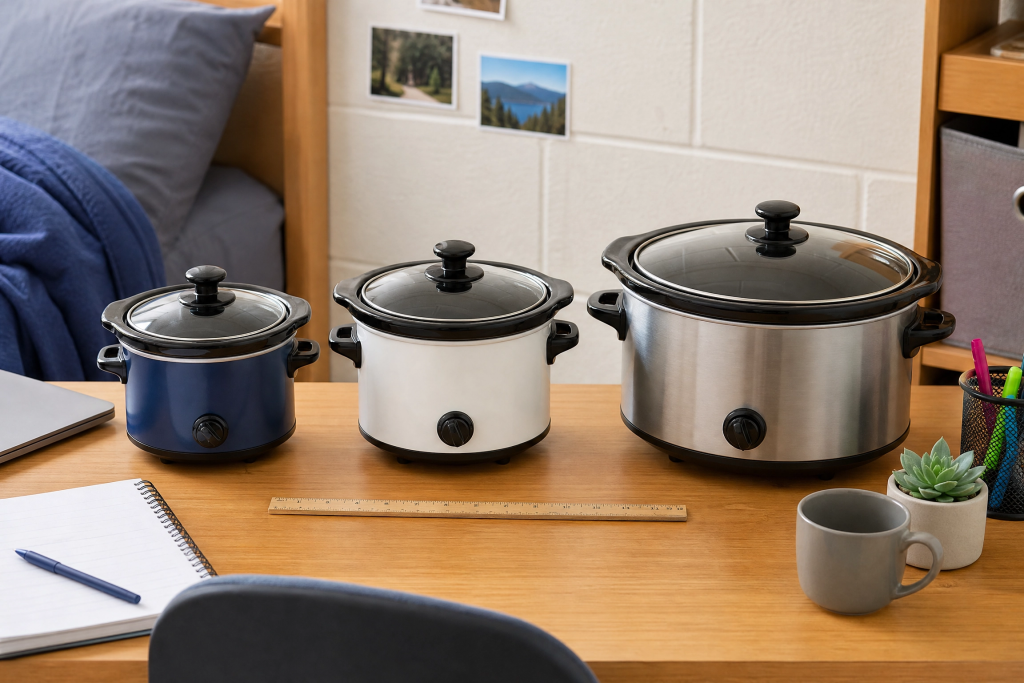
Anything bigger than 3 quarts eats up desk or closet space fast and usually isn’t allowed under most schools’ wattage or appliance-size caps anyway. A 1.5- to 2-quart model is enough for one to two servings, which is realistic for a single student cooking solo.
2. Low wattage
Most dorm-safe slow cookers draw somewhere between 100 and 200 watts, which is gentle on old dorm wiring and shared power strips. Check your housing agreement for a maximum wattage limit before you buy, since some schools cap total appliance wattage per room.
3. Removable, dishwasher-safe insert
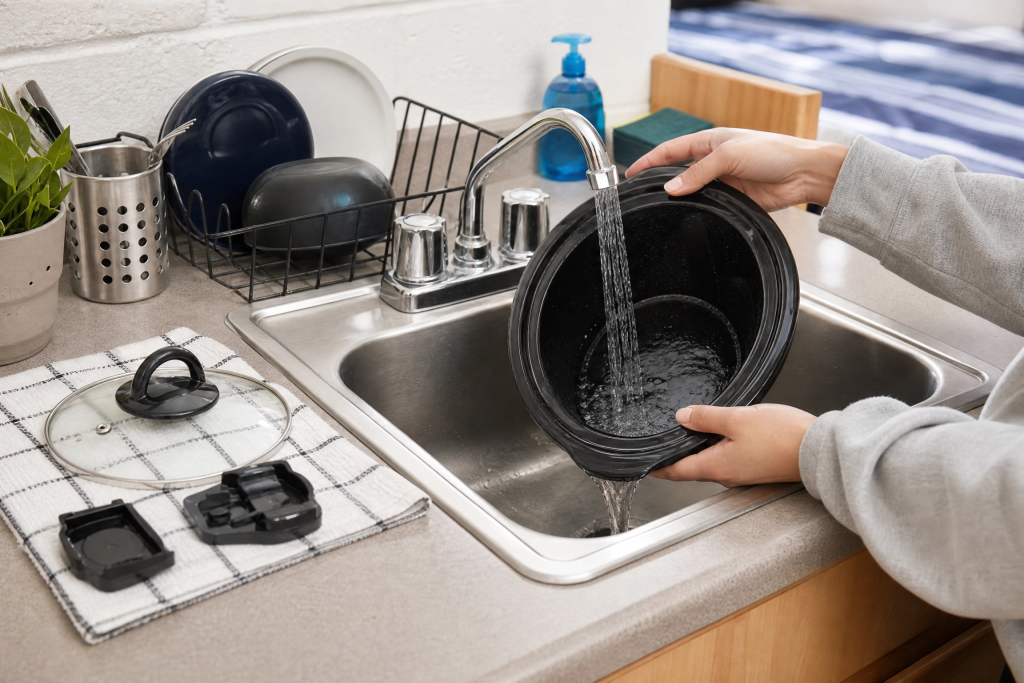
Dorm bathrooms and shared kitchenettes are not ideal places to hand-scrub a pot. A ceramic or nonstick insert that lifts out and rinses clean in a communal sink (or dishwasher, if you’re lucky enough to have one) saves a lot of hassle.
4. A locking lid
If you’re carrying a half-cooked meal down the hall to a communal kitchen, a lid that clips shut prevents spills in your backpack or on the carpet.
5. Simple controls
You don’t need a programmable touchscreen for dorm cooking. A basic low/high/warm dial is easier to use, cheaper to replace, and less likely to break during a move.
6. Auto shut-off or “keep warm” mode
This is a genuinely useful safety feature for students who tend to leave for a 90-minute lecture and forget what’s cooking.
Best Types of Dorm Crockpots by Situation
- Living solo, tiny desk space: a 1.5-quart mini crockpot is the most compact option and works well for oatmeal, soups, or single-serving chili.
- Splitting a room with a roommate: a 2- to 3-quart model gives you enough capacity for two people or leftovers for the next day.
- Frequent movers (dorm to dorm, or home for breaks): look for one with a locking lid and a compact, stackable shape so it survives the trip in a duffel bag or car trunk.
- Budget-conscious first-years: a basic manual-dial model from a mainstream slow-cooker brand is typically the most affordable and the easiest to replace if something goes wrong.
Nutrition Profile: Home-Cooked Crockpot Meals vs. Dorm Food
One of the underrated benefits of owning a crockpot is what it does for your actual nutrition, not just your convenience. Here’s a general comparison based on typical ingredients:
| Dining Hall / Fast Food (avg. plate) | Crockpot Meal (beans, veg, lean protein, grain) | |
|---|---|---|
| Sodium | Often 900–1,500+ mg per meal | Fully adjustable — you control the salt |
| Added sugar | Common in sauces and drinks | Minimal, since you’re not relying on pre-made sauces |
| Fiber | Frequently low | Higher, especially with beans, lentils, and vegetables |
| Protein quality | Variable, often processed | Whole-food protein (chicken thighs, beans, lentils) |
| Portion control | Hard to manage in a buffet setting | Easy — you decide how much goes in |
A typical dorm-friendly crockpot meal built around beans, brown rice, chicken breast or lentils, and frozen vegetables generally lands in the range of 350–500 calories per serving, 20–30 grams of protein, and 8–12 grams of fiber, depending on portion size. That’s a meaningfully different nutritional picture than a fast-food combo or a plate of dining-hall pasta.
Nutrition Notes
- Beans and lentils are a cheap, shelf-stable way to boost fiber and plant protein in almost any crockpot recipe.
- Frozen vegetables hold onto most of their vitamins and are often more affordable than fresh produce for students on a budget.
- Lean proteins like chicken breast, ground turkey, or tofu keep saturated fat lower than heavily processed deli meats or fried takeout.
- Watch the sodium in canned goods. Rinsing canned beans or choosing low-sodium broth can cut a meaningful amount of salt without changing the recipe.
- Whole grains like brown rice or quinoa add fiber and help meals stay filling through a long study session, compared to refined white rice or bread.
Tips for Cooking in a Dorm Crockpot
- Prep ingredients the night before and store them in a container in your mini fridge so you can dump everything in before your first class.
- Use a liner or light spray of oil to make cleanup faster, especially if you don’t have easy access to a sink.
- Stick to 4–6 hour recipes on low so you’re not leaving something cooking for a full 8-hour class day unattended.
- Keep a small stash of freezer staples — frozen chicken thighs, frozen mixed vegetables, dried lentils — so you can always throw together a meal without a grocery run.
- Check your school’s fire code before use, and never leave a crockpot running in a shared hallway or common area if it’s against your dorm’s rules.
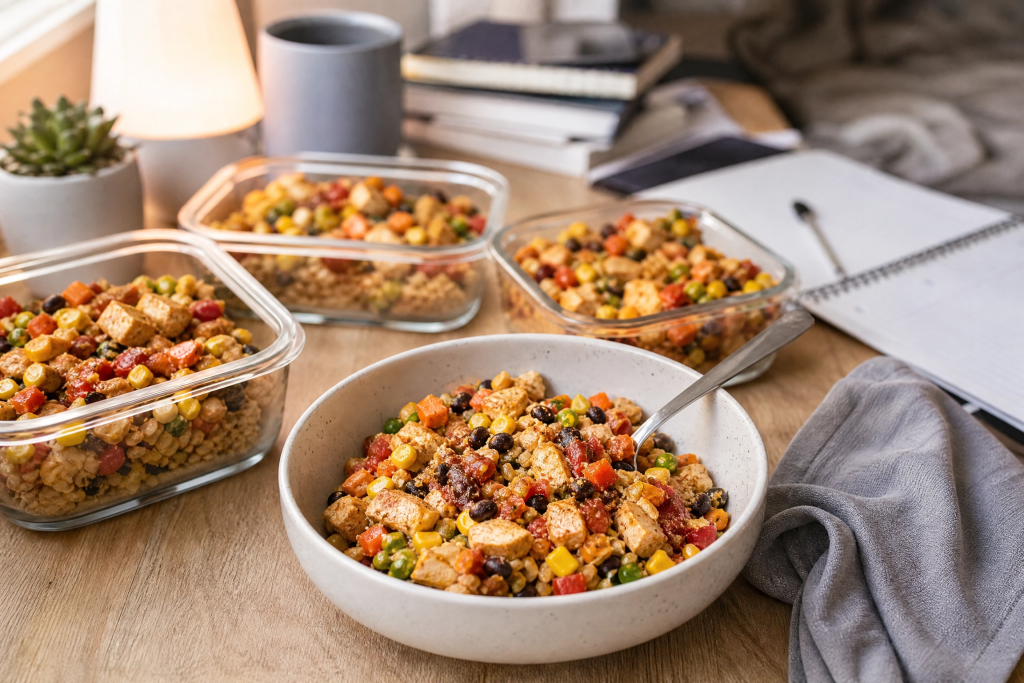
- Portion into containers right after cooking so you’re not tempted to eat straight from the pot, which makes portion control easier during a busy week.
FAQ
Are crockpots actually allowed in college dorms? In most cases, yes — small, low-wattage slow cookers are commonly permitted because they don’t use an open flame. That said, policies vary by school and even by building, so it’s worth confirming with your Resident Life office or housing handbook before you buy one.
What size crockpot is best for a single dorm room? A 1.5- to 2-quart model is usually the best fit for one person. It’s compact enough for a desk or closet shelf and still large enough for a proper single-serving meal.
Is a crockpot healthier than dining hall food? It can be, mainly because you control the ingredients, portion sizes, and sodium levels. Dining hall and fast food options are often higher in sodium and added sugar, while a homemade crockpot meal built around beans, lean protein, and vegetables tends to be more balanced.
Can I leave a crockpot cooking while I’m in class? Many students do, since slow cookers are designed for long, low-heat cooking. Still, check your dorm’s specific rules, since some housing policies require appliances to be attended at all times.
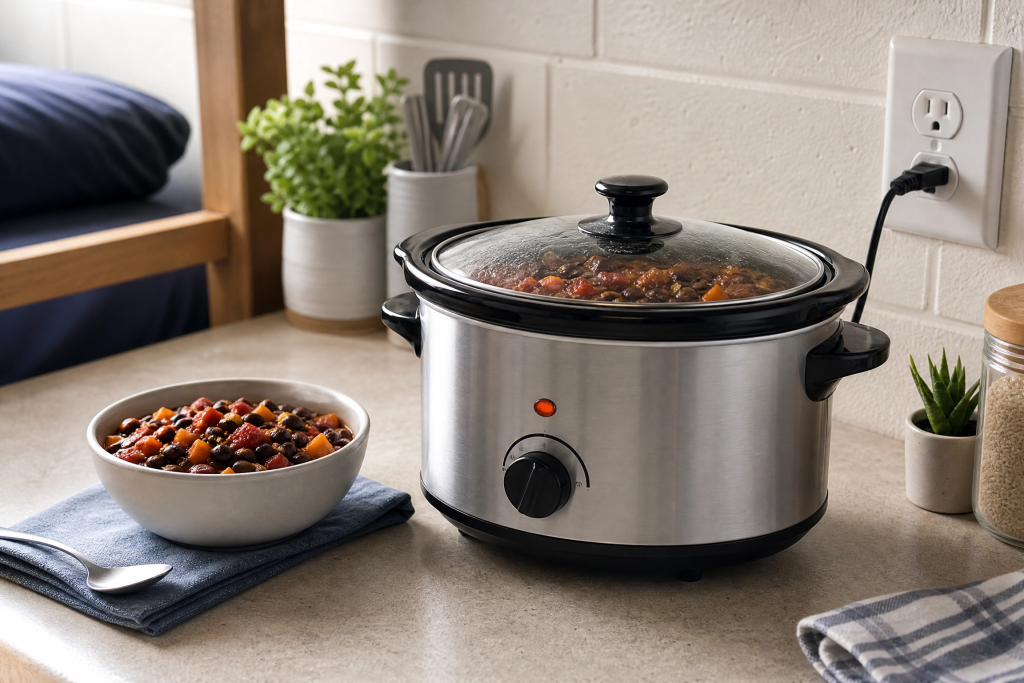
What’s the easiest first recipe to try? A simple chili or bean-and-vegetable stew is a good starting point — dump canned beans, frozen vegetables, diced tomatoes, and seasoning into the pot, cook on low for 4–6 hours, and you have a full week of easy reheatable meals.
How do I clean a dorm crockpot without a kitchen? Look for a model with a removable insert so you can rinse it in a communal bathroom or kitchenette sink, and always unplug and let it cool completely before cleaning.
Final Thought
A crockpot won’t turn a dorm room into a full kitchen, but it closes a big gap between “microwave everything” and actually eating real, balanced meals on a student budget. Pick a compact, low-wattage model with a removable insert, keep a few cheap staples on hand, and you’ll have home-cooked food waiting for you after class more often than not.